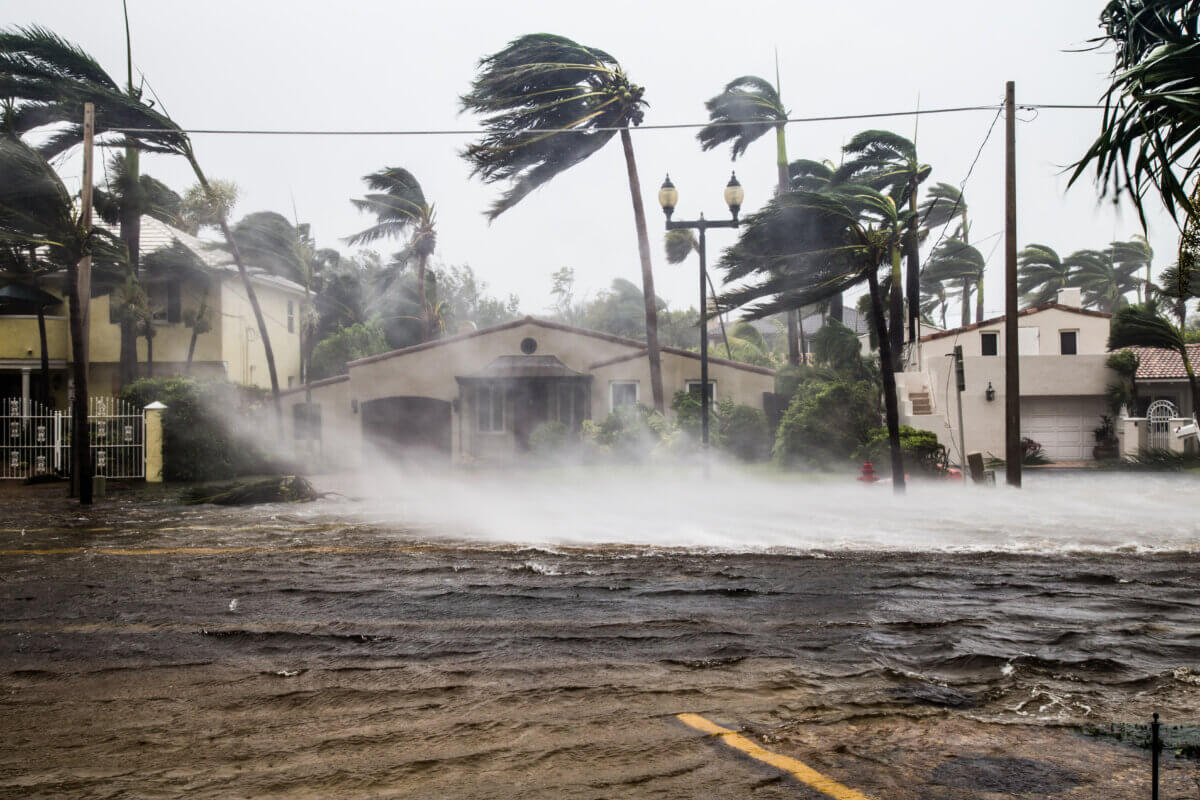
A flooded street after catastrophic Hurricane Irma hit Fort Lauderdale, FL in 2017. (Photo by FotoKina on Shutterstock)
NEW YORK — The threat of a flood typically conjures images of immediate dangers: rushing water, submerged streets, and emergency evacuations. But according to an extensive new study, the deadliest impacts of flooding can come long after the water subsides. Researchers from Columbia University say certain populations face a significantly higher risk of death from various health conditions during tropical storm-caused floods compared to normal conditions.
Published in Nature Medicine, the study estimates a 72% increase in the population exposed to yearly floods by 2050. Climate change is expected to contribute to more river, coastal, and flash floods. Additionally, these floods are expected to be caused by hurricanes and other natural events, such as heavy rain, snowmelt, and ice jams.
“Flooding is an urgent public health concern as sea level rise, rapid snowpack melting, and increased storm severity will lead to more destructive and frequent events,” says lead author Dr. Victoria Lynch, a post-doctoral research fellow at Columbia’s Mailman School of Public Health, in a statement. “Our results show that floods were associated with higher death rates for most major causes of death, even for rain- and snow-related floods that are less likely to generate rapid emergency responses.”
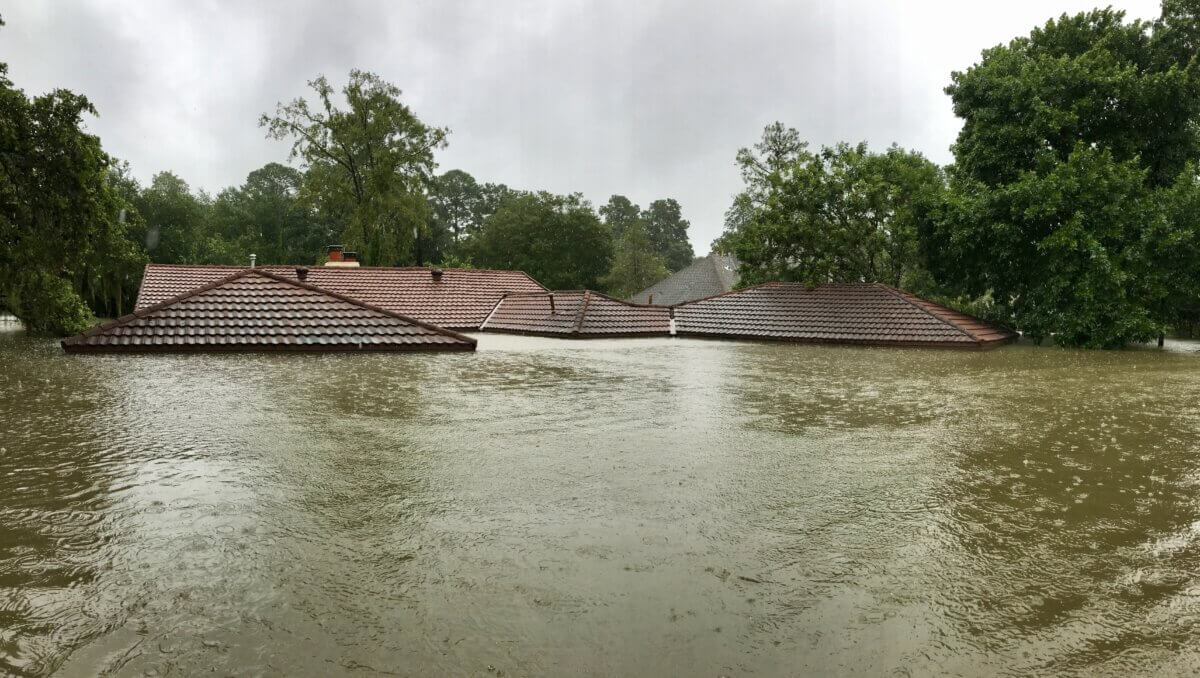
The new study fills in a knowledge gap on how flooding influences mortality rates in the United States and how this affects specific groups in the population. A better understanding of the public health risks attributed to flooding would help prioritize creating resources to deal with flooding episodes.
“In the U.S., floods have a devastating effect on society, yet a comprehensive assessment of their continuing health impacts had been lacking,” says senior author Robbie M. Parks, an assistant professor at the Environmental Health Sciences at Columbia Mailman School. “Our study is a first major step in better understanding how floods may affect deaths, which provides an essential foundation for improving resilience to climate-related disasters across the days, weeks, months, and years after they wreak destruction.”
The research team combed through 35.6 million US death records from 2001 to 2018 to calculate how mortality rates changed three months after a large flood versus in normal weather conditions. Records showed that residents from 2,711 counties—75% of the US population—had gone through at least one large flood in the 17-year study period.
Heavy rain was the most common cause of large flooding events. Tropical cyclones primarily affecting the Southeast were the next most common cause, followed by snowmelt events concentrated in the Midwest.
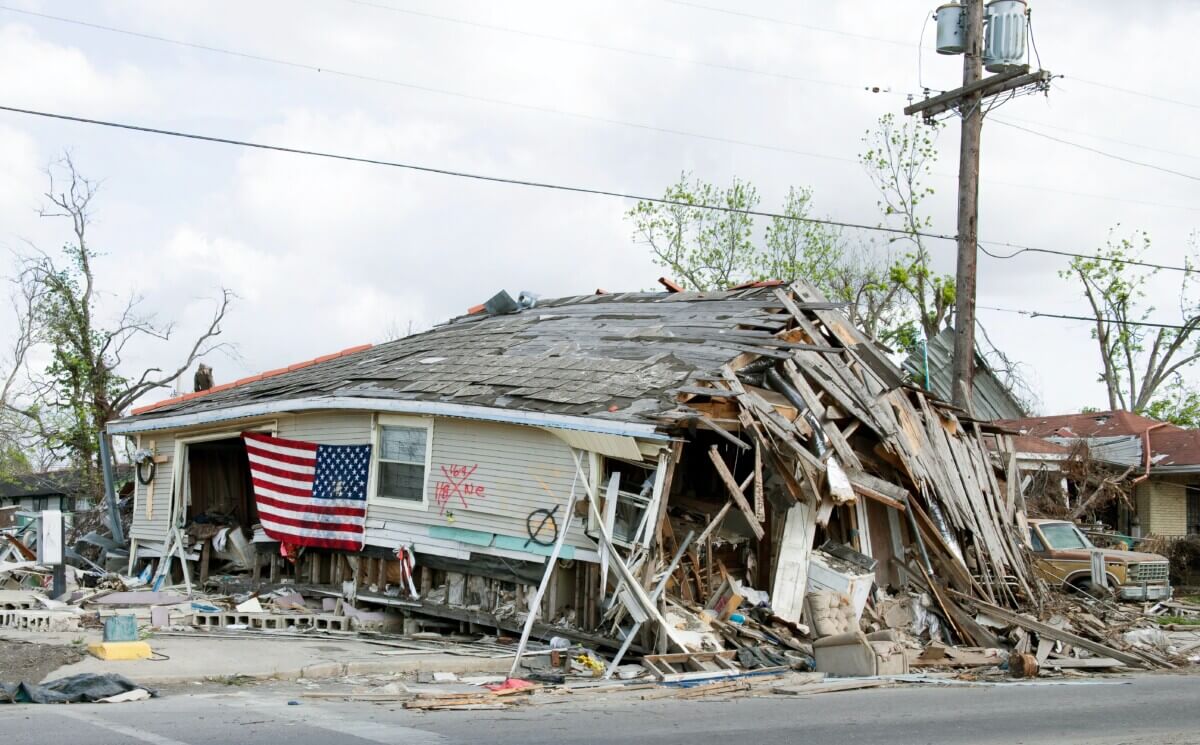
During tropical cyclone-related floods, certain groups faced higher risks of death. Adults 65 and over saw a 24.9% increase in injury-related deaths during these events, while women experienced a 21.2% increase in injury-related deaths compared to normal conditions. The increase in death rates was linked to infectious diseases related to heavy rain-related flooding (3.2%) and heart disease (2.1%). According to the authors, flooding can create contaminated drinking water and affect sewage drains, which increases the spread of waterborne diseases.
Snowmelt-related floods were linked to higher mortality rates for respiratory diseases (22.3%), neuropsychiatric conditions (15.9%), and heart disease (8.9%). The study suggests psychological conditions like stress could arise from constant flood-related disruptions.
A person’s socioeconomic status also affects people’s health after a large flood. Lower-income communities likely have fewer resources to help evacuate residents during emergencies and deal with flood damage.
“The majority of our understanding of flood-related health impacts comes from major events like Hurricane Katrina or Harvey that, despite their devastation, are a sample of a larger phenomenon,” says Jonathan Sullivan, an assistant professor in Geography, Development, and Environment at the University of Arizona and study co-author. “Our study shows that even floods caused by snowmelt or heavy rain, each uniquely driven by changes to climate and development, elevate mortality months after the fact providing critical knowledge of how to manage and adapt to floods.”
Paper Summary
Methodology
Researchers used satellite data from NASA’s MODIS system to identify flood events, combining this with county-level death records and population data. They employed a sophisticated statistical model called a Bayesian conditional quasi-Poisson model to analyze how flood exposure affected monthly death rates, accounting for factors like temperature and seasonal variations.
Results
The study found distinct patterns of increased mortality based on flood type and timing. Heavy rain floods were associated with immediate increases in infectious and cardiovascular disease deaths, while tropical cyclone flooding led to sustained increases in injury-related deaths. Snowmelt floods showed broad increases across multiple causes of death, particularly affecting older populations.
Limitations
The research faced several constraints, including potential misclassification of residency during evacuations and the inability to track population movement during floods. The satellite imagery used couldn’t capture all urban flooding events, and the county-level analysis may have masked local variations in exposure and vulnerability.
Discussion and Takeaways
The findings suggest that flood-related health impacts vary significantly based on flood type, location, and community characteristics. This highlights the need for tailored disaster preparedness strategies that account for local conditions and vulnerable populations. The study also emphasizes the importance of maintaining healthcare access and monitoring public health for extended periods after flood events.
Funding and Disclosures
The research was supported by various National Institute of Environmental Health Sciences grants. The authors declared no competing interests.
Publication Information
This study was published in Nature Medicine on January 3, 2025, titled “Large floods drive changes in cause-specific mortality in the United States” (DOI: 10.1038/s41591-024-03358-z).


