
Credit: Radu Razvan on Shutterstock
In A Nutshell
- The Tour de France has avoided dangerous heat days for 50 years, but researchers say that’s been luck, not planning.
- Paris has crossed the high-risk heat threshold four times since 2014, never once on a race day.
- Record heat readings across France have all occurred after 2018, and cities like Paris and Lyon are becoming new danger zones.
- Scientists are calling on race organizers to share rider health data and rethink race timing before conditions force their hand.
Every July, the Tour de France ends with a procession of exhausted cyclists rolling down the Champs-Élysées in Paris, arms raised, race finally over. It is one of sport’s most recognizable images. What most viewers don’t realize is that Paris has crossed into dangerous heat territory four times since 2014, and on each of those occasions, by pure chance, no stage of the race was happening. Now, research spanning 50 years of climate data says that streak of good fortune is almost certainly running out.
Researchers tracked hourly heat conditions across France from 1974 to 2023, examining how rising temperatures and humidity have shifted at locations the race regularly visits. Dangerous heat is becoming more frequent, it is spreading to cities that were once considered moderate in summer, and the Tour has managed to dodge the worst of it through timing that amounts to luck. Race routes are locked in months ahead of time. There is no way to plan the route around dangerous heat days that far in advance, because weather forecasts simply don’t reach that far.
“With record-breaking heatwaves becoming more frequent, it seems only a question of time as to when the race will encounter the extreme heat stress days that will test the existing heat safety protocols,” the authors wrote in the study, published in the journal Scientific Reports.
How Scientists Measure Heat Risk at the Tour de France
To gauge danger, researchers used a metric called Wet Bulb Globe Temperature, or WBGT, which factors in air temperature, humidity, wind speed, and solar radiation simultaneously. It gives a much more accurate picture of how the body experiences heat during physical exertion than a standard thermometer reading alone. The International Cycling Union uses it as the basis of its High Temperature Protocol, adopted in 2023, flagging anything above 28°C (82°F) as high risk. At that level, officials can alter start times, move riders to shaded areas, or suspend sections of the race.
The study focused on six locations along typical Tour routes: Paris, Nîmes, Bordeaux, Toulouse, and the mountain climbs of Alpe d’Huez and Col du Tourmalet. At five of those six, record heat readings all occurred after 2018. Bordeaux hit 30.1°C (86°F) in 2019. Nîmes hit 30.0°C (86°F) in 2020. Toulouse reached 29.7°C (85°F) the same year. None of those records coincided with race days.
Paris Keeps Getting Closer to the Danger Line
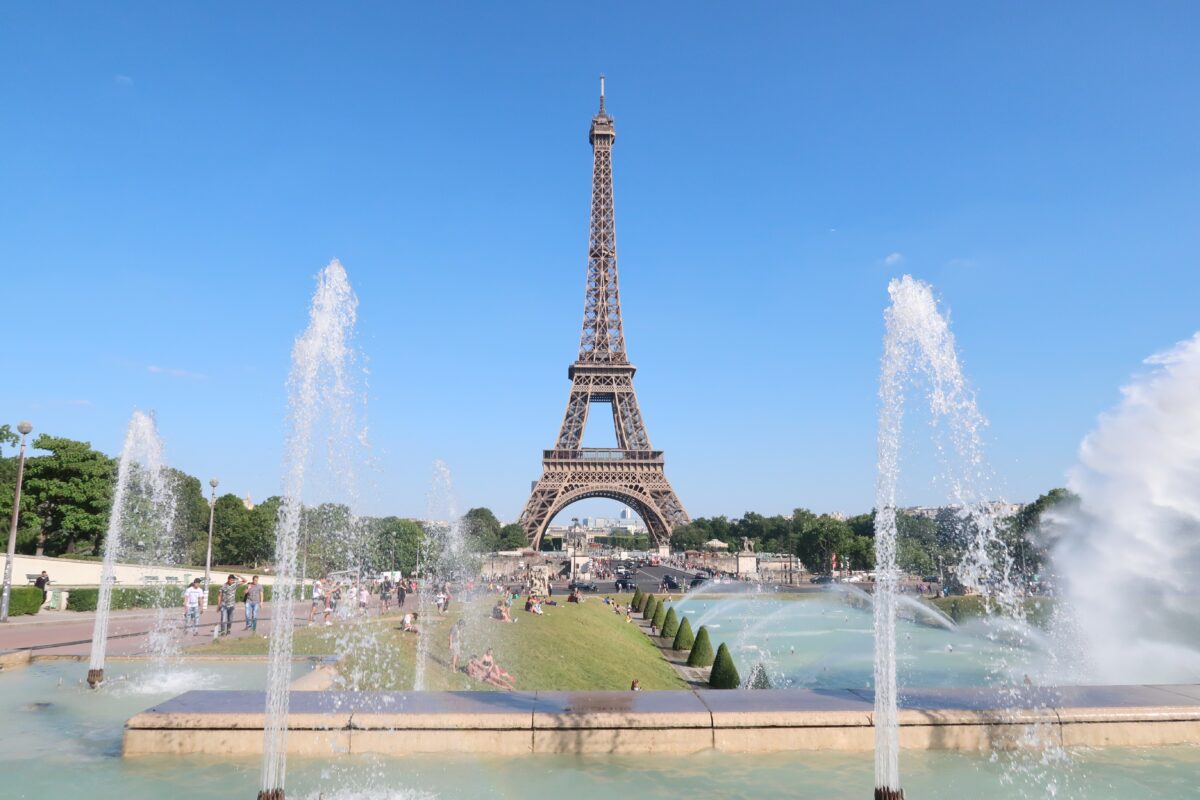
Paris tells the most compelling story. Over the 50-year study period, the city crossed the high-risk danger threshold five times in July. Four of those crossings happened since 2014. Not once did a Tour stage coincide with one of those days. The closest call was July 2002, when race-day heat stress reached 26.8°C (80°F), staying just under the line. That was more than two decades ago, and conditions have only worsened since.
Paris and Lyon, cities that rarely approached dangerous readings in earlier decades, are now doing so regularly enough that researchers describe them as “new heat stress hotspots.” Mountain stages offer some relief. Researchers note that those locations “largely remain safe.” For now.
Timing adds another layer of concern. Across France in July, mornings are consistently the safest part of the day. From roughly 3 p.m. through 6 p.m., heat stress is at its worst, which is exactly when many Tour stage finishes, including the Paris finale, traditionally take place. Shifting more finishes to the morning could meaningfully cut risk for riders and the crowds who stand for hours in direct sun, though doing so would be a major undertaking for an event of this scale.
Why Tour de France Riders Face Unique Heat Dangers
Professional cycling at Tour de France intensity is considered by many sports scientists to be the most physically demanding endurance event in the world. One study cited in the research found that 85% of professional cyclists monitored during a UCI race reached a core body temperature of at least 39°C (102°F), and 25% exceeded 40°C (104°F). Core temperatures above 40°C are typically associated with heatstroke in medical settings.
Recreational athletes can slow down or stop when they feel overheated. Tour riders often don’t have that option, and the researchers put it plainly: “during sports competitions such individual protective behaviors are often ignored or may not always be implemented as needed.”
There is also a cycling-specific factor that standard heat measurements miss entirely. Riders traveling above 30 mph generate an apparent wind that helps cool the body when outside air is cooler than body temperature. When the air exceeds body temperature, that same wind may actually accelerate heat absorption. On the hottest days, real conditions for riders could be worse than any instrument on the roadside would suggest.
Sports governing bodies have made progress. The UCI’s 2023 protocol was a real step forward from relying on air temperature alone, and major organizations including FIFA, World Athletics, and the International Tennis Federation now all use similar heat stress measures in their safety frameworks. But the underlying safety thresholds most sports use were derived from research on U.S. military personnel in the 1950s, not endurance athletes. The authors call on teams and organizers to share anonymized physiological data with researchers so that limits can eventually be built around the actual demands of the sport rather than borrowed from a different era and a very different activity.
For 50 years, the worst July heat in France has arrived on days when the peloton happened to be somewhere else. Paris has already shown it can turn dangerous. The question facing race organizers and governing bodies is no longer whether extreme heat will one day collide with one of cycling’s most celebrated moments, but whether the plans will be ready when it does.
Paper Notes
Study Limitations
The analysis is based on fixed geographic points rather than tracking conditions experienced by individual riders in motion. Real-world heat exposure is continuously shaped by microclimatic factors such as sun exposure, wind shelter, urban heat, and the cooling effect of high riding speeds. The study covers historical trends from 1974 to 2023 and does not include future climate projections. Publicly available physiological data on heat response in professional cyclists remains limited, making sport-specific safety thresholds difficult to establish with precision. How the apparent wind created by cycling speed interacts with heat stress in race conditions is identified as an area requiring further research.
Funding and Disclosures
Authors Ivana Cvijanovic and Desislava Petrova received support from the TipESM project, funded by the European Union (grant agreement 101137673). Malcolm N. Mistry was supported by the European Commission under the H2020-MSCA-IF-2020 program (Grant No. 101022870). Additional support came from the Agence Nationale de la Recherche (grant no. ANR-19-CE03-0012). The authors declared no competing interests.
Publication Details
Authors: Ivana Cvijanovic, James D. Begg, Malcolm N. Mistry, Desislava Petrova, Chloe Brimicombe, and Benjamin Sultan. | Journal: Scientific Reports (2026), Volume 16, Article 2644. | Title: “The future of European outdoor summer sports through the lens of 50 years of the Tour de France.” | DOI: https://doi.org/10.1038/s41598-025-30129-8 | Published online: February 24, 2026. Received May 21, 2025; accepted November 21, 2025.


