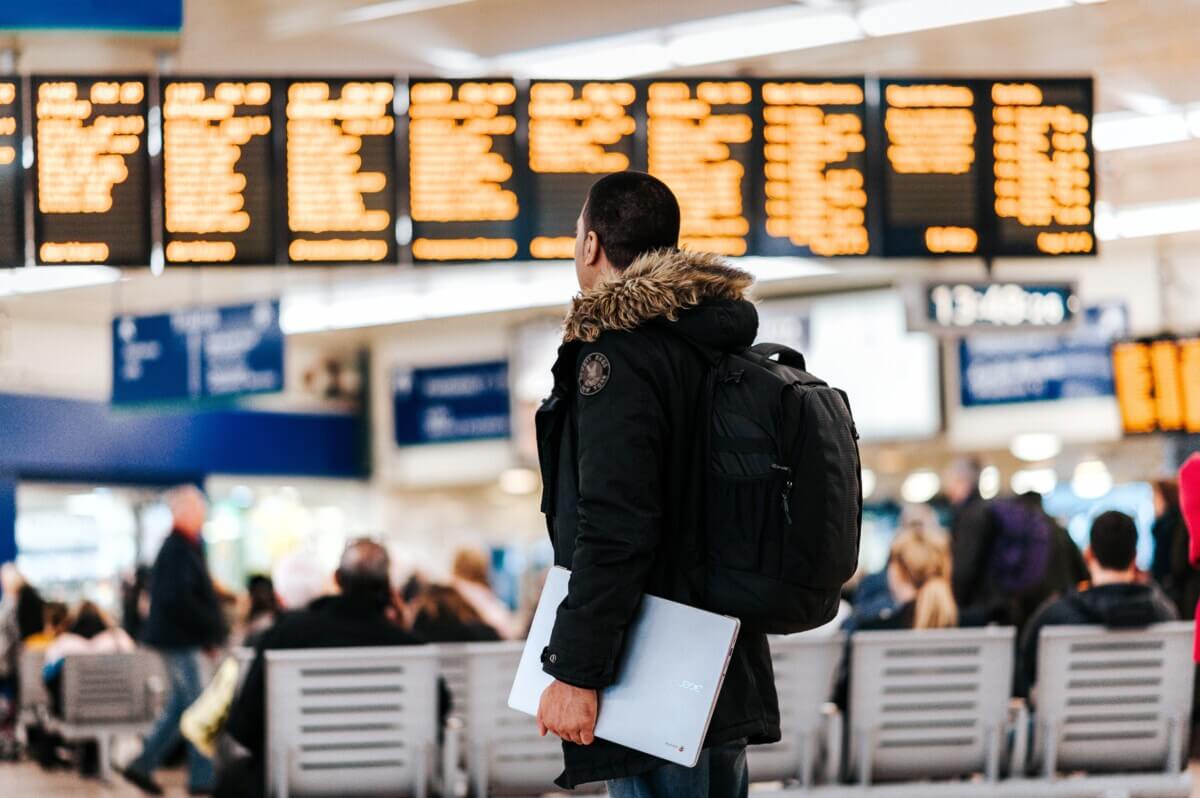
(Photo by Anete Lūsiņa on Unsplash)
Thousands of Students Move Abroad Every Year Expecting It to Change Them. Does It?
In A Nutshell
- Students who spent a year abroad grew more agreeable and curious, and reported lower anxiety than peers who stayed home.
- Four of the five major personality traits showed no meaningful difference between students who went abroad and those who stayed home.
- Daily emotional habits appeared more closely linked to personality change than any single dramatic cultural experience.
- Because students were not randomly assigned, the study cannot confirm that going abroad caused the changes observed.
Every year, thousands of university students pack up their lives and move to another country, expecting the experience to transform them. They come back with new languages, new friends, and no shortage of stories. But does living abroad actually change who they are as a person? A new study tracking 180 British university students across a full academic year suggests it might, just not in the sweeping, all-encompassing way universities often advertise.
Published in the Journal of Research in Personality, the study followed students from 12 UK universities over roughly 14 months. Half spent the academic year living abroad across 32 destinations, while the other half stayed home. Students who went abroad showed selective shifts in certain traits, becoming more agreeable, more curious, and, by some measures, less anxious, though those changes are complicated by the fact that students were not randomly assigned and may have differed from their stay-at-home peers even before anyone left. Broader personality reinvention was not found.
For the millions of students and families weighing the cost, disruption, and commitment of international study, that distinction matters considerably.
Nearly 4,500 Momentary Responses Were Collected, More Detail Than Most Personality Studies Attempt
Researchers from Durham University and the University of Sydney recruited 180 students from across the UK. Of those, 110 spent the 2018–2019 academic year living abroad, while 70 remained at their home universities. For 72 of the students who went abroad, the year overseas was mandatory, primarily for those studying modern languages. The remaining 38 volunteered. Most destinations were European, with France, Spain, Germany, and Italy most common. Participants were mostly female, with an average age of around 20.
To measure personality, the researchers used several tools across multiple timelines. Broad personality traits, the five well-known dimensions of openness, conscientiousness, agreeableness, extraversion, and neuroticism, were assessed four times over the year. More specific traits like anxiety, curiosity, and resilience were tracked monthly across 11 occasions. During three separate weeks spread throughout the year, a subset of 154 students also answered brief questionnaires four times a day to capture how they were thinking and feeling in the moment. Across those intensive tracking weeks, researchers gathered nearly 4,500 individual responses, giving the study an unusually detailed window into students’ daily inner lives that most personality research simply does not attempt.

Students Who Went Abroad Grew More Agreeable and Curious, and Reported Lower Anxiety Than Peers Who Stayed Home
Students who went abroad showed three shifts their stay-at-home peers did not: they became more agreeable, a standard broad personality trait, grew more curious, and reported lower anxiety by year’s end. The anxiety result is tricky to interpret, since students who went abroad were already less anxious than their peers at the very start of the study, before anyone had boarded a flight. That raises the possibility that calmer, more open-minded students were simply more likely to go abroad in the first place, rather than the experience itself producing the change.
Researchers had predicted, based on earlier work with German student populations, that those who went abroad might return more agreeable and emotionally stable. That prediction was only partially confirmed. Four of the five broad personality traits, openness, conscientiousness, extraversion, and neuroticism, showed no meaningful difference between students who went abroad and those who stayed home. Resilience, also tracked monthly, did not shift significantly either.
Daily Habits, Not Big Moments, Appear Most Closely Linked to Personality Change Over Time
Perhaps the most revealing finding had less to do with which traits changed and more to do with how personality change may be tied to everyday experience rather than dramatic events. Of three types of data gathered from the four-times-a-day check-ins, the average daily state showed the strongest and most consistent link to longer-term personality change. Students who consistently reported feeling curious, warm, or calm throughout the ordinary days of their year abroad tended to show corresponding shifts in broader personality traits by the end of the study.
All of this points to a slower process than a single dramatic cultural encounter. Repeated daily behaviors and feelings appear to be connected to personality shifts over months, though the study cannot confirm that daily states are the direct cause. A year abroad may matter most not because of any one defining moment, but because of the thousands of small interactions that stack up across 365 days of living somewhere unfamiliar.
For universities that market the year abroad as a guaranteed character-building experience, that is a meaningful and important distinction to make. Personality does appear to shift with the experience, but the changes are specific and gradual, built through the accumulation of ordinary days rather than through cultural immersion alone. It may be less about where students went and more about how they showed up each ordinary day once they got there.
Disclaimer: This article is based on a peer-reviewed academic study and is intended for general informational purposes only. While the research was conducted by credentialed scientists and published in a peer-reviewed journal, individual results and experiences may vary. The findings should not be taken as a guarantee of any particular outcome from studying abroad or as a substitute for personal or professional guidance regarding education and career decisions.
Paper Notes
Limitations
The authors acknowledge several important limitations. Because random assignment was not possible, the study used a quasi-experimental design in which students self-selected into going abroad or staying home. This makes it more difficult to definitively conclude that the year abroad itself, rather than pre-existing differences between the groups, caused the personality changes observed. The sample was predominantly female and skewed toward modern languages students, which may limit how widely the findings can be generalized to other student populations. The researchers also note that 32 students who began the study were dropped from the final analysis due to high levels of missing data, and that lower-conscientiousness students were more likely to be among those with excessive missing responses. The experience sampling portion of the study had a response rate of approximately 35%, which the researchers anticipated and planned for by scheduling more measurement occasions than strictly required. The authors also acknowledge that the study was not pre-registered, and they describe the research as explicitly exploratory in nature, particularly regarding the analyses linking daily personality states to longer-term trait change.
Funding and Disclosures
The study was funded by the Economic and Social Research Council (ESRC), Grant/Award Number ES/J500082/1. The authors declare no competing financial interests or personal relationships that could have influenced the work reported.
Publication Details
Authors: Ian Moore (Durham University, UK), Damian P. Birney (The University of Sydney, Australia), Akansha Singh (Durham University, UK), and Nadin Beckmann (Durham University, UK) | Journal: Journal of Research in Personality, Volume 122, 2026, Article 104706 | Paper Title: “Personality dynamics and trait change on the year abroad” | DOI: https://doi.org/10.1016/j.jrp.2026.104706 | Published online: January 16, 2026


