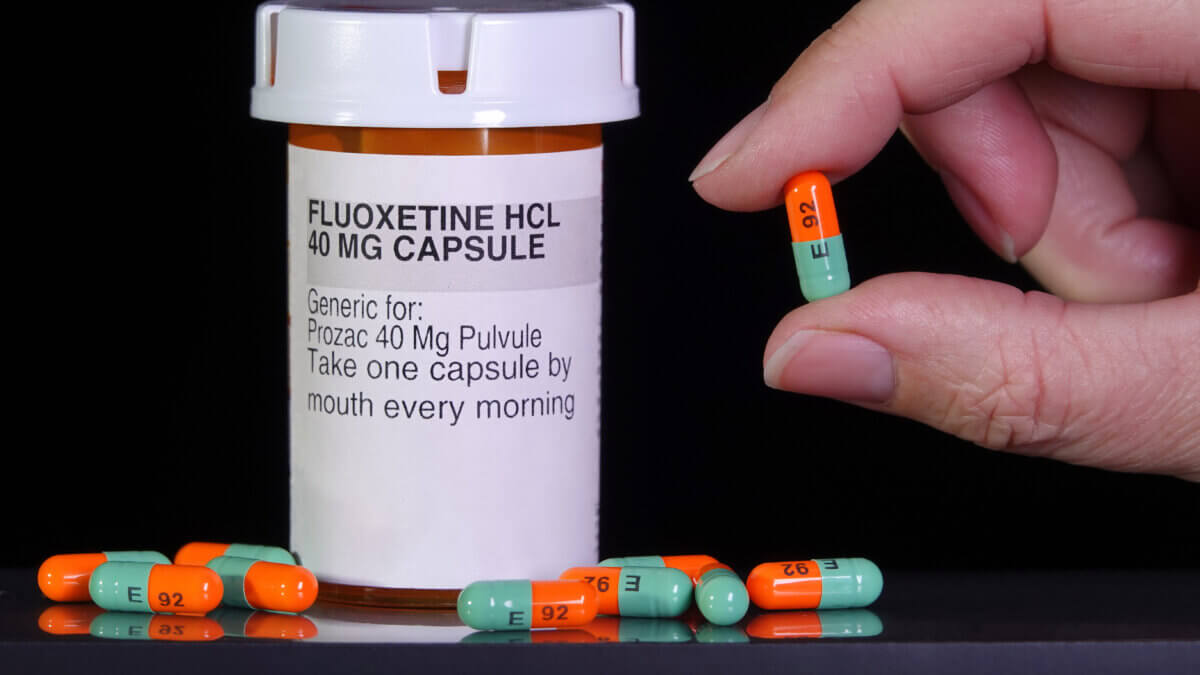
(© Simone - stock.adobe.com)
A Single Dose of Antidepressant May Fuel a Brain Chemical Tied to Low Mood
In A Nutshell
- A new study mapped how the SSRI fluoxetine changes gene activity in the brain’s main serotonin-producing region in mice
- Researchers found six distinct subgroups of serotonin-producing nerve cells, each responding differently to the drug
- After a single dose, levels of a chemical linked to dysphoria and depression-like states spiked before dropping again with extended use
- Authors suggest the early spike may be connected to why some patients feel worse before they feel better on SSRIs, though a direct link in people has not been proven
SSRIs are the most widely prescribed treatment for depression in the world. Tens of millions of people take them. And yet scientists still don’t fully understand what these drugs actually do inside the brain at the molecular level. A new study takes a closer look than ever before at the brain’s primary serotonin-producing region, and what researchers found raises fresh questions about one possible biological reason some people feel worse before they feel better on these medications.
SSRIs work by blocking a protein that normally clears serotonin from the gaps between nerve cells, allowing it to linger longer. That part has been known for decades. What has remained murky is how the drugs change the activity of genes in the very nerve cells that produce serotonin, and whether those changes differ depending on where in the brain you look.
To find out, researchers at Stockholm University used a technique called spatial transcriptomics, which reads the activity of thousands of genes while tracking exactly where in the tissue those genes are active. Working with mouse brain sections containing a small but critical brainstem structure near the base of the skull, which houses the majority of the brain’s serotonin-producing cells, the team built a detailed molecular map of the region. They then tracked how that map shifted after both a single dose and a 22-day course of the SSRI fluoxetine, publishing their findings in the journal Molecular Psychiatry.
The Brain’s Serotonin Hub Is More Varied Than Scientists Thought
One of the first major findings was just how varied this brain region turned out to be. Researchers identified six distinct subgroups of serotonin-producing nerve cells, each with its own unique set of active genes and a specific physical location within the structure. Some were clustered along the midline, others along the sides, others toward the rear. SSRIs appear to affect some of these nerve-cell populations differently, even as many gene changes were spread broadly across the entire region.
Across both the single-dose and long-term treatment conditions, the researchers identified 232 genes whose activity changed significantly compared to mice that received no drug. Many of those changes involved the molecular relay systems nerve cells use to communicate internally, including ones tied to cell growth and stress response. Long-term treatment, in particular, was linked to widespread reductions in the activity of genes involved in how nerve fibers navigate through the brain and find their targets, a process that may relate to previously observed changes in the shape and density of serotonin nerve fibers after extended fluoxetine use. Chronic treatment was also associated with reduced overall nerve-cell activity in the midline portion of the region specifically.
Adult male and female mice were used, with nine animals for the gene-mapping portion and 17 for the cellular imaging portion. Three groups were compared: a control group given saline, a group given a single dose of fluoxetine, and a group given daily doses for 22 consecutive days.

An Antidepressant’s Early Spike in a Pro-Depression Brain Chemical
Two brain chemicals, prodynorphin and thyrotropin-releasing hormone, moved in sharply opposite directions depending on how long the mice had been on fluoxetine. After a single dose, prodynorphin levels in serotonin nerve cells went up. After 22 days, they came back down. Thyrotropin-releasing hormone showed the reverse: a trend toward decreasing after one dose, then a significant rise after chronic treatment. These opposing shifts were confirmed using a cellular imaging approach that traced the changes to specific physical locations within the region.
The prodynorphin finding is where the research begins to connect with clinical questions. Prodynorphin is a precursor to a natural, opioid-like brain chemical that, unlike the chemicals behind pain relief or euphoria, activates a receptor system associated with dysphoria, a state of unease, anxiety, and low mood. Animal studies have linked this receptor system to depression-like behavior. A single dose of fluoxetine caused a spike in prodynorphin activity in serotonin nerve cells before the drug has had any chance to produce an antidepressant effect.
Why SSRIs May Feel Worse Before They Feel Better
Clinicians have long warned patients that SSRIs can temporarily worsen anxiety and, in some cases, increase suicidal thinking during the first weeks of use. That clinical caution has been based largely on observation. Study authors suggest the early prodynorphin surge may be connected to those documented early adverse effects, though they note that a direct causal link in humans will require further research to confirm.
Because the experiments were conducted in healthy mice rather than animals modeled for depression, the results may not translate directly to patients. Whether these same gene shifts occur in people, or in brains already affected by depression, is still an open question. For the many patients who have wondered why their antidepressant seemed to make things harder before making them better, this study points to one plausible molecular thread worth pulling.
Disclaimer: The findings discussed in this article are based on animal research and have not been confirmed in human studies. This content is for informational purposes only and should not be interpreted as medical advice. Always consult a qualified healthcare provider with questions about medications or mental health treatment.
Paper Notes
Limitations
Spatial transcriptomics captures gene expression from tissue spots containing multiple cells, roughly nine per spot on average, meaning results reflect averaged signals across mixed cell types rather than individual cells. Transcriptional changes in rare cell populations may fall below detection thresholds. While fluorescent imaging confirmed several key findings at single-cell resolution, some genes identified as differentially expressed, including Htr1a, Bdnf, and Vip, were not validated by that approach. Experiments were conducted in healthy mice not modeled for depression, limiting direct translation to a clinical context. Additionally, because the chronic treatment group underwent repeated gavage while the control group received only a single saline dose, the study cannot fully separate fluoxetine’s effects from those of repeated handling or stress. Only one SSRI was tested, so findings may not generalize to other drugs in the class.
Funding and Disclosures
Funding came from SciLifeLab, the Wenner Gren Foundations, the Swedish Research Council (grant 2024-02931), the Polish National Agency for Academic Exchange (The Bekker Programme, BPN/BEK/2021/1/00152), a SciLifeLab RED Postdoctoral Fellowship, and open-access funding from Stockholm University. The authors declared no competing interests.
Publication Details
Authors: Charlotta Henningson, Jakub Mlost, and Iskra Pollak Dorocic, all affiliated with Science for Life Laboratory, Department of Biochemistry and Biophysics, Stockholm University, Stockholm, Sweden. | Journal: Molecular Psychiatry | Paper Title: “Effects of SSRIs on the spatial transcriptome of dorsal raphe serotonin neurons” | DOI: https://doi.org/10.1038/s41380-026-03644-x | Correspondence: [email protected] | An interactive data app accompanying the study is available at: https://st-ssri.serve.scilifelab.se/app/st-ssri


