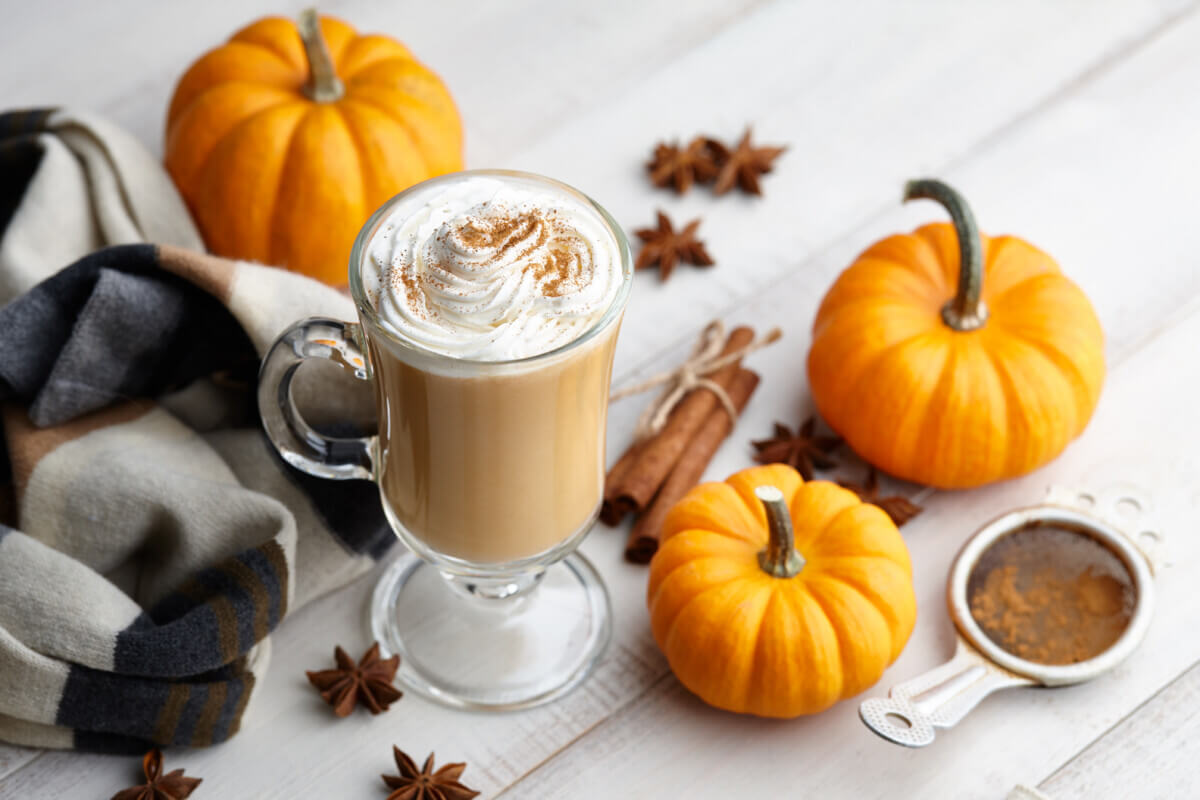
(© kobeza - stock.adobe.com)
In A Nutshell
- An audit of autumn menus at popular UK coffee chains found that 10 of the 14 seasonal drinks reviewed, 71.43%, list more than 30 grams of total sugar in a single cup. Britain’s 30-gram guideline applies to free sugars, and the menu figures do not separate free sugar from naturally occurring milk sugar.
- Costa’s Maple Hazel Hot Chocolate topped the list at 456 calories and 54 grams of sugar (about 13 teaspoons) in a 404ml cup (13.7 fluid ounces), roughly 22.8% of a 2,000-calorie day.
- Starbucks’ Iced Pumpkin Spice Latte came in lightest at 192 calories, 67 fewer than the hot version, largely because it skips the whipped cream.
Fall arrives on a coffee shop menu board weeks before it arrives outside, and this year Starbucks rolled out its 2026 seasonal lineup for app users on August 27. Within a month, British searches for “Pumpkin Spice Latte 2026” had jumped by more than 5,000%. What almost nobody checks before ordering is that a single medium seasonal cup can carry nearly a quarter of an adult’s daily calories.
Researchers at the UK online healthcare provider ZAVA pulled the calorie and sugar figures for every seasonal item published so far by major British coffee chains and ranked them. Using Britain’s 30-gram daily sugar guideline (about 7 teaspoons) as the benchmark, 10 of the 14 drinks came in above it, or 71.43% of the autumn lineup. One caveat belongs next to that number: the menu figures are total sugar, and the analysis does not break out how much of each drink’s sugar is added or free sugar rather than sugar occurring naturally in milk.
American guidance is framed differently, capping added sugars at about 50 grams (12 teaspoons) on a 2,000-calorie diet, a figure the published totals cannot be measured against directly.
Heaviest of all was not a pumpkin drink at all. Costa’s Maple Hazel Hot Chocolate, a 404ml cup (13.7 fluid ounces, between a Starbucks tall and grande), delivered 456 calories and 54 grams of total sugar, 80% above the 30-gram free-sugar benchmark ZAVA used for comparison, and roughly 22.8% of a 2,000-calorie day.
Pumpkin Spice Latte Calories Rank Lower Than Expected
Pumpkin spice may own the season culturally, with the drink searched 74,400 times a year in Britain, but it does not own the top of the calorie chart. Costa’s Maple Hazel Frappé placed second at 374 calories and 52 grams of sugar in a 467ml serving (15.8 fluid ounces). Starbucks’ Pumpkin Spice Frappuccino took third at 368 calories and 47.4 grams of sugar.
Pattern in the ranking tracks format more than flavor. In this ranking, blended and frappé-style drinks cluster near the top. Costa’s Maple Hazel Latte, the same flavor served hot without the blending, drops to 315 calories and 33 grams of sugar, 59 calories below the frappé version. Serving sizes are not published for every item in the ranking, so part of that gap may come down to cup volume rather than the build alone.
Straight espresso drinks land in the middle of the pack. Starbucks’ hot Pumpkin Spice Latte registered 259 calories and 31.4 grams of total sugar, well under half the leader’s calorie count. Its Pumpkin Spice Caramel Macchiato came in at 234 calories, and the Maple Pecan Macchiato at 215.
Iced Pumpkin Spice Latte Lands Lightest
Two cold options landed at the bottom of the calorie ranking. Starbucks’ Iced Pumpkin Spice Latte finished last on the calorie list at 192 calories, the only drink in the set under 200. ZAVA credits the gap to what the cup leaves out: no whipped cream, just a spice blend of cinnamon, ginger, nutmeg and cloves. Against the hot version, the iced cup saves 67 calories and 2.8 grams of sugar (28.6g versus 31.4g).
Second lightest was Costa’s Maple Hazel Iced Matcha, a 458ml drink (15.5 fluid ounces) with 206 calories and 26 grams of sugar, the lowest sugar figure in the entire lineup. Matcha’s presence near the bottom of the list tracks a broader shift in what younger drinkers order. Green tea exports, matcha included, rose 25% in 2024, driven by the viral “MatchaTok” trend and demand for drinks marketed as functional rather than indulgent.
ZAVA argues matcha earns some of that reputation on nutritional grounds, since it is made by consuming the whole tea leaf rather than steeping and discarding it, which concentrates antioxidants, vitamins and minerals. Worth keeping in perspective: at 26 grams of sugar, the matcha is the least sweet drink on an unusually sweet menu, not a low-sugar beverage in absolute terms. Nutrition claims about immune function, inflammation and skin cited in the analysis come from press coverage of matcha generally, not from testing of the drinks measured here.
What autumn coffee actually costs, cup by cup
Fourteen seasonal drinks from Costa and Starbucks in the UK, ranked by calories in a medium serving. Sugar figures are total sugar as published on each chain’s own menu.
Where Seasonal Drink Sugar Actually Lands
Sugar figures land harder in American units. Fifty-four grams works out to about 13 teaspoons of sugar, served hot in a cup that few drinkers would file under dessert. That framing matters because seasonal drinks are usually bought alongside food rather than instead of it, so the calories stack on top of a normal day rather than replacing part of one.
Portion size complicates any comparison. Sizes labeled medium differ from chain to chain, from Costa’s 404ml hot chocolate (13.7 fluid ounces) to its 467ml frappé (15.8) and 458ml iced matcha (15.5), so a straight cup-to-cup ranking flatters the smaller serving. American drinkers face a further wrinkle: these are UK recipes and UK menu data, and US formulations, syrups and cup sizes are not identical. The 30-gram sugar figure is British public health guidance for free sugars; US dietary guidelines are framed differently, generally advising that added sugars stay under 10% of daily calories, or about 50 grams on a 2,000-calorie diet.
Kathryn Basford, a doctor at ZAVA, framed the takeaway in terms of frequency rather than prohibition. “Seasonal drinks and sweet treats can be a delightful part of enjoying the autumn season, but many of these options are high in calories and sugar,” she said. “For those focused on weight management, it’s important to be mindful of how often these indulgences are consumed, as even one high-calorie drink can make up a significant portion of your daily intake.”
None of this makes a pumpkin spice latte a nutritional crisis. Ordered a few times between September and December, it is a seasonal pleasure with a calorie price tag attached, the same as a slice of pie. Ordered as a regular habit through the season, those calories and grams of sugar stop being an autumn treat and become part of the everyday diet, on a drink most people would not describe as dessert. Chains publish the numbers on their menus and apps, where they are easy to miss and easy to check.
Disclaimer: Figures come from a commercial analysis published by ZAVA, an online healthcare provider, based on nutrition data posted by coffee chains on their own websites and apps and collected on a single day, August 27, 2026. Findings have not been peer reviewed, independently verified, or laboratory tested, and menus, recipes and serving sizes change through the season. Drinks measured are UK menu items, and US versions of similarly named drinks may differ in size and formulation. Sugar comparisons use the UK’s 30-gram daily guideline. Menu figures report total sugar and do not separate added or free sugar from naturally occurring milk sugar, so they are not directly comparable with the US added-sugar limit of about 10% of daily calories. Nothing here is medical or dietary advice for any individual.
Survey Notes
Methodology
ZAVA, a UK online healthcare and prescription service, set out to identify the highest-calorie items on new and seasonal menus at popular British coffee shops. Calorie and sugar figures for each seasonal or new menu item were taken directly from each chain’s own website or app. Chains that had not yet launched a seasonal menu were excluded from the count. Figures reflect a medium-sized serving, though what counts as medium varies between chains, which limits direct cup-to-cup comparison. Data was collected on August 27, 2026 and is subject to change as more chains release autumn menus. Fourteen drinks across Costa and Starbucks appear in the published ranking, and the analysis reports a full dataset available on request. Search volume figures for “Pumpkin Spice Latte” and the reported 5,000%-plus rise in searches for “Pumpkin Spice Latte 2026” cover UK search activity.
Funding and Disclosures
Analysis was produced and distributed by ZAVA, a commercial online healthcare provider, through the PR agency Journalistic. Material of this kind is created for media placement and typically requests a link back to the company’s site, and it has not been peer reviewed or independently audited. Nutritional claims about matcha cited in the release are sourced to consumer press coverage, specifically a BBC report on global matcha supply and a Country & Townhouse article on matcha in winter, rather than to original research conducted by ZAVA. Comment is attributed to Kathryn Basford, a doctor at ZAVA.


