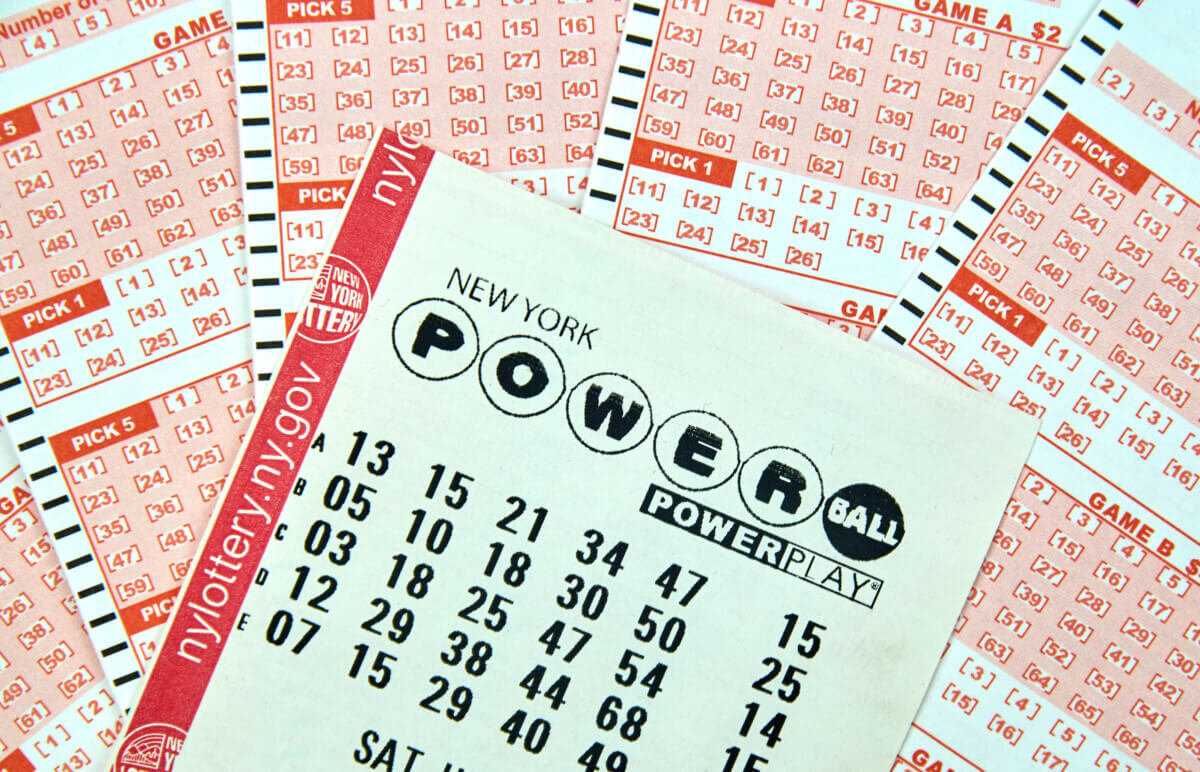
(© dennizn - stock.adobe.com)
In A Nutshell
- Philosophers explain death’s badness by what it deprives a person of, but that same formula makes trivial non-events, such as never finding a magic lamp or losing a lottery, count as major misfortunes.
- Anna Folland of Roskilde University works through the central responses to that gap, including Ben Bradley’s appeal to irrationality and Neil Feit’s accessibility condition, and argues that each one she examines fails.
- Folland extends the problem to the Counterfactual Comparative Account of Harm, a prominent philosophical account, using a lottery bet that “harms” a winner and a heart attack that “harmlessly” kills Batman.
- Work of this kind is philosophical argument, not empirical research: there is no sample, no data, and no test, and the case rests on shared intuitions readers may not share.
Losing a lottery drawing costs a person millions of dollars they will never have. Dying young costs a person decades of birthdays, meals, arguments, and ordinary Tuesday afternoons they will never have. Both are losses. Only one of them gets treated as a tragedy, and a new paper argues that more than twenty-five years of philosophical attempts to explain the difference still have not solved the problem.
That failure is the subject of a new paper in The Journal of Ethics by Anna Folland, a philosopher at Uppsala University now based at Roskilde University in Denmark. Folland works through the leading attempts to solve the puzzle, one by one, and concludes that every one of them collapses under pressure. Worse, she argues, the same crack runs through one of the most popular philosophical accounts of what it means to harm someone at all.
Stakes here are higher than an academic squabble about word choice. If leading accounts cannot explain why premature death deserves dread and a losing lottery ticket does not, then an important piece of philosophical thinking about badness and harm may be resting on shakier ground than its defenders assume.
Why Death Is a Misfortune, According to a 2,300-Year-Old Argument
Epicurus, writing in ancient Greece, insisted that death is nothing to the person who dies. His reasoning was blunt: only sensation can be good or bad for a person, and death is the end of sensation, so death cannot be bad for the one who dies, and it does not deserve fear or grief.
Modern philosophers mostly reject that. Their standard response is called deprivationism, and it says death is bad because of what it takes away. A person who dies at 30 misses out on everything the next 50 years would have held. On this view, a state of affairs is bad for someone if she would have been better off overall had it not happened.
Trouble arrived in 1999, when philosopher Kaila Draper pointed out that the same formula makes an enormous number of ordinary non-events catastrophically bad. Draper’s example has become famous in the field: she did not find Aladdin’s lamp today, and had she found it, a genie would have granted her three wishes and her life would have been extravagantly better. By the deprivation formula, not finding the lamp is a disaster of the first order. Yet nobody talks that way. Draper called it “a peculiar use of the word ‘misfortune‘” to say: “I’ve suffered a terrible misfortune today, for I have not happened upon Aladdin’s lamp.”
Draper’s challenge, then, is a demand: explain why death earns fear, sadness, and dread while the missing lamp and the losing ticket earn a shrug. Folland’s paper is, by her account, the first attempt to survey the proposed answers as a group rather than one at a time.

Three Rescue Attempts, Three Failures
First up is an argument from philosopher Ben Bradley, who bites the bullet. On his earlier view, not finding Aladdin’s lamp really is terrible for a person and really does merit bad feelings, but actually sitting around feeling bad about it would be irrational. “There is no necessary connection between the value of something and the all-things-considered rationality of having some feeling about it,” Bradley wrote.
Folland’s counterexample is a cursed version of the lamp. Suppose someone spends her days cheerful about not having found a lamp that would have turned every wish into a catastrophe, wishing for peace and receiving war. Her happiness costs her nothing and interferes with nothing in her life. Something still seems off about the attitude. And because the happiness carries no practical downside, Bradley’s escape hatch, calling the feeling irrational, is simply unavailable. Folland also dismantles the fallback that these lamps are impossible to find so feelings about them cannot be rational, noting that aging and one’s own eventual death are equally inevitable and that regret about both seems perfectly sane.
Second is a fix proposed by philosopher Neil Feit, who adds a condition: something can only be bad for a person if a world where it did not happen is accessible to her, meaning it shares the actual world’s laws of nature or lies within human ability. Magic lamps are out. Dying at 30 is not.
Folland raises a case that sinks it. Imagine unavoidable pain that leads to nothing good and prevents nothing bad, with no accessible world in which the pain is absent. Feit’s rule says the value of that pain for the sufferer is undefined. Common sense says the pain is bad, full stop. Feit himself flagged a related problem using a man named Harry who develops a hereditary disease, since Harry can no more change his genetics than a lottery player can change her odds, which means accessibility cannot sort the disease from the losing ticket. One escape route Feit considered was to grant that a losing ticket is a great misfortune while denying that it deserves much distress. He then punctured that route with a question of his own: “If not having the winning ticket is a misfortune in the same sense that (premature) death is, why should we care so much about the misfortune of death?”
Third is Bradley’s later position, which abandons the puzzle by declaring that death merits no emotional response at all, positive or negative, because emotions fit only things good or bad in themselves, and death is bad only for what it prevents. Folland tests it against a dying person in unrelievable agony who feels peace at the thought of the end. Bradley’s rules say her preference for death is correct, her sadness about her suffering is correct, and her comfort about dying is inappropriate. That combination reads less like a moral insight than a bug report.
Why Death Is a Misfortune Matters for the Theory of Harm
Halfway through, Folland turns the argument on a much larger target. Philosophers who study harm lean heavily on the Counterfactual Comparative Account, or CCA, which holds that an event harms a person if she would have been better off overall without it. Same shape as the badness theory, same vulnerability.
Consider a lottery with two winning six-figure numbers paying different amounts. A player bets on 444444 and wins 1,000 dollars. Had she not bet on it, she would have bet on 333333, the other winner, worth 2,000 dollars. By CCA, her winning bet harmed her. Nobody would counsel distress over it, which is exactly the mismatch CCA was supposed to avoid.
Running the problem backward is no kinder. Folland borrows a case Bradley invented: “Suppose Batman drops dead of a heart attack. A millisecond after his death, his body is hit by a flaming cannonball. The cannonball would have killed Batman if he had still been alive.” Since Batman was doomed either way, CCA says the heart attack harmed him not at all. A heart attack that kills Batman plainly deserves distress, and CCA cannot say it was a harm.
Folland’s verdict is not that death fails to be a misfortune. Grief at a young death is not on trial here. On trial is the machinery philosophers built to justify that grief, and by her reading, the machinery does not run. An account that counts a missing genie lamp as a great evil, and a winning bet as an injury, has lost contact with the thing it was built to explain.
Paper Notes
Limitations
Work of this kind is argument, not measurement, so it carries no sample, no data, and no statistical test. Its conclusions stand or fall on whether readers share the intuitions it appeals to, and intuitions about magic lamps, cursed wishes, and cannonball-struck superheroes are not universally held. Folland states plainly that space kept her from addressing every proposed solution to Draper’s challenge, listing several she sets aside, including arguments from Draper herself and from philosopher Travis Timmerman. She also concedes she cannot rule out that a good argument exists for a strategy she finds unconvincing, namely the claim that only concrete events, and not states of affairs, can harm a person. Her positive alternative, a fitting-attitudes analysis of harm, appears only as an unpublished manuscript cited in a footnote, so the paper diagnoses a problem without delivering a finished replacement.
Funding and Disclosures
Open access funding was provided by Roskilde University. Folland declares no competing interests. She thanks participants in the Center for Values and Social Policy research seminar at CU Boulder and the Higher Seminar in Practical Philosophy at Uppsala University, along with Jens Johansson, Erik Carlson, Björn Petersson, Henrik Andersson, Chris Heathwood, Alastair Norcross, John Eriksson, and two anonymous reviewers. Published under a Creative Commons Attribution 4.0 International License.
Publication Details
Anna Folland of the Department of Philosophy at Uppsala University in Sweden, with a present address at the Department of Communication and Arts at Roskilde University in Denmark, wrote “Misfortune and Missing Out,” published in The Journal of Ethics, volume 30, pages 365 to 390, in 2026. Submitted August 22, 2025, accepted April 4, 2026, and published online May 27, 2026. DOI: 10.1007/s10892-026-09558-8. Central sources discussed include Kaila Draper’s “Disappointment, Sadness, and Death” in The Philosophical Review (1999), Ben Bradley’s Well-Being and Death (Oxford University Press, 2009), Bradley’s “Doing Away with Harm” in Philosophy and Phenomenological Research (2012), Bradley’s “Fitting Attitudes Towards Deprivations” in Exploring the Philosophy of Death and Dying (Routledge, 2020), and Neil Feit’s “The Time of Death’s Misfortune” in Noûs (2002).


