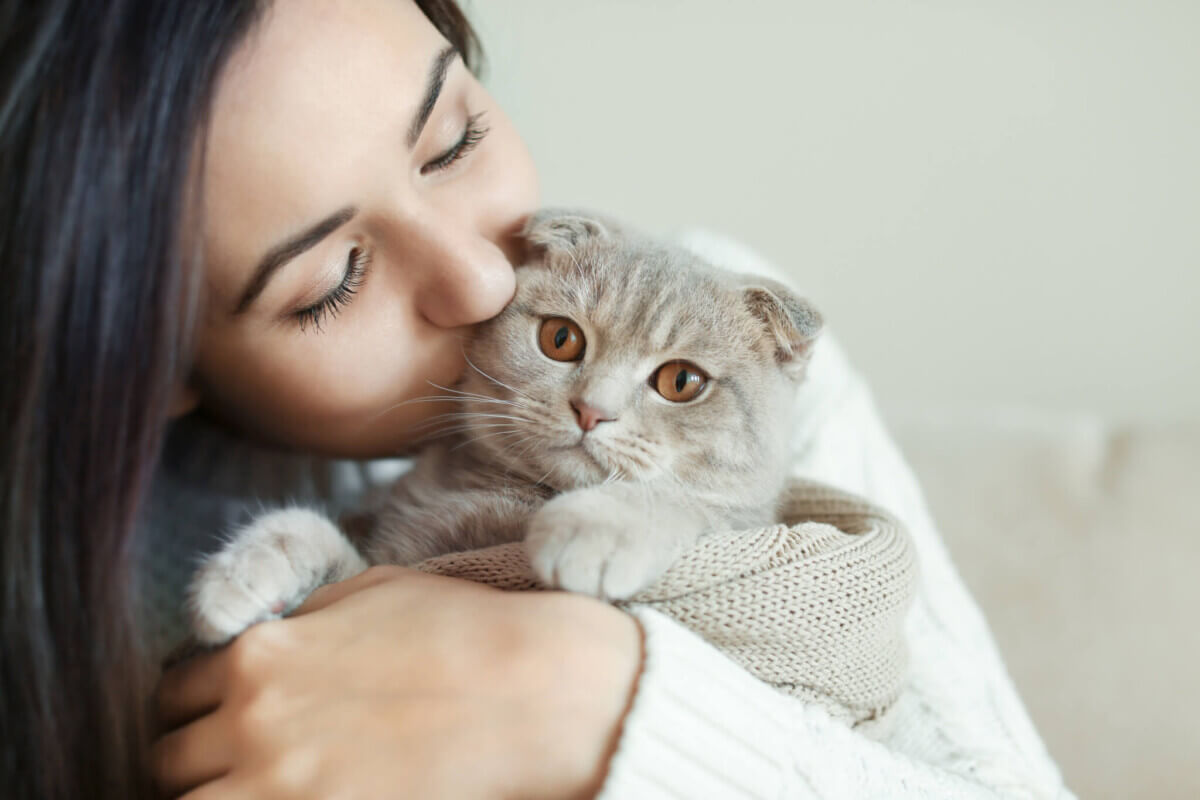
(© Africa Studio - stock.adobe.com)
EAST LANSING, Mich. — The vast majority of dog and cat owners will say their pets enrich their lives in countless ways and bring immeasurable levels of extra happiness, but researchers from Michigan State University suggest that most pet owners may just be telling themselves what they want to hear. Their new study found that despite owners claiming pets improve their lives, researchers did not see a reliable association between pet ownership and well-being during the COVID-19 pandemic.
The pandemic was a stressful time for everyone, to put it lightly. Even the most laid-back among us found themselves overwhelmed by the lockdowns and social distancing guidelines that dominated 2020. So, the research team at MSU theorized that the pandemic represented an ideal time to study just how much comfort and happiness pets really provide to their families.
In all, the study authors assessed a total of 767 people on three separate occasions in May 2020. The research team opted to adopt a mixed-method approach that allowed them to simultaneously assess several indicators of well-being, all while also asking participants to reflect on the role of pets from their point of view in an open-ended manner. Generally, pet owners predictably reported their pets made them happy. More specifically, they said their pets helped them feel more positive emotions and provided affection and companionship.
On the other hand, the participants also articulated the dark side of pet ownership, such as worries related to their pet’s well-being or having their pets interfere with working remotely.

Crucially, however, when study authors actually compared the happiness of pet owners to levels seen among non-pet owners, the datasets showed no difference in the well-being of pet owners and non-pet owners over time. The research team explains it also didn’t matter what type of pet people owned, how many they cared for, or how close a pet was to their person. Researchers also did not deem the personalities of the owners to be a factor either.
“People say that pets make them happy, but when we actually measure happiness, that doesn’t appear to be the case,” says William Chopik, an associate professor in MSU’s Department of Psychology and co-author of the study, in a university release. “People see friends as lonely or wanting companionship, and they recommend getting a pet. But it’s unlikely that it’ll be as transformative as people think.”
Study authors also explored several theories possibly explaining why there was no difference seen between the well-being of pet owners and non-pet owners. One of these hypotheses was that non-pet owners fill their lives with other activities and interests that make them just as happy as a pet would.
“Staking all of your hope on a pet making you feel better is probably unfair and is maybe costly given other things you could do in your life that could improve your happiness,” Prof. Chopik concludes.
The study is published in the Personality and Social Psychology Bulletin.


