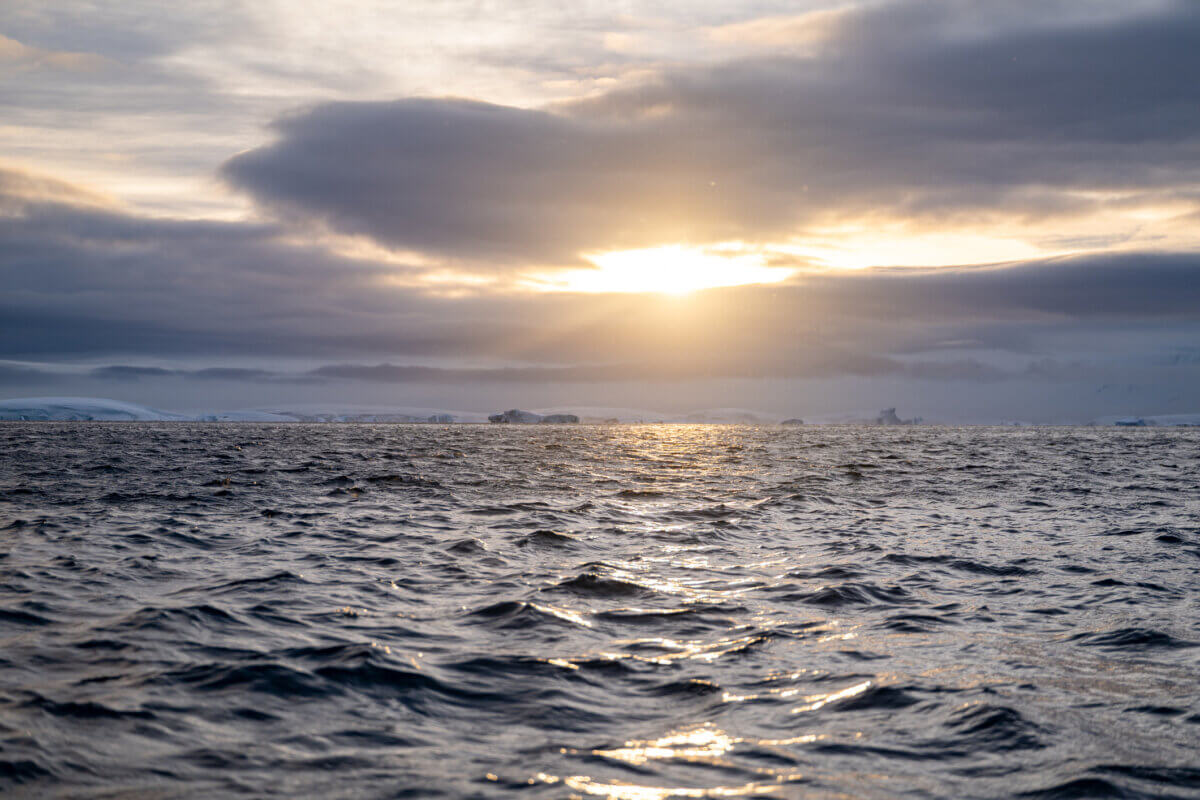
A view of the Southern Ocean. (Credit: © Oleksandr Matsibura | Dreamstime.com)
In a nutshell
- Scientists have discovered that oceans emit a previously overlooked sulfur gas called methanethiol (MeSH) that increases their cooling effect on Earth’s climate by up to 70% in the Southern Ocean region.
- This finding helps explain why climate models have consistently overestimated how much solar radiation reaches the Southern Ocean surface – they weren’t accounting for the additional cooling effect of this marine gas.
- The discovery suggests that marine life plays a more significant role in regulating Earth’s temperature than previously understood, with implications for improving climate change predictions and understanding natural cooling mechanisms.
BARCELONA — Scientists have discovered that the oceans have been secretly helping cool our planet more than we thought through an overlooked sulfur gas produced by marine life. This finding could help explain why climate models have been struggling to accurately predict temperatures over the Southern Ocean, that vast expanse of water surrounding Antarctica.
For decades, scientists focused on another sulfur compound called dimethyl sulfide (DMS), known for creating the evocative smell of shellfish, as the ocean’s main cooling contributor. DMS gets released into the air from tiny marine organisms and helps form clouds that reflect sunlight back to space. However, this new research published in Science Advances reveals that its chemical cousin methanethiol (MeSH) has been working behind the scenes all along, playing a much bigger role in cooling than previously recognized.
“This is the climatic element with the greatest cooling capacity, but also the least understood,” says Dr. Charel Wohl of the University of East Anglia’s Centre for Ocean and Atmospheric Sciences, in a statement. Wohl spearheaded the research with colleagues at the Institute of Marine Sciences in Spain. “We knew methanethiol was coming out of the ocean, but we had no idea about how much and where. We also did not know it had such an impact on climate.”
Current climate models may need updating to account for this additional cooling effect, especially in the pristine waters of the Southern Ocean where human pollution has less influence. “Climate models have greatly overestimated the solar radiation actually reaching the Southern Ocean, largely because they are not capable of correctly simulating clouds,” explains Dr. Wohl. “The work done here partially closes the longstanding knowledge gap between models and observations.”
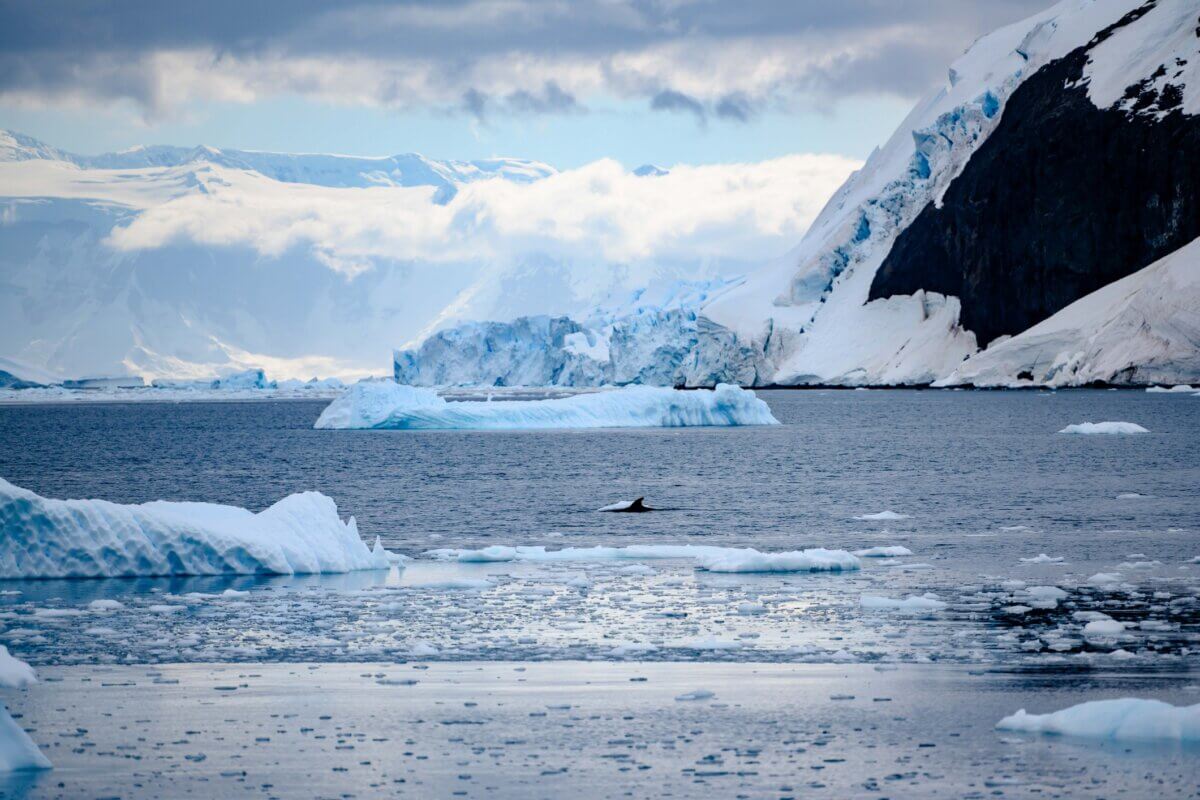
Researchers compiled the first global database of ocean MeSH measurements, gathering data from multiple research cruises spanning from the tropical Atlantic to the icy waters near Antarctica. The measurements covered an impressive range of conditions — from nearly freezing temperatures to warm tropical waters, and from areas with sparse marine life to highly productive regions teeming with microscopic organisms.
What they found was surprising: MeSH concentrations showed distinct patterns based on water temperature and location. In colder waters and open ocean areas, MeSH levels were proportionally higher compared to DMS. Meanwhile, in warmer waters and coastal areas, MeSH made up a smaller fraction of the total sulfur emissions.
“It may not seem like much, but methanethiol is more efficient at oxidizing and forming aerosols than dimethyl sulfide and, therefore, its climate impact is magnified,” says co-lead Dr. Julián Villamayor, a researcher at Blas Cabrera Institute of Physical Chemistry.
When the researchers input these new MeSH measurements into sophisticated climate models, they discovered that including MeSH emissions increased the cooling effect of marine sulfur compounds by 30-70% over the Southern Ocean. This enhancement was particularly strong during the Southern Hemisphere summer when marine life is most active and solar radiation is at its peak.
But MeSH doesn’t just add its own cooling effect, it actually makes DMS more effective too. The team found that MeSH acts like a chemical teammate, competing with DMS for reactive compounds in the atmosphere. This competition allows DMS to survive longer and travel farther, spreading its cooling influence over a wider area.
This tag-team effect between MeSH and DMS leads to more sulfate aerosols, tiny particles that help form clouds and reflect sunlight. The increased aerosol formation was most pronounced over the Southern Ocean, where globally, methanethiol increases known marine sulfur emissions by 25%. The impacts are most visible in the Southern Hemisphere, where there is more ocean and less human activity, and therefore the presence of sulfur from the burning of fossil fuels is lower.
These findings represent a major advance on a groundbreaking theory proposed 40 years ago about the ocean’s role in regulating Earth’s climate. As human-caused sulfur emissions continue to decline due to air quality regulations, understanding natural sulfur sources becomes increasingly important for predicting future climate changes.
Editor’s note: A previous version of this article misrepresented the actual findings of the study by questioning whether climate change was “greatly overestimated.” This suggestion was not posited by the study’s authors. We have since addressed this error internally while updating our previous report. Adhering to the findings of the amazing research we publish is of the utmost importance to us at StudyFinds, and we sincerely regret and apologize for this error.
Paper Summary
Methodology
The researchers used a combination of new measurements and historical data to build their database. They collected seawater samples from various ocean regions and used specialized equipment to measure both MeSH and DMS concentrations. They gathered all available measurements of methanethiol in seawater, added their own measurements from the Southern Ocean and Mediterranean coast, and statistically related them to seawater temperature obtained from satellites. This allowed them to develop a statistical model to predict MeSH levels globally and create comprehensive maps of MeSH emissions.
Results
The study found that MeSH emissions account for about 19% of total marine sulfur emissions globally, with higher proportions (up to 37%) in polar regions. When included in climate models, MeSH increased the atmospheric burden of sulfur compounds by 34% globally and 51% over the Southern Ocean. This led to enhanced formation of cooling sulfate aerosols, with the strongest effects during summer months.
Limitations
The researchers note that MeSH is highly reactive and difficult to measure, which has historically limited available data. Earlier work focused primarily on warmer oceans, whereas the polar oceans are now known to be emission hotspots. The statistical model they developed relies on relationships between MeSH and DMS that may vary under different conditions. Additionally, the climate model simulations include uncertainties related to chemical reaction rates and atmospheric processes.
Discussion and Takeaways
This research suggests that natural marine sulfur emissions play a larger role in climate regulation than previously recognized. The findings help explain persistent biases in climate model predictions over the Southern Ocean and indicate that marine life’s influence on climate may be more significant than thought. The study also highlights the importance of considering multiple sulfur compounds when investigating ocean-climate feedbacks. The discovery will help scientists represent climate more accurately in models used to make predictions of +1.5°C or +2°C warming scenarios.
Funding and Disclosures
The research was supported by multiple institutions including the European Research Council and Spanish Ministry of Science and Innovation. Additional funding came from CONICET and ANPCyT Argentina, National Science Foundation (United States), Alfred Wegener Institute, and the Ministry of Earth Sciences, Government of India. The authors declared no competing interests.
Publication Information
Published in Science Advances (Vol. 10, eadq2465) on November 27, 2024, by Charel Wohl and colleagues. The full paper, titled “Marine emissions of methanethiol increase aerosol cooling in the Southern Ocean,” is available through Science Advances with open access.


