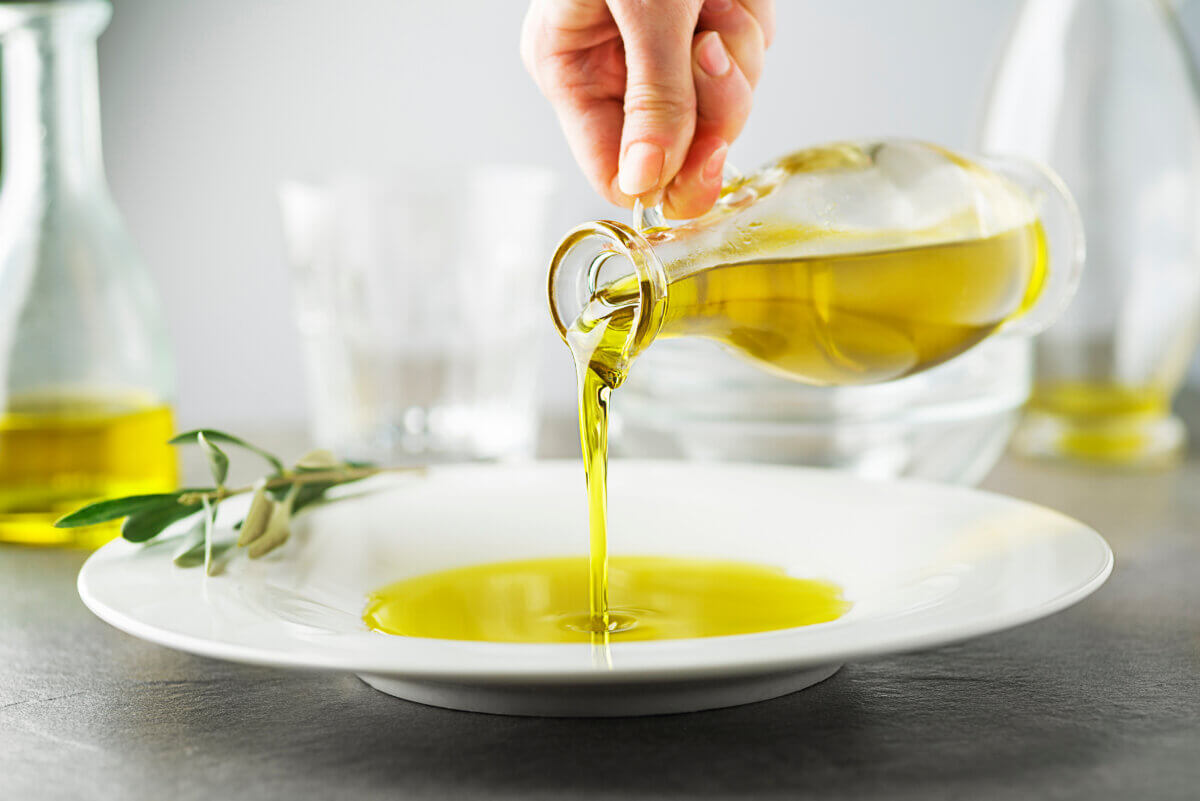
(Credit: DUSAN ZIDAR/Shutterstock)
Olive Oil Slowed the Stomach and Softened Early Blood Sugar Spikes in Mice
In A Nutshell
- Olive oil given 15 minutes before glucose blunted the early blood sugar spike in mice, while oil given afterward did not help.
- Mice with low insulin from damaged insulin-producing cells saw the same benefit.
- Slower stomach emptying drove the effect, with help from two hormones and a gut-brain nerve.
- Results come from mice, so a benefit for people with diabetes remains unproven.
Olive oil proved a better meal opener than closer for mice. Given 15 minutes before glucose, a simple carbohydrate, it blunted the early blood sugar surge that followed; given afterward, it did not help. The trick worked in animals whose insulin-producing cells were badly damaged, pointing to something simple: the order in which foods are eaten.
After a carb-heavy meal, blood sugar climbs fast, and taming that climb is a key goal of diabetes treatment. The condition affected more than 580 million people worldwide in 2025, according to figures cited in the paper. Eating vegetables, protein, or fat before carbohydrates has been linked to smaller spikes. Meal sequencing is appealing, corresponding author Daisuke Yabe of Kyoto University said in a press release, because it “merely changes how a meal is eaten” instead of asking people to give up whole food groups.
Scientists had not pinned down why the order matters. A team from Gifu University and Kyoto University, working with colleagues in Canada, Australia, and Germany, went looking for the body’s wiring and published the work in the journal Diabetes.
Olive Oil Given First Shrank Early Blood Sugar Spikes
Main experiments used 8-week-old male mice, five to six per group. After an overnight fast, one group got olive oil 15 minutes before a glucose solution, another got it 15 minutes after, and a third got plain water first for comparison. All three groups then received the same glucose dose. The oil dose was 5 milliliters per kilogram of body weight, a hefty fat dose for a mouse, by the authors’ account. Blood draws over the next two hours tracked blood sugar, insulin, and several digestion hormones. A separate test followed acetaminophen, a common pain reliever, through the bloodstream to show how fast the stomach emptied.
Mice that got oil first had significantly lower blood sugar 15 and 30 minutes after the glucose and emptied their stomachs more slowly than the other groups. That pace matters because the stomach decides how quickly glucose reaches the intestines and then the blood. Insulin stayed about the same in all three groups, but digestion hormones rose more sharply when oil came first.
That benefit was early, though. Total blood sugar across the full two hours did not differ significantly between groups, and no rebound spike appeared later, so the oil mainly flattened the first surge. Other fats varied: flaxseed oil resembled olive oil, fish oil did little, and lard worked better than coconut oil.

Olive Oil Still Blunted Blood Sugar Spikes in Diabetic Mice
To approximate diabetes, the team repeated the test in two kinds of mice. One group received a chemical that damages insulin-producing cells, leaving insulin levels, in the researchers’ words, “markedly reduced.” The other was a strain that develops diabetes on its own. In both, olive oil first lowered the early blood sugar rise compared with water or oil afterward.
Because the oil worked without an insulin boost, hormones from insulin-producing cells are unlikely to be the main drivers, according to the authors. Slower delivery of glucose from the stomach looks like the real action. Chemically damaged mice only approximate human diabetes.
Backup Hormones and a Nerve Helped Slow Stomach Emptying
Next came the question of which hormones matter. Glucagon, a pancreas hormone better known for raising blood sugar, and GLP-1, a gut hormone, can each slow the stomach. Researchers used mice bred without the gene that makes both (it also makes other related hormones), mice missing only the receptor GLP-1 docks onto, and drugs that block each hormone’s pathway.
Without the gene, olive oil lost its power over blood sugar and the stomach. Mice lacking only the GLP-1 receptor largely kept the benefit, and so did mice with either pathway blocked alone. Blocking both weakened the blood sugar benefit and erased any detectable slowing of the stomach. Together, those results point to a backup system: when one hormone’s route is blocked, the other can carry the signal.
A separate experiment targeted the vagus nerve, a communication line between the gut and brain. Researchers tied off the nerve in some mice and performed a similar operation without tying it in others. Two weeks later, olive oil’s effects were weakened or gone, even though the hormones stayed just as high or climbed higher. The nerve may help translate hormone signals into slower digestion, although the surgery itself slowed the stomach, which muddies the comparison.
Why order mattered remains a guess. When glucose arrives first, its quick absorption may dull how glucagon-producing cells in the pancreas respond to fat, the authors propose, while oil first may switch on fat-sensing pathways before blood sugar climbs. How the gut hormones respond is less clear.
Mouse results cannot show that olive oil before eating helps people with diabetes. The dose was large, and only a glucose solution was tested, not full meals. Still, the experiments make a case for testing meal order in human trials, since slowing the stomach worked even when insulin was scarce.
Disclaimer: This article summarizes a mouse study and is for informational purposes only. It is not medical advice. Anyone with diabetes or another health condition should talk with a healthcare professional before changing diet or treatment.
Paper Notes
Limitations
Authors listed several limitations. Acetaminophen appearance in the blood reflects liquid-phase stomach emptying and is influenced by intestinal absorption and liver metabolism, so it may track only weakly with scintigraphy, the gold standard method, and confirmation with direct methods and solid mixed meals is warranted. The hormone amylin, released alongside insulin and a possible contributor to slower stomach emptying, was not measured. Mice lacking the glucagon receptor were not used, so direct tests of glucagon’s receptor-specific role are missing. Cutting off vagus nerve signaling itself slowed stomach emptying, and the two-week interval before testing may have been too short for full adjustment, so altered baseline motility and a ceiling effect may have hidden additional slowing from olive oil. The oils were not directly analyzed, so explanations for why flaxseed and olive oil outperformed fish oil remain speculative, and the proposed explanations for why timing matters were not tested. The 5 milliliters per kilogram dose is a substantial single fat load, and long-term effects, feasibility, and adherence at everyday doses in free-living humans remain undetermined. Additional context: groups were small (five to six mice each), and the main experiments used male mice, while the paper does not specify the sex of the gene-deficient mice, so results may not apply to females.
Funding and Disclosures
Funding came from KAKENHI grants from the Japan Society for the Promotion of Science, a research grant from the Japan Association for Diabetes Education and Care, a research grant from the Suzuken Memorial Foundation, and the Japan Agency for Medical Research and Development’s Practical Research Project for Lifestyle-Related Diseases. Several authors reported research grants, consulting fees, or speaker fees from pharmaceutical companies, including Novo Nordisk, Ono Pharmaceutical, Eli Lilly, Sumitomo Pharma, and Boehringer Ingelheim, as detailed in the paper. The control antibody was obtained from Novo Nordisk, and author Daniel J. Drucker holds the Banting and Best Diabetes Centre Novo Nordisk Chair in Incretin Biology. Author Michael Horowitz reported past advisory ties to Glyscend Therapeutics, which ceased operations in January 2025, and unpaid advisory roles with two other companies. Author Daisuke Yabe is an editor of Diabetes but was not involved in decisions on this manuscript. The authors used ChatGPT Plus for language editing and took full responsibility for the content.
Publication Details
Titled “Olive Oil Before Oral Glucose Delays Gastric Emptying and Lowers Glycemia Through Partially Redundant Glucagon and GLP-1 Signaling in Mice,” the paper was written by Yanyan Liu, Hiromi Tsuchida, Sodai Kubota, Saki Kubota-Okamoto, Takehiro Kato, Yukio Horikawa, Shin Tsunekawa, Hitoshi Kuwata, Yuuka Fujiwara, Yuji Yamazaki, Yuichiro Yamada, Hiroki Fujita, Katsumi Iizuka, Naoya Murao, Shinji Ueno, Yusuke Seino, Atsushi Suzuki, Yoshitaka Hayashi, Tsuyoshi Nakanishi, Daniel J. Drucker, Takahiko Shiina, Yasutake Shimizu, Yusaku Iwasaki, Toshihiko Yada, Yohei Seno, Yuya Takahashi, Toshinori Imaizumi, Takaaki Murakami, Michael Horowitz, Yutaka Seino, and Daisuke Yabe. The corresponding author is Daisuke Yabe of Kyoto University Graduate School of Medicine. It was received June 18, 2026, accepted August 27, 2026, and published in the journal Diabetes, a publication of the American Diabetes Association (2026, volume 75, issue 12, pages 1 to 12). DOI: https://doi.org/10.2337/db26-0531. Daisuke Yabe’s quote comes from the press release issued with the study.


