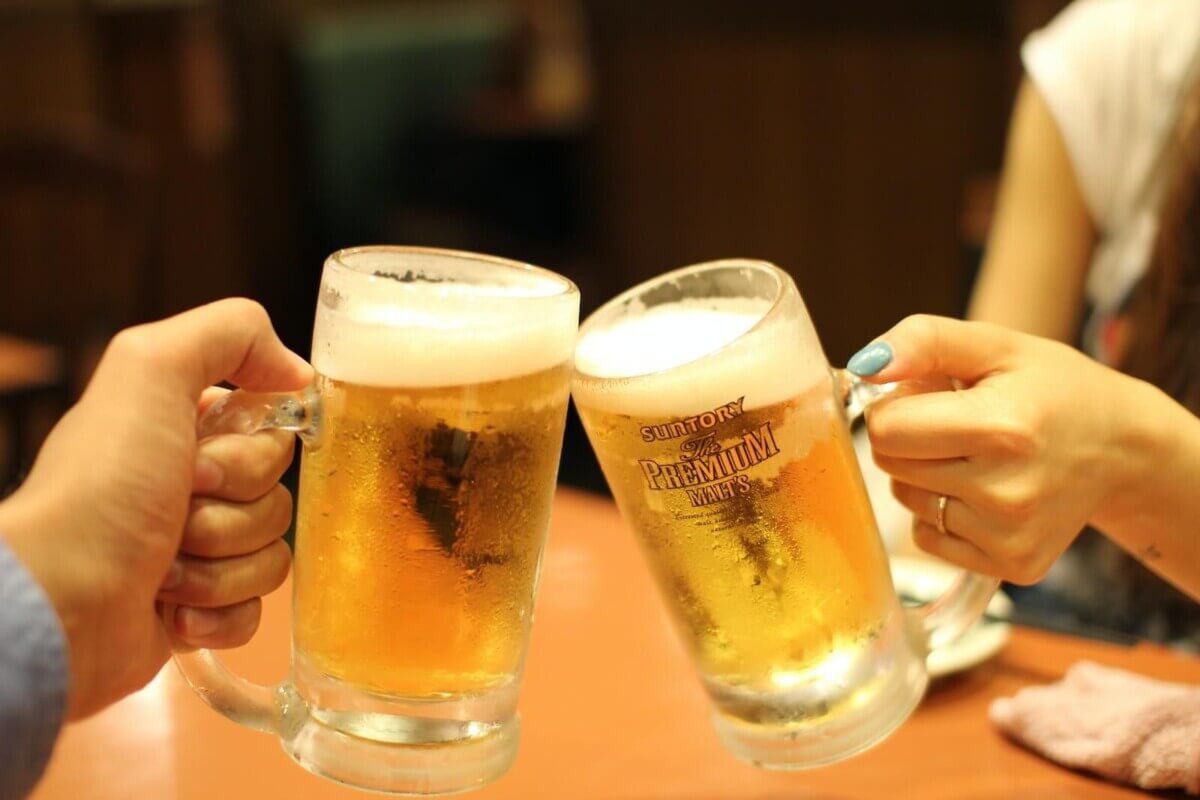
(Photo by kazuend on Unsplash)
In A Nutshell
- Researchers found no meaningful difference in vitamin B6 levels between alcohol-free and full-strength beers, suggesting dealcoholization does not strip the vitamin from the beverage.
- Vitamin B6 content in beer depends far more on the type of grain used than on brewing technology, with barley-based beers like bock leading the pack and rice beer finishing last.
- Scientists detected a maltose-linked form of vitamin B6 in beer for the first time, though its origin in the brewing process remains unclear.
- A standard half-liter lager provides roughly 15 to 18% of the recommended daily B6 intake, with alcohol-free versions delivering comparable amounts.
Cracking open an alcohol-free beer after a long day delivers similar amounts of a nutrient your body genuinely needs, without the health risks tied to alcohol. A new analysis of 65 German beers found no meaningful difference in vitamin B6 levels between alcohol-free and full-strength varieties, adding another point in favor of a category that has exploded in popularity worldwide.
Vitamin B6 helps power more than 150 chemical reactions in the body, from building brain chemicals like dopamine and serotonin to breaking down fats and processing proteins. A shortage of B6 has been linked to heart disease risk, depression symptoms, diabetes, inflammation, and cancer. Recent European studies found 20% of adolescent participants had insufficient levels, while an earlier American study put the deficiency rate in the general population at 11%.
Global consumption of alcohol-free beer reached 75 million hectoliters in 2024. In 2023, the World Health Organization stated there is no safe threshold for alcohol consumption, citing links to cancer risk and other health harms. Against that backdrop, an alcohol-free beer that still contains measurable amounts of vitamin B6 starts to look less like a compromise and more like a reasonable choice.
How Researchers Measured Vitamin B6 in Beer
A team at the Technical University of Munich developed a highly sensitive laboratory method to measure not just the well-known forms of vitamin B6, but also several less-studied, sugar-attached versions that had never been properly measured in beer before. One form, where the vitamin is bonded to a sugar called maltose, had never been detected in beer at all prior to this work.
All 65 beers spanned nine categories: lager, alcohol-free lager, unfiltered lager (known as “Keller beer”), wheat beer, alcohol-free wheat beer, pilsener, bock beer, dark beer, and rice beer. All samples were purchased from local German supermarkets and brewed under Germany’s strict regulations, meaning the results may not apply to beers made elsewhere with different ingredients or standards. Each sample was prepared and measured three times using a technique considered the gold standard in food chemistry.

Alcohol-Free Beer and Vitamin B6: What the Numbers Showed
Total vitamin B6 levels across all 65 beers ranged from 95.3 to 1,020 micrograms per liter. Bock beer, a strong and malt-heavy style, came out on top at an average of 808.2 micrograms per liter. Rice beer sat at the bottom with just 185.3. Lager-style beers landed in the middle, averaging around 515 micrograms per liter.
Alcohol-free lager averaged 461.8 micrograms per liter compared to 515.0 for regular lager, a gap that was not statistically meaningful. Same result for wheat beer and its alcohol-free counterpart. Removing the alcohol did not strip away the vitamin B6.
Wheat beers had significantly lower B6 levels than lager-type beers regardless of alcohol content. Researchers traced this to raw ingredients: barley, the primary grain in lager, contains roughly 560 micrograms of B6 per 100 grams, while wheat comes in at about 269 micrograms per 100 grams. Rice, at 150 micrograms per 100 grams, explains why rice beer ranked last.
“Variations in vitamin B6 composition were primarily associated with raw materials rather than with brewing technology,” the researchers wrote in the study, published in the Journal of Agricultural and Food Chemistry.
The grain a brewer picks matters far more than whether the beer is filtered, fermented differently, or has its alcohol removed.
A First-of-Its-Kind Discovery in Beer Chemistry
Researchers also measured three different sugar-attached forms of vitamin B6, including one linked to maltose that had never been identified in beer before. Where this maltose-linked compound originates remains an open question. Two possibilities were proposed: it may form when starch-digesting enzymes break down larger sugar chains that already carry vitamin B6, or it may be assembled by enzymes activated during an early brewing step.
Alcohol-free beers produced by methods that suppress fermentation, leaving behind higher residual sugar, contained roughly five times more of the glucose-linked B6 form than fully fermented versions. This suggests yeast may break down the sugar-vitamin bond during fermentation. Yet fully fermented alcohol-free beers still had higher total B6 levels overall, hinting that fermentation may release additional forms of the vitamin from grain.
Worth noting: some sugar-bound forms, especially the glucose-linked version, may be absorbed less efficiently by the body. Prior research estimated absorption at only 50 to 58% for that form. So while two beers might look equivalent on a lab readout, the amount the body actually uses could differ depending on how much B6 is locked to sugars. In a single serving, that difference is likely modest.
What a Pint Actually Contributes to Daily B6 Needs
Recommended daily intake of vitamin B6 is 1.4 milligrams for women and 1.6 milligrams for men. A half-liter glass of lager, based on this study’s data, would deliver roughly 250 micrograms, covering about 15 to 18% of that daily target. For alcohol-free options, the numbers are essentially the same.
Beer is not a substitute for a balanced diet rich in poultry, fish, potatoes, and chickpeas. But for a growing population choosing alcohol-free beer for health reasons, the data offers a straightforward reassurance: removing the alcohol does not appear to cost the beverage its B6 content.
Disclaimer: This article is based on peer-reviewed research, but it is intended for general informational purposes only and should not be taken as medical or nutritional advice. Consult a qualified healthcare professional for guidance specific to your health needs.
Paper Notes
Limitations
The study analyzed 65 beers, but some subcategories had small sample sizes. Rice beer included only three samples and dark beer included five, which limits the statistical power of conclusions about those specific subgroups. The method was not tested through trials at other laboratories, though the researchers indicated this would be addressed in future work. How well the body absorbs the measured vitamin B6 forms was discussed based on prior research rather than measured directly in this study. The origin of the newly detected maltose-linked vitamin B6 form remains inconclusive and can only be hypothesized at this stage. Additionally, all beers were brewed under Germany’s purity-oriented regulations, and results may not apply to beers made in other countries with different ingredients or standards.
Funding and Disclosures
The article is published under a CC-BY 4.0 open-access license. No specific external funding sources or conflicts of interest were reported. The authors acknowledged support from staff at the Chair of Molecular Sensory Science at the Technical University of Munich for NMR experiments and from the Wissenschaftliche Station für Brauerei in München e.V.
Publication Details
Title: Quantitation of Vitamin B6 Vitamers and Glycosides in German Alcohol-Free and Full-Strength Beer by a Stable Isotope Dilution LC–MS/MS Method | Authors: Simone Jahner, Elias Geilich, Carina Hagenauer, and Michael Rychlik | Affiliations: Chair of Analytical Food Chemistry, Technical University of Munich, Freising, Germany; Centre for Nutrition and Food Sciences, University of Queensland, Brisbane, Australia (Michael Rychlik) | Journal: Journal of Agricultural and Food Chemistry | DOI: https://doi.org/10.1021/acs.jafc.5c14229 | Received: October 23, 2025; Revised: March 21, 2026; Accepted: March 25, 2026


