Photo by Victor Freitas on Unsplash
BETHASDA, Md. — Are you experiencing blurry vision or trouble seeing with crystal-clear sharpness? While you might think spending hours binge-watching Netflix or scrolling TikTok led to your eye problems, there is a chance it could be an entirely new disease. Researchers from the National Eye Institute have discovered this new disease — that doesn’t even have a name yet — affects the part of your eye that’s necessary to see the world in sharp detail.
The macula is one small part of the retina, a thin layer of tissue in the back of the eye. While small, it plays an important role in capturing light and sending electrical impulses to the optic nerve and later the brain. The electrical signals help your brain translate the light into colorful and bright images. However, when a person’s macula is not functioning correctly, such as those with macular dystrophies, it can cause central vision loss.
Disorders of the macula tend to involve genetic mutations. For example, the genetic eye disease Sorsby Fundus Dystrophy results from changes to the TIMP3 gene. TIMP3 is a protein that helps with blood flow in the eye. A layer of tissue that supports the retina’s light-sensing photoreceptors secretes this protein. TIMP3 gene mutations tend to emerge in mature proteins after they separate from the tissue. The TIMP3 genetic mutations may cause vision impairment from the leakage of abnormal blood vessels growing under the retina.
“We found it surprising that two patients had TIMP3 variants not in the mature protein, but in the short signal sequence the gene uses to ‘cut’ the protein from the cells. We showed these variants prevent cleavage, causing the protein to be stuck in the cell, likely leading to retinal pigment epithelium toxicity,” comments lead author Bin Guan, PhD, in a media release.
Scientists figure out how to spot the new disease
The team studied the clinical and genetic outcomes of family members related to the two patients with TIMP3 mutations not in the mature protein. Doing so allowed them to verify differences from other eye disorders.
“Affected individuals had scotomas, or blind spots, and changes in their maculas indicative of disease, but, for now, they have preserved central vision and no choroidal neovascularization, unlike typical Sorsby Fundus Dystrophy,” describes Cathy Cukras, MD, PhD, a study co-author and a medical retina specialist who clinically evaluated the patients.
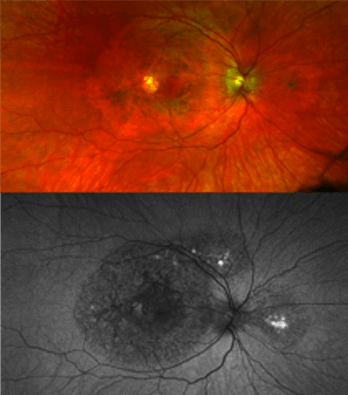
Understanding the biological mechanisms that lead to the new disease could help in making more accurate diagnoses in people with TIMP3 genetic mutations and guide towards more effective treatments.
The study is published in JAMA Ophthalmology.


