(Credit: Pixel-Shot/Shutterstock)
Christmas is the season to be jolly, but it’s wrapped in some cheerless trials. There’s car park mania, pre-dawn pilgrimages to purchase seafood, and the ever-perplexing question, “What should I buy family and friends for Christmas?”
I have no tips for parking zen or pilfering prawns, but here’s a solution for your gift-giving puzzle: how about a musical instrument?
They come with physical and mental benefits, and there’s an instrument to suit everyone.
The gift of an instrument can solve your problem and revive everyone’s jollies.
Gifts from playing musical instruments
Research shows that playing an instrument is good for our brains across the lifespan.
Studies of children and adolescents have linked learning an instrument with a positive effect on cognitive skills and academic achievement.
Studies on the elderly suggest playing protects against dementia and cognitive decline.

Playing an instrument is a gift for our fine motor skills. A Canadian study found university students who had learned an instrument performed better at beginner surgical skills. Likewise, research on older adults found that one year of piano lessons improved players’ hand control.
Learning an instrument opens the door to social connection: one-to-one interaction with a teacher, participating in group lessons, joining ensembles, starting a band, and performing for others. In a lonely world, players can experience belonging, confidence, and collaboration.
Combined, the findings suggest giving a musical instrument is like giving multiple gifts. So, here’s some suggestions for matching the right instrument with the right person.
For fitness fans
A drum kit can liven up the exercise routines of fitness fans and engage energetic kids.
Studies of rock and heavy metal drumming measured players’ heart rate and oxygen consumption, finding these are relatively high-intensity physical activities.
Don’t worry about the noise of your purchase. According to The Little Drummer Boy, pa-rum-pum-pum-pumming makes babies smile. But if you’re skeptical, an electronic kit with headphones will keep the peace.
For quirky fitness options, look out for second-hand pianolas and pump organs. These musical relics require vigorous pedaling while playing. (Think exercise bike without boredom.)
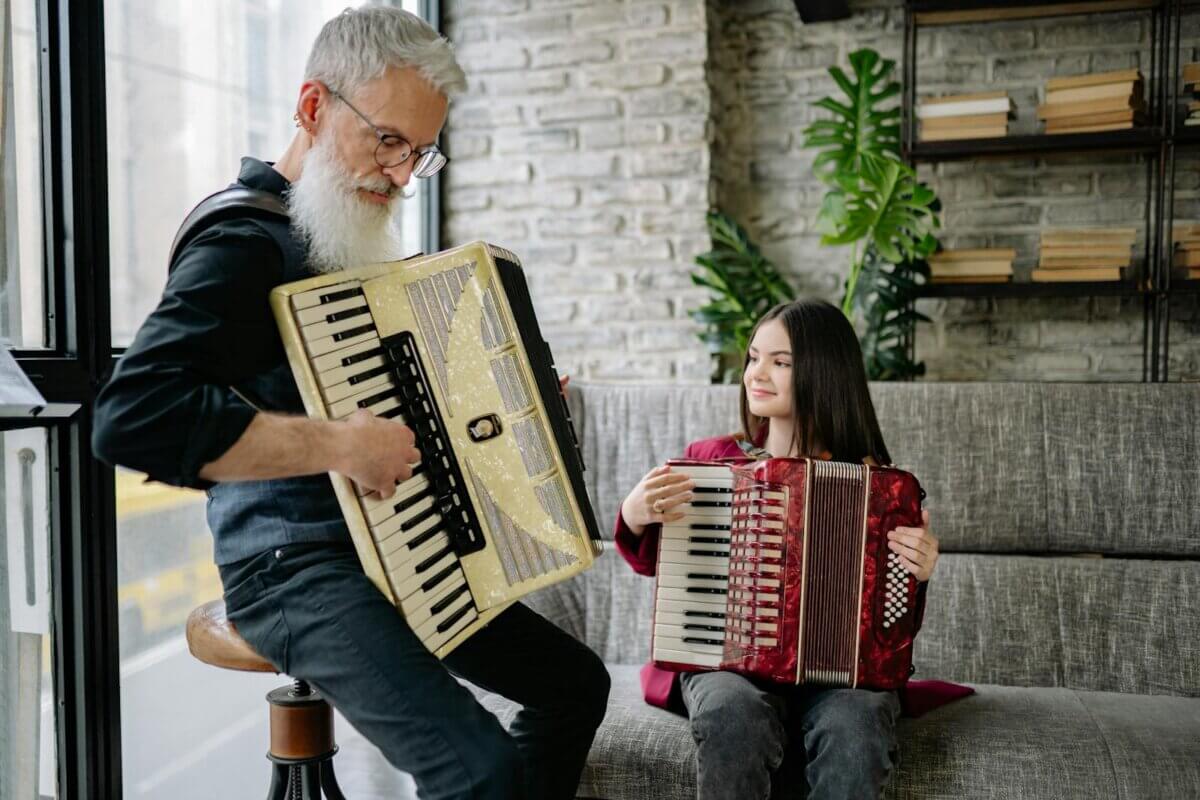
For upper body strength, the weight and pumping action of the accordion can give the arms a workout. Alternatively, if you want something smaller, buy castanets and suggest flamenco dance lessons.
For the creative and the troubled
Researchers have long connected creative expression with mental well-being.
If you’re shopping for expressive relatives, downhearted friends or angsty teenagers, instruments support the healthy emotional outlet of songwriting.
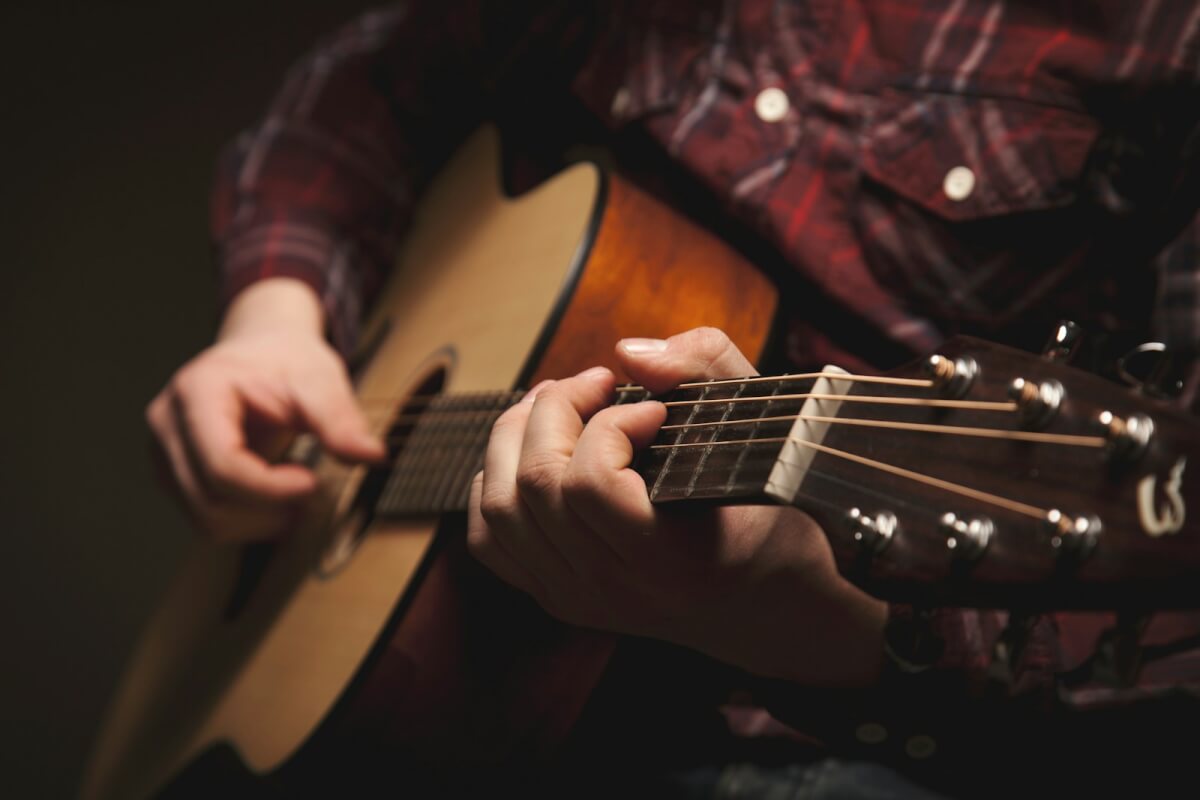
Novice songwriters can play pianos and guitars to accompany themselves while singing their hearts out. These instruments provide a healthy avenue for releasing inner pain.
For the budget-conscious
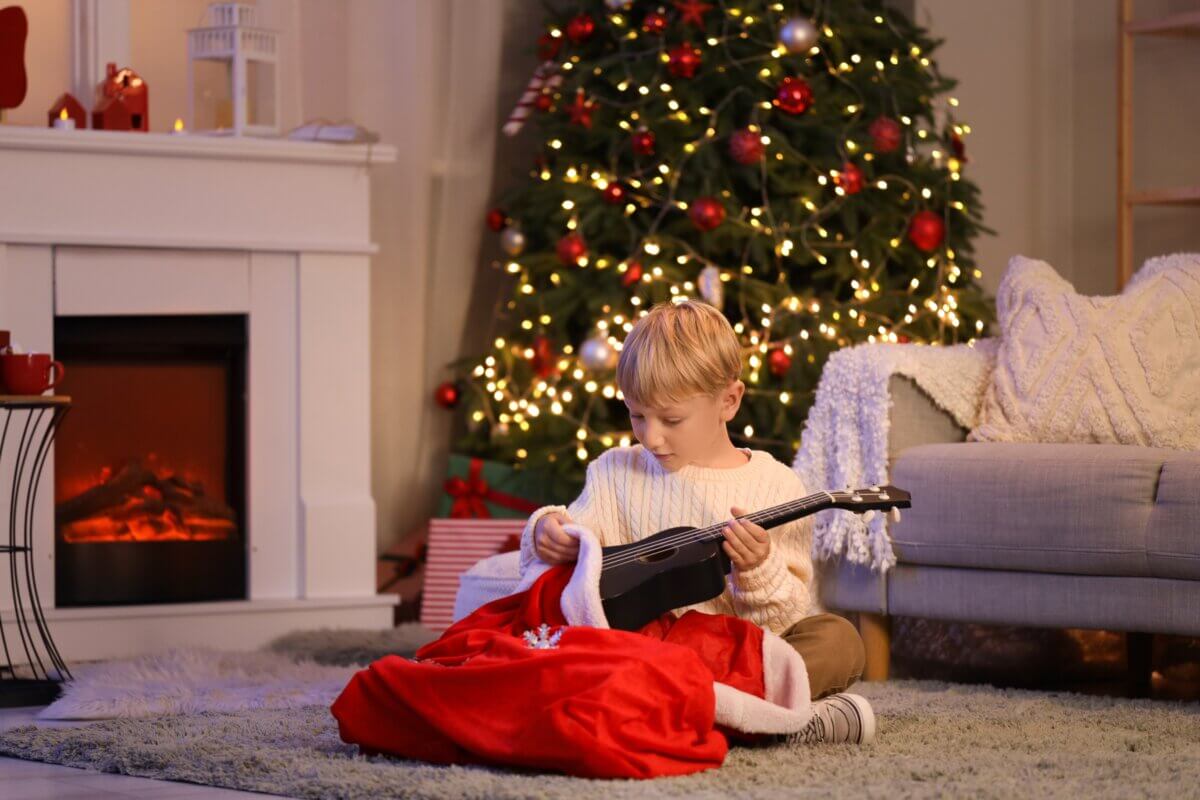
If you’re watching the dollars this year, mini keyboards and ukuleles give singer-songwriters their accompaniment without the expense of pianos or high-end guitars.
Other low-cost musical instruments include harmonicas, glockenspiels, palm-sized clay whistles called ocarinas and that old school favorite, the recorder, which has more advantages than you think.
If purchasing a drum kit is too much, consider cheaper percussion possibilities. Teenagers can enjoy mastering a cajon – a wooden box which street performers sit on and play with their fingers, palms and heels. Youngsters can experiment with handheld percussion, like tambourines and maracas.
You can also keep costs down by watching local advertising for listings of second-hand instruments. Musicians (and their parents) frequently sell beginner models to fund the next instrument upgrade. You can pick up bargains on trumpets, flutes, clarinets, and violins.
For the eco-friendly
When saving the planet tops your Christmas list, check out the range of bamboo instruments.
Bamboo has been used for centuries for instruments such as the shakuhachi (a traditional Japanese flute) and angklung (an Indonesian instrument where players rattle bamboo segments together to produce notes). Today, we value bamboo ecologically because it is natural, biodegradable, re-grows easily, and grows faster than the wood used in other instruments. Its tubular shape and acoustic properties make it an ideal material for musical instruments.
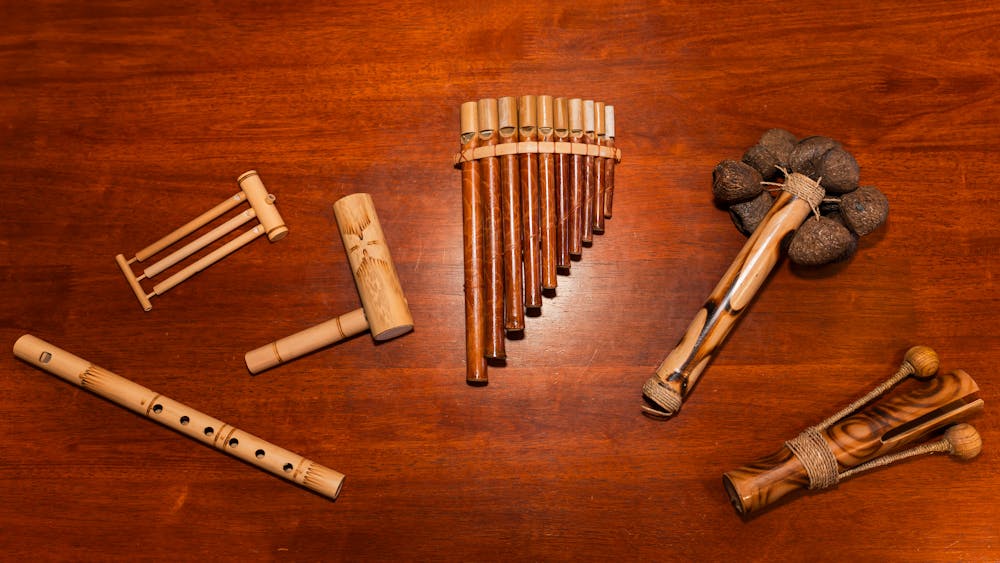
This Christmas, you can pick up bamboo flutes, panpipes, and xylophones.
If recycling is your passion, then lurk around at pre-Christmas drinks and collect discarded beer bottle caps. Then, with a stick, hammer, and nails, you can gift someone a home-made lagerphone while saving the environment.
And for the reluctant musician?
There are hundreds of musical instruments so you’ll never be shopping for the person who has everything. You may, however, encounter the reluctant musician.
Solve this challenge by gifting a novelty instrument, like the comically-sounding kazoo or nose flute (yes, you play it with your nose!).
I can’t vouch for all the benefits, but when you’re sitting around the Christmas table watching Dad trying to play his new nose flute, you’ll unwrap another gift – laughter. That will put the jolly back into Christmas.
Wendy Hargreaves is a senior learning advisor at the University of Southern Queensland.
This article is republished from The Conversation under a Creative Commons license. Read the original article.


