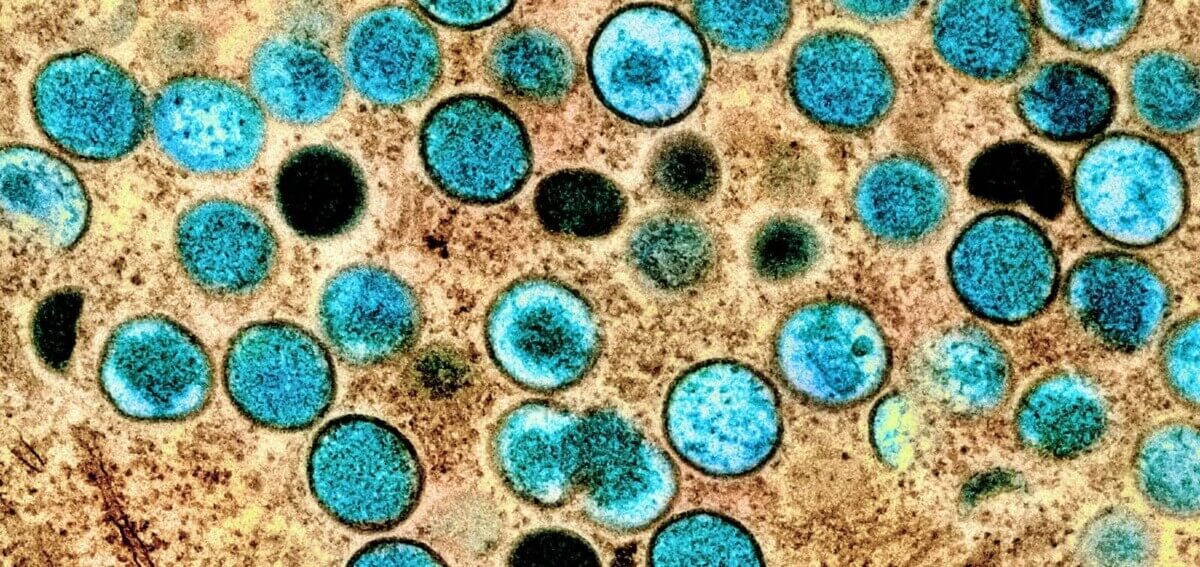
(Photo: NIAID/ISGlobal)
BARCELONA, Spain — A new monkeypox report is raising the level of concern that the virus could infect others through a patient’s bodily fluids. Researchers in Spain have discovered high viral loads in the saliva, semen, urine, and other samples coming from confirmed monkeypox patients.
A team from the Barcelona Institute for Global Health (ISGlobal) notes that monkeypox is the latest zoonotic disease (traveling from animals to humans) to spread around the globe. Over the last six months, there have been more than 9,000 cases of monkeypox reported worldwide.
Study authors say the initial cases in Britain, Portugal, and Spain have been mainly discovered among men who have sex with other men. In the United States, there have been over 1,400 confirmed cases so far.
Until now, researchers say the main way the virus spreads is through direct contact with the lesions on an infected patient’s skin. Contact with surfaces contaminated by these lesions can also spread the virus. However, it’s been unclear whether monkeypox can pass from person to person through bodily fluids like blood and semen.
Monkeypox Update: Here’s what you need to know about the outbreak
Viral loads found in every patient’s saliva
The new study examined various biological samples from 12 patients with a confirmed case of monkeypox. At the time of their diagnosis, doctors found high viral DNA loads in the skin lesions of each patient.
Researchers discovered that all 12 patients also had virus DNA in their saliva, with some of the patients having very high viral loads present. Before this study, only one study had found the virus in a single monkeypox patient’s saliva.
The team also discovered virus DNA in rectal (11 of 12 patients), nasal (10 of 12 patients), semen (7 of 9 patients), and fecal (8 of 12 patients) samples from the monkeypox group.
“A couple of previous studies had already shown occasional presence of viral DNA in some samples and in some patients, but here we show that viral DNA is frequently present in various biological fluids, particularly saliva, during the acute phase of the disease, and up to 16 days after the onset of symptoms in one patient,” explains Aida Peiró, an ISGlobal researcher and first author of the study, in a media release.
Does viral load mean viral transmission?
Although the team found the monkeypox virus in the vast majority of these fluid samples, researchers say that doesn’t necessarily mean it’s infectious. In the next step of their investigation, researchers plan to isolate infectious virus particles from these samples. They add, however, the high viral loads in both saliva and semen suggests that the virus is infectious. This falls in line with previous reports that warn against kissing and sex with monkeypox patients.
“The results of our study contribute to a better understanding of the mechanisms and dynamics of virus transmission, as well as the possible role of sexual transmission,” team leader Mikel Martínez concludes.
The study is published in the journal Eurosurveillance.


