
(Photo by Inside Creative House on Shutterstock)
In A Nutshell
- Adults who most closely followed the DASH diet were 41% less likely to report significant cognitive decline than those who followed it least.
- Following the DASH diet between ages 45 and 54 showed the strongest link to better brain health in old age, suggesting midlife is a critical window.
- All six healthy dietary patterns tested were tied to lower risk of self-reported cognitive decline, pointing to overall diet quality as the key factor.
- Fried potatoes, red and processed meats, and sugary beverages were repeatedly linked to worse cognitive outcomes; vegetables and fish were consistently protective.
Eating well in midlife is standard advice for the heart. A sweeping new study suggests it matters just as much for the brain, and that the time to start paying attention is earlier than most people think.
Researchers tracked the diets and cognitive health of more than 159,000 adults over several decades, testing six popular healthy eating plans against the likelihood of memory complaints and cognitive decline later in life. Every plan was tied to a lower risk of cognitive trouble, but one stood above the rest: the DASH diet, a regimen originally built to lower blood pressure. Adults who followed it most closely were 41% less likely to report significant cognitive decline than those who followed it least. Crucially, the strongest brain benefits showed up when people ate that way during their 40s and early 50s, not in old age.
With dementia expected to affect roughly 150 million people worldwide by 2050, finding modifiable risk factors before symptoms appear has become a research priority. This study, published in JAMA Neurology, is one of the most thorough attempts yet to compare multiple dietary frameworks within the same large population over many decades.
“Results suggest that a healthy diet, such as the DASH diet, was associated with early indicators of cognitive aging, which underscores the importance of a healthy diet for maintaining long-term cognitive health,” the authors wrote.
A Study Built on Decades of Eating Habits
Data came from three long-running Harvard research projects: the Nurses’ Health Study, the Nurses’ Health Study II, and the Health Professionals Follow-Up Study. Together, they enrolled more than 159,000 adults, 82.6% of whom were women, with a mean starting age of 44.3 years. Participants completed detailed food questionnaires every four years, giving researchers a far clearer picture of long-term eating habits than a single dietary snapshot ever could.
Six eating plans were put to the test, ranging from the well-known DASH and plant-based diets to scoring systems that measure how much a person’s diet tends to spike insulin levels or drive inflammation. The more closely someone followed any of the six plans, the lower their reported risk of subjective cognitive decline.
Cognitive health was measured two ways. Participants answered questions about changes in their memory, attention, and ability to think clearly, a measure researchers call subjective cognitive decline. Think of it as the stage where something feels off, but a doctor’s test wouldn’t necessarily catch it yet. A smaller group of older women also completed telephone-based memory and thinking assessments.
To avoid a common pitfall in diet research, the team stopped updating dietary data six years before cognitive assessments. That way, any early, undetected cognitive decline couldn’t quietly change what people were eating and muddy the results.
The DASH Diet’s Surprising Brain Connection
All six eating patterns were tied to lower cognitive decline risk, but the DASH diet showed the strongest and most consistent associations. People in the top tier of DASH adherence were 41% less likely to report significant cognitive decline compared to those in the bottom tier, even after researchers accounted for exercise, smoking, income, blood pressure, and family history of dementia.
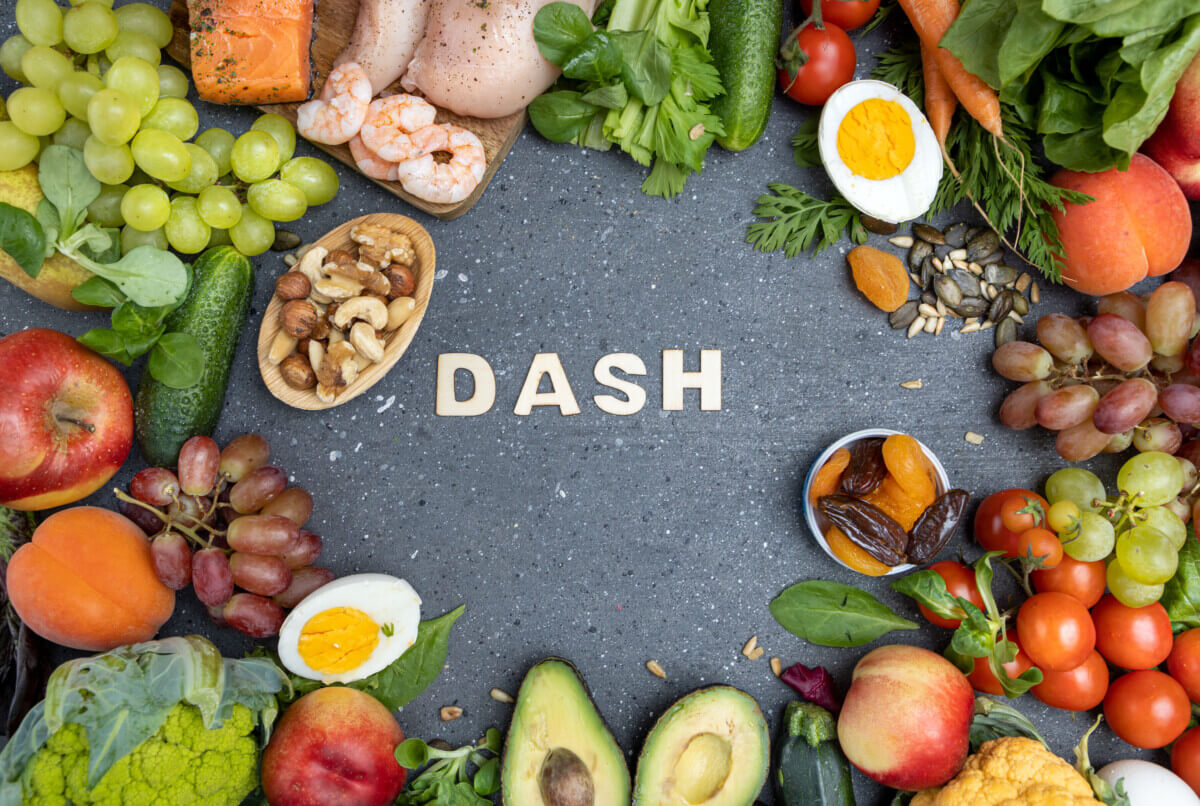
DASH emphasizes vegetables, fruits, whole grains, legumes, and fish while cutting back on red meat, sodium, and added sugar. Its original claim to fame was blood pressure control, and that may be part of the brain story too, since high blood pressure is one of the best-established risk factors for dementia. The researchers were careful to note, however, that they couldn’t confirm blood pressure as the specific mechanism here.
On the objective tests, women who most closely followed the DASH diet had better scores for global cognition, verbal fluency, and working memory than those who followed it least. The difference in global cognition scores was statistically equivalent to being about three-quarters of a year younger in cognitive aging.
Plant-based and planetary health diets also showed real protective associations with self-reported cognitive decline. Those two plans were less consistent on the objective tests, possibly because the testing group was smaller and older.
What Specific Foods Showed Up in the Data
Green leafy vegetables, yellow vegetables, and other produce were consistently tied to better cognitive outcomes. Fish came up as protective, in line with years of research on omega-3 fatty acids. Red meat, processed meat, sugary beverages, and sweets were repeatedly linked to worse outcomes.
Fried potatoes were associated with higher cognitive decline risk and worse test performance. Non-fried potatoes showed no such link, pointing to cooking method rather than the food itself as the issue.
One finding broke from the expected pattern. Higher nut and seed intake was associated with greater self-reported cognitive decline in the study’s food group data, which runs counter to prior research generally supporting nuts as brain-friendly. Researchers didn’t identify a clear explanation, and the result may reflect other factors at play in participants’ overall diets.

Why Your 40s May Be the Most Important Decade for Brain Health
The protective connection between the DASH diet and cognitive decline was detectable even when diet was measured up to 26 years before cognitive assessments in the longest-running cohort. That long lead time makes it less likely that the results are simply a reflection of already-healthy older adults eating well.
More specifically, following the DASH diet between ages 45 and 54 showed the strongest association with reduced cognitive decline in old age. That fits with a growing body of evidence that midlife is when lifestyle habits quietly set the trajectory for brain aging. High blood pressure and type 2 diabetes, both heavily influenced by diet, often take root during these same years and are among the most established drivers of dementia risk down the road.
Like all observational research, this study can’t prove that eating well causes better brain health. People who follow healthy diets tend to have other healthy habits too, and while the researchers adjusted for many of those factors, some degree of uncertainty is unavoidable. The study population was also predominantly White, highly educated health professionals, which means the results may not translate perfectly to everyone.
What’s hard to dismiss, though, is the consistency. Six different dietary frameworks, tested in the same massive population over decades, all pointed in the same direction. That kind of consistency across six different dietary frameworks is notable, and it suggests that overall diet quality, not loyalty to any single eating plan, may be what matters most for the aging brain.
Medical Disclaimer: This article is intended for informational purposes only and does not constitute medical advice. The findings described are based on observational research and do not establish cause and effect. Consult a qualified healthcare provider before making changes to your diet or health regimen.
Paper Notes
Study Limitations
Subjective cognitive decline is self-reported and may be influenced by personal health awareness or reporting tendencies, despite prior validation of the measure. Objective cognitive testing was limited to women aged 70 and older within the Nurses’ Health Study, which may have reduced the ability to detect associations given the narrower age range and similar educational backgrounds of that group. Dietary data came from food frequency questionnaires, which carry inherent measurement error. Although researchers adjusted for a wide range of confounding factors, some degree of uncertainty from unmeasured variables remains. The study population was predominantly White, highly educated health professionals, which may affect how broadly the findings apply. As an observational study, causation cannot be established.
Funding and Disclosures
Funding for the three cohorts was provided by the National Institutes of Health through grants UM1 CA186107, U01 CA176726, and U01 CA167552. Additional support came from the Zhejiang University Global Partnership Fund and the Alzheimer’s Association (AARG-22-928604). Lead author Hui Chen received support from the Zhejiang University Doctoral Academic Rising Star Training Program. Dr. A. Heather Eliassen and Dr. Meir Stampfer reported receiving NIH grants during the conduct of the study. No other conflicts of interest were disclosed. Funders had no role in study design, data collection, analysis, or manuscript preparation.
Publication Details
Authors: Hui Chen, PhD; Marianna Cortese, MD, PhD; Mario H. Flores-Torres, MD, PhD; Anne-Julie Tessier, PhD; Dong D. Wang, MD, PhD; Jae H. Kang, ScD; A. Heather Eliassen, ScD; Meir Stampfer, MD; Alberto Ascherio, MD, DrPH; Walter Willett, MD, DrPH; Changzheng Yuan, ScD; Kjetil Bjornevik, MD, PhD. Affiliations include Harvard T.H. Chan School of Public Health (Department of Nutrition and Department of Epidemiology), Brigham and Women’s Hospital and Harvard Medical School, and Zhejiang University School of Medicine. | Journal: JAMA Neurology | Title: “Dietary Patterns and Indicators of Cognitive Function” | DOI: 10.1001/jamaneurol.2026.0062 | Published Online: February 23, 2026


