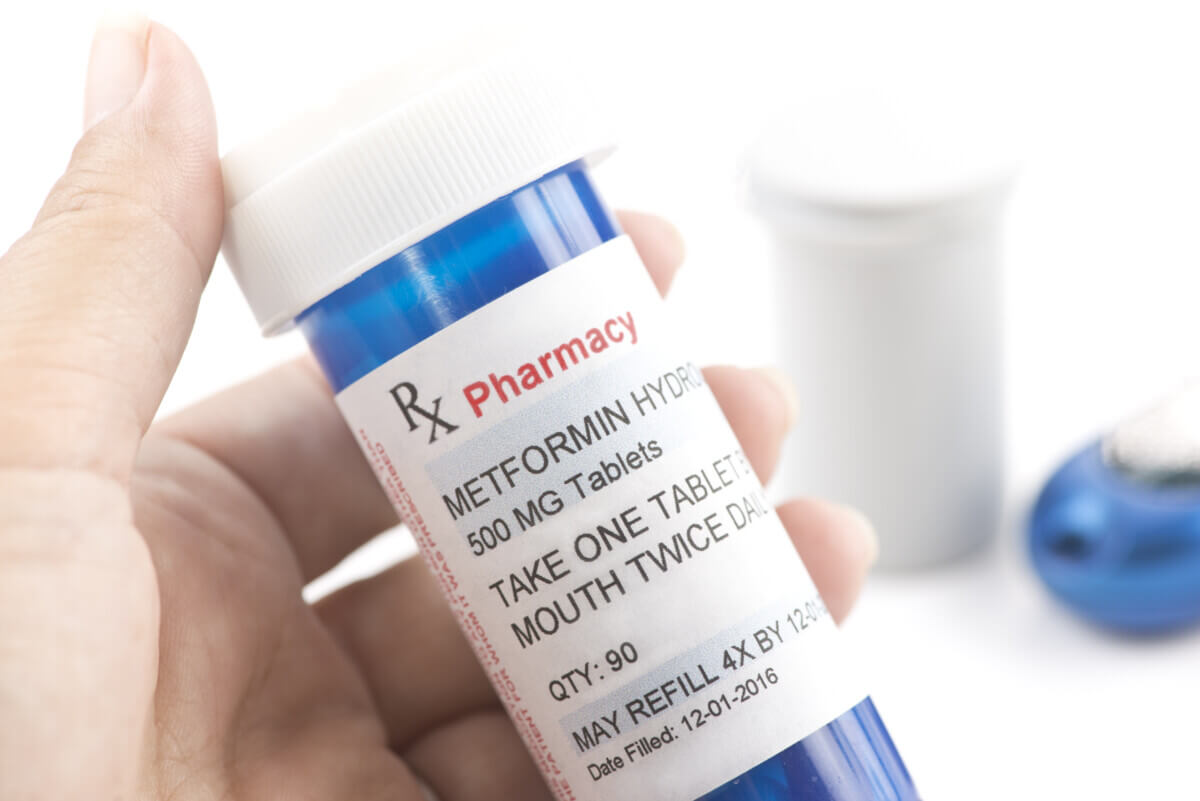
(© Sherry Young - stock.adobe.com)
A Diabetes Pill Is Reshaping the Anti-Aging Conversation
In A Nutshell
- A new scientific review finds metformin, a decades-old diabetes drug, interacts with nearly every major biological process scientists link to aging
- Animal studies show real lifespan gains, from a 36 percent increase in roundworms to a striking drop in biological age in monkeys, but human evidence stays far more mixed
- One widely cited human study claiming a survival benefit has since failed to replicate, and a major clinical trial designed to settle the question has stalled since 2017
- Metformin is not an approved anti-aging treatment, and researchers say it’s too soon for healthy people to take it hoping to live longer
There’s a decades-old diabetes drug scientists are now eyeing for something bigger: whether it can slow aging itself. According to a new scientific review, metformin, the go-to drug for type 2 diabetes, appears to touch many of the same biological switches that control how fast the body wears out.
A team from Hamad Bin Khalifa University in Qatar combed through decades of research on worms, mice, monkeys, and people to figure out why this cheap, decades-old pill keeps coming up in conversations about living longer. Their review, published in the journal Aging, stops well short of calling metformin a miracle drug. It lays out the biological case for the curiosity, staying upfront about how much is still unknown.
That curiosity traces back to geroscience, a field built on a simple idea: instead of treating heart disease, cancer, and dementia as separate late-life problems, what if the aging process behind all of them could be tackled at once? Metformin has become the leading test case, mostly because it already has decades of proven human safety.
Metformin Touches Nearly Every Cellular Process Linked to Aging
Scientists have pinpointed several ways the body breaks down over time: damaged cells that refuse to die and pile up, a slowdown in internal cellular cleanup, and genes that behave differently with age. Metformin appears to nudge an unusually large number of these at once, though researchers still don’t fully understand how.
Much of the action seems to run through AMPK, a molecule that works like a fuel gauge inside cells. Flip it on, and the body slows energy-hungry growth, speeds up internal cleanup, and produces energy more efficiently. AMPK naturally slows with age, so cranking it back up artificially is one reason scientists think metformin might counter some effects of getting older.
Gut bacteria may be doing more work. Metformin, swallowed as a pill, collects in the digestive tract at levels hundreds of times higher than in the bloodstream, where it seems to boost bacteria that calm inflammation, strengthen the gut lining, and help the body manage insulin. One such bacterium, Akkermansia muciniphila, has been linked to less frailty and inflammation later in life.
Metformin also leaves fingerprints on DNA itself, on chemical tags controlling which genes switch on, tags that shift predictably as people age. Scientists track these shifts using epigenetic clocks, biological stopwatches that estimate someone’s age from their DNA rather than their birth certificate. One study of adult men found metformin users had a biological age running roughly three years younger on two different clocks, a correlation, not proof of cause, but the kind of finding that keeps researchers interested.

Animal Studies Show Lifespan Gains, Human Evidence Stays Mixed
This pattern holds up across a surprising range of species, though effect size swings wildly. Roundworms given metformin lived up to 36 percent longer in one study and saw survival jump nearly 40 percent in another. Mice showed more modest gains, from 14 percent to 8 percent longer lifespans, the smaller number tied to slower tumor growth in cancer-prone strains.
A 2024 study in monkeys produced the splashiest result, with metformin shaving years off the biological age of several organs after 40 months of treatment. The brain saw the biggest effect, dropping roughly six years younger, or about 18 human years, linked to a protein called Nrf2 that helps cells fend off everyday wear and tear.
Human data is where the story gets messier. Some studies looking back at patient records found people with diabetes who took metformin lived longer than similar people who didn’t, even outliving some who never had diabetes. But one of the most cited of these studies has since drawn criticism after other researchers couldn’t reproduce it, and an unrepeatable finding isn’t one to build a headline on. A recent trial in frail older adults with muscle weakness found metformin didn’t meaningfully improve physical performance, a result that has researchers wondering whether its benefits, if real, apply evenly to everyone.
That’s the question a massive trial called TAME, short for Targeting Aging with Metformin, was designed to answer, enrolling thousands of older adults without diabetes to track age-related diseases like heart disease, cancer, and cognitive decline. It began in 2017, but no results have surfaced, and researchers suspect funding troubles have stalled it.
Metformin’s Side Effects Range From Mild to Rare but Serious
None of this comes without tradeoffs. A notable share of users deal with stomach trouble like nausea, diarrhea, and vomiting, and long-term use has been tied to vitamin B12 deficiency, which can worsen anemia, nerve damage, and memory problems if unchecked. In rare cases, the drug can trigger a dangerous lactic acid buildup in the blood, a condition with a high death rate more likely in people with kidney or liver trouble, both more common with age.
Metformin is not an approved anti-aging treatment, and nothing here means healthy people should take it to live longer. What the evidence does show is that a cheap, widely available pill built to manage blood sugar interacts with nearly every biological process scientists connect with aging. Whether that adds up to a longer, healthier life for the average person, rather than just for lab worms and monkeys, is a question only bigger human trials can settle. Until then, the honest verdict is promising, but far from proven.
Disclaimer: This article summarizes findings from a published scientific review and is intended for general informational purposes only. It is not medical advice. Anyone considering changes to a medication regimen should speak with a qualified healthcare provider.
Paper Notes
Limitations
The review’s authors note several gaps in the current evidence. Most human studies have been observational rather than controlled trials, and many focused on sick populations, such as diabetes or cancer patients, rather than the general public, making it hard to separate metformin’s anti-aging effects from its effects on existing disease. Study outcomes have also been inconsistent across research, with different trials measuring different things like mortality, cancer rates, or biological age markers, complicating comparisons. One widely cited study claiming a survival benefit for metformin users has reportedly failed replication in later research and should be interpreted cautiously. The authors also point out there is no agreed-upon optimal dose, treatment duration, or ideal age to begin taking the drug for anti-aging purposes, and it remains unclear which groups of people, such as men versus women or diabetics versus non-diabetics, might benefit most.
Funding and Disclosures
One of the authors, Jarra Manneh, is supported by a scholarship from the Qatar Genome Programme (QGP). The authors state they have no conflicts of interest.
Publication Details
The paper, titled “Metformin at the convergence of aging and longevity,” was written by Jarra Manneh, May Alasmar, and Nady El Hajj of the College of Health and Life Sciences and College of Science and Engineering at Hamad Bin Khalifa University, Qatar Foundation, in Doha, Qatar. It was published in the journal Aging (Aging-US), Volume 18, in 2026, as an open access article under a Creative Commons Attribution License. The paper can be found at https://www.aging-us.com/article/206407/text.


