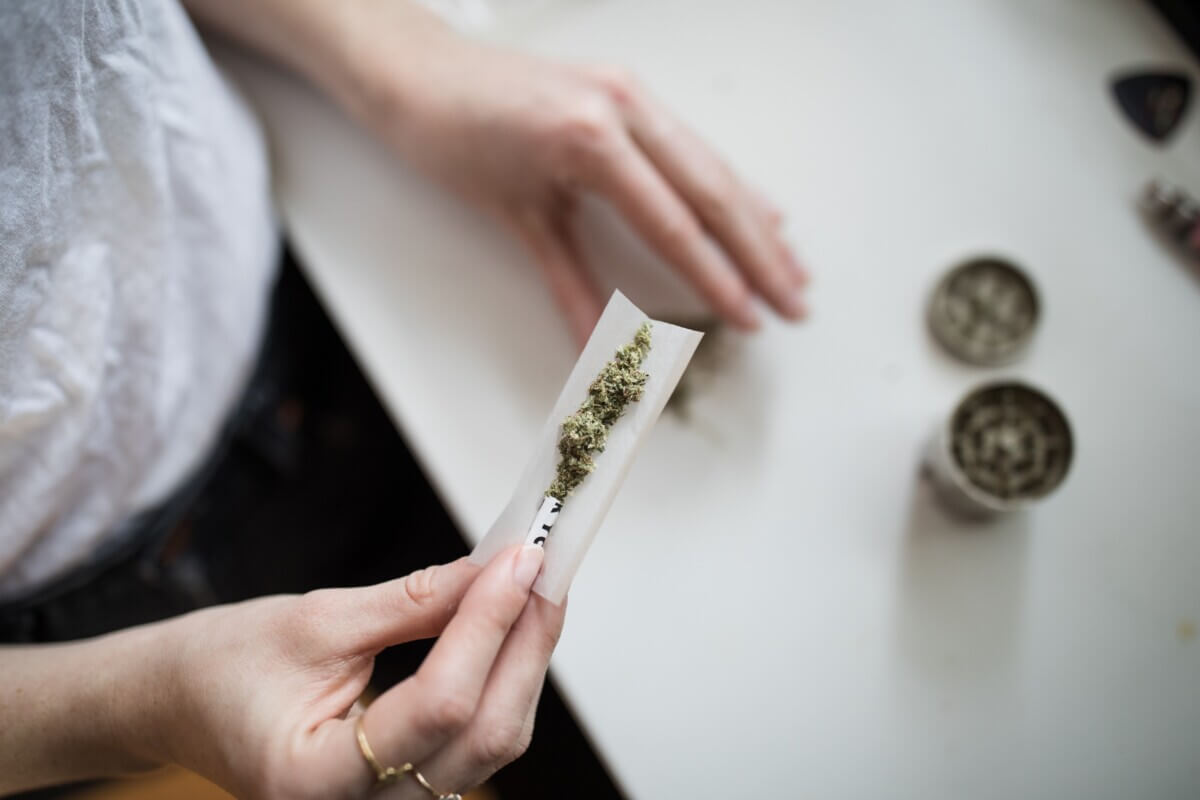
Photo by Thought Catalog on Unsplash
Researchers track brain changes in unprecedented 1,000-person study
In a nutshell
- People who have used cannabis more than 1,000 times show reduced brain activity during memory tasks, even long after stopping use
- The effects were most noticeable in brain regions responsible for working memory
- While the study found impacts on memory function, other mental tasks like emotional processing, language, and logical thinking weren’t significantly affected by heavy cannabis use
AURORA, Colo. — Think cannabis effects wear off once you decide to quit for good? Think again. New research suggests that heavy marijuana use could impact your brain’s memory functions long after your last use. This finding comes from one of the largest studies ever conducted on how cannabis affects brain function.
Against a backdrop of increasing cannabis legalization and rising potency of marijuana products, researchers from the National Institute on Alcohol Abuse and Alcoholism, the University of Colorado School of Medicine, and the University of Toronto collaborated to conduct the largest study of its kind examining how both recent and long-term cannabis use affects brain function. Their findings, published in JAMA Network Open, suggest that heavy cannabis use may have lasting impacts on cognitive processing, even after someone stops using the drug.
“As cannabis use continues to grow globally, studying its effects on human health has become increasingly important. By doing so, we can provide a well-rounded understanding of both the benefits and risks of cannabis use, empowering people to make informed decisions and fully comprehend the potential consequences,” said the study’s first author Joshua Gowin, PhD, an assistant professor of radiology at the University of Colorado School of Medicine, in a statement.
The research team looked at brain scans from 1,003 young adults between ages 22 and 36. They found that people who had used cannabis heavily throughout their lives showed less brain activity during memory tasks compared to those who rarely or never used marijuana. This difference was most noticeable in brain regions that help us pay attention, make decisions, and temporarily store information.
Working memory is sort of like a mental sticky note – it’s what helps you remember a phone number just long enough to dial it. We use this type of memory countless times each day, from following a conversation to solving problems or remembering directions.
The researchers split participants into three groups based on their lifetime cannabis use: heavy users (more than 1,000 times), moderate users (10-999 times), and nonusers (fewer than 10 times). Out of everyone studied, about 9% were heavy users, 18% were moderate users, and 73% rarely or never used cannabis. Heavy users were more likely to be male, have lower income and education levels, and show recent cannabis use in drug tests.
“We applied the highest standards to our research, setting rigorous thresholds for statistical significance across all seven cognitive function tests. To minimize the risk of false positives, we employed false discovery rate (FDR) correction. While some of the other tasks indicated potential cognitive impairment, only the working memory task showed a statistically significant impact,” noted Gowin.
Beyond memory tasks, the study also looked at how participants’ brains responded during other mental challenges – things like processing rewards, recognizing emotions, using language, controlling movement, logical thinking, and understanding others’ perspectives. Interestingly, heavy cannabis use didn’t seem to significantly affect these other brain functions.
The team also found that people who had recently used cannabis (detected through drug testing) performed worse on memory and movement tasks. However, these short-term effects weren’t as statistically strong as the long-term impacts on memory.
The study revealed an interesting gender difference: men showed more pronounced effects than women when it came to movement-related brain activity while under the influence of cannabis. This adds to growing evidence that marijuana might affect men and women differently.
For anyone who uses cannabis regularly, the research suggests it might be helpful to take breaks before tackling mentally demanding tasks. However, Gowin warned that suddenly stopping cannabis use could also affect thinking abilities. “People need to be aware of their relationship with cannabis since abstaining cold turkey could disrupt their cognition as well,” he said. “Heavy users may need to be more cautious.”
Paper Summary
Methodology
Researchers leveraged data from the Human Connectome Project, which collected extensive brain imaging and behavioral data between 2012-2015. Participants underwent functional magnetic resonance imaging (fMRI) while performing seven different cognitive tasks. They also provided detailed information about their history of cannabis use through standardized interviews and underwent urine testing to detect recent use. The study controlled for potentially confounding factors like alcohol use, nicotine use, education, income, and demographic variables.
Results
Heavy lifetime cannabis users showed significantly lower brain activation during working memory tasks compared to non-users, with a moderate effect size (Cohen’s d = -0.28). This association remained even after excluding participants with recent cannabis use. The effect was most pronounced in brain regions with high densities of cannabinoid receptors. Recent cannabis use was associated with poorer performance on working memory and theory of mind tasks, though these effects didn’t survive the strictest statistical corrections.
Limitations
This research was cross-sectional rather than longitudinal, meaning it can’t definitively prove that cannabis use caused the observed differences in brain function. The study focused on young adults, so findings may not generalize to other age groups. Researchers lacked detailed information about when heavy cannabis use occurred in participants’ lives and couldn’t account for differences in marijuana potency or consumption methods.
Discussion & Takeaways
These findings suggest that heavy cannabis use may have lasting effects on brain function, particularly working memory, even after cessation. This has important implications for public health messaging around marijuana use. The research indicates that users may benefit from periods of abstinence before cognitively demanding tasks, though the optimal duration of such breaks remains unclear.
Funding & Disclosures
This research was supported by the National Institute of Mental Health, National Institute on Drug Abuse, and other NIH institutes through the Human Connectome Project. Several authors reported receiving various research grants, but no significant conflicts of interest were disclosed.
Publication Information
This study, titled “Brain Function Outcomes of Recent and Lifetime Cannabis Use,” was published in JAMA Network Open on January 28, 2025. The research was led by Joshua L. Gowin, PhD, and colleagues from multiple institutions including the University of Colorado, National Institute on Alcohol Abuse and Alcoholism, and National Institute on Drug Abuse.


Those who consume marijuana multiple times a day every day will experience this. After just 3 days, your short term memory starts to degrade. It can take about 30 days to fully recover. Long term heavy usage can definitely make you very forgetful and unable to concentrate as well as becoming very lazy in general. It may be far worse in the young and undeveloped mind. The frontal lobes don’t fully develop until your mid-20’s. It could cause long term issues.
However, for an adult one time use in moderation every few weeks is not going to make much of an impact.
Moderation is the key. Sometimes I just want to turn off my brain which runs at ridiculous speeds and I cannot sleep. A couple puffs off a cannabis vape or 15mg of edibles doesn’t get me very high and in a couple hours I sleep like a baby. Waking refreshed in the morning.
Dr’s treating pot addicts have known that for 40 years. It’s part of what’s called a motivational syndrome.
If the findings were significant they would be shouting the specific percent memory loss from the rooftops in this article. Since they didn’t mention it once, other than to say “statistically significant,” one has to reason that mentioning the actual figure would bring a chuckle from the reader.
Isn’t the whole point of smoking it to forget all the everyday BS?
This study is an exercise in confirmation bias.
Not real science.
From age 15 to 20 I was a heavy user of cannabis. I noted a strong effect on working memory which lasted for 6 months after quitting. It has now been 48 years since I quit. I seen to be recovered but how could I know that for sure.
The fact that the study focused on young adults prove only what has been observed in the lab, and in the real world as far as cannabis among the young: the younger mice got stupid, but the older mice got a little more smarter. https://pmc.ncbi.nlm.nih.gov/articles/PMC9877016/
LOL It’s been well known to those who have treated chronic users for the last 50 years. Nothing new!!
BS, I can do a study and make it “show” what my prearranged outcome too. Bunch of delusional crackpots!! Demand your money back!! They taught you lies and BS????
I’m conducting daily research in this field. Have had ZERO negative effects, including memory loss, but the positive effects are immeasurable. I believe it helped decalcify my pineal gland causing my 3rd eye to open. EPIC!
Fact checked by WHO? Colorado liberals? we all know fact checkers are FULL OF Sh….
Well, that’s fantastic! Sounds like the exact reason one may actually want to use it ????
now, how about conducting a similar study with alcohol use-bet you have a more dramatic result with a substance that’s legal most everywhere
Yet another site, for low information viewers, that STILL thinks “Reefer Madness” is a documentary. Weed has been LEGAL for DECADES….. stop your ridiculous, sensationalist, false, cringy posts please. You COULD come and cook me dinner… you know? Kinda like how EVERYTHING you typed “COULD, MIGHT, MAYBE” happen.
Some people need that very specifically. I have very reduced adrenaline reaction and I simply can not forget things I needed to forget. It is the only thing that helps me in any way, and for crohn’s disease as well, and I have no access to it. I feel on my death bed from mild hemp oil deficiency.
Really? Gee this study really explains why at 72 yrs old, I can readily remember 12 & 16 digit numbers, like my Bank Accounts’ savings & checking numbers, glance at 10 digit phone numbers and remember them immediately and recall Chords and progressions on my Guitar after 50+ years
of playing. I guess after 50+ years of off & on daily use, my brain has shrunk to the size of a walnut.
I’ve been a Licensed Electrician for over 40 yrs as well, and can still do the math I was taught in my ’20’s. I’m calling Bullshit on this study. Of course, as they say (and they probably didn’t discover this in their Study either) It affects different people different ways. Maybe some folks just get stupid
and some don’t.
When the Saints come marching in.
Louis Armstrong smoked Ganga all his life.
I was gonna leave a comment but I forgot what I was gonna say
What was the question.
lol…
Me too. Bloody repress.
After years of use, my memory is excellent. And when I quit it gets even better. Its almost too much. Remembering everything is not a gift.
For some people, perhaps some memory erasure is best. I’ve known quite a number of people who have smoke marijuana for more than 50 years and do not seem in the least impaired.
lol. Strong word in the first paragraph. “COULD” This is not a full double blind scientific study but another run by an anti marijuana firm. Sometimes its better to just not post things that are clearly skewed. This is how you lost your Cred.
Double-Blind studies are difficult to undertake for recreational drug use and dietary studies…..Journal of American Medical Association paper here, and the authors are very forth coming about the limitations of the study and of the conclusions…
Also, they literally state that user impact ‘could’ be long after stopping use….but then the details of the study say the 9% heavy users ‘showed recent cannabis use’. So either the article about the study is seriously flawed or the study is seriously flawed and does not actually test what the headline states.
Just go roll up another one and maybe you can look for a job tomorrow!