
Mobile phone catches fire while charging. (© VisualProduction - stock.adobe.com)
LOS ANGELES — A recent discovery could pave the way for safer, more powerful lithium-metal batteries. These types of batteries have twice the energy capacity of the more common lithium-ion batteries found in smartphones and electric vehicles.
Lithium-metal batteries, the predecessors of lithium-ion batteries, have not been widely adopted due to their higher risk of combustion. However, scientists from the California NanoSystems Institute at UCLA believe they can avoid this danger.
A typical lithium-ion battery stores charged lithium atoms within a carbon-coated electrode. In comparison, a lithium-metal battery uses an electrode coated in metallic lithium, which can store 10 times more lithium, leading to better performance but also increased risks.
The process of applying this lithium coating in batteries often results in the formation of microscopic filaments with protruding spikes. These spikes can cause dangerous short circuits if they intersect within the battery.
The UCLA team made an astonishing observation: when the typical corrosion seen while applying the lithium is prevented, the lithium forms a specific 12-sided shape known as a rhombic dodecahedron, similar to dice used in games like Dungeons and Dragons.
“There are thousands of papers on lithium metal, and most descriptions of the structure is qualitative, such as ‘chunky’ or ‘column-like,’” says Yuzhang Li, the study’s corresponding author, an assistant professor of chemical and biomolecular engineering at the UCLA Samueli School of Engineering, and a member of CNSI, in a university release.
“It was surprising for us to discover that when we prevented surface corrosion, instead of these ill-defined shapes, we saw a singular polyhedron that matches theoretical predictions based on the metal’s crystal structure. Ultimately, this study allows us to revise how we understand lithium-metal batteries.”
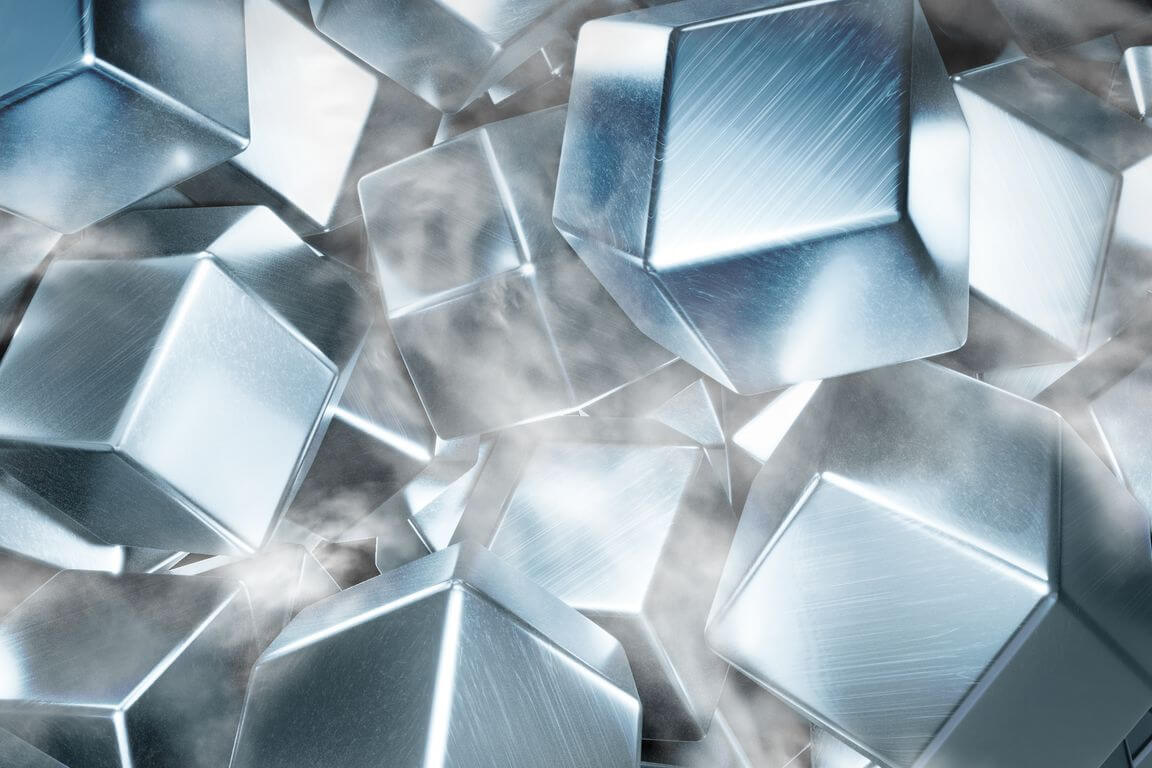
By establishing this orderly pattern of lithium accumulation, the risk of intersections and potential explosions could be reduced, offering a safer alternative to the existing lithium-metal battery design. UCLA researchers are now considering the implications of their findings for future battery technologies.
“Scientists and engineers have produced over two decades’ worth of research into synthesizing metals including gold, platinum and silver into shapes such as nanocubes, nanospheres and nanorods,” says Li. “Now that we know the shape of lithium, the question is, Can we tune it so that it forms cubes, which can be packed in densely to increase both the safety and performance of batteries?”
To achieve their results, UCLA scientists developed a unique method to deposit lithium faster than the usual corrosion occurs. This was achieved by using a smaller electrode to push electricity out more quickly.
They were able to observe the shape of lithium using cryo-electron microscopy (cryo-EM), an imaging method that captures detailed images at an atomic level by passing electrons through frozen samples. This breakthrough might be a game-changer in the battery industry, promising safer and more efficient batteries in the near future.
The study was published in the journal Nature.


