
(© the faces - stock.adobe.com)
NEW YORK — Parents may want their kids to do their chores, but do parents even know how to do their chores? One in three parents is learning they’ve been cleaning things all wrong their entire lives.
The poll of 2,000 U.S. parents revealed many have been told by others they incorrectly fold laundry (33%), mop and sweep wrong (28%), and don’t know how to wash laundry properly (26%).
Are Mom and Dad to blame? Four in 10 respondents have witnessed their own parents also “cleaning the wrong way,” and 47% have tried to correct them. Many recall never being taught how to mow the lawn (26%), do garden or yard work (25%), or how to properly load a dishwasher (24%).
Commissioned by PINALEN Multipurpose Cleaner and conducted by Talker Research, the study showed that a majority of Americans still credit their upbringing for teaching them how to fold laundry properly (72%), do dishes by hand (70%), wash laundry (69%), and mop or sweep floors (65%).
For some, their families weren’t the only resource for learning how to clean. Roughly one in three respondents said they also learned to clean from their past or current jobs (37%), from their significant other (31%), and from their friends (27%).
As a result, 17% claim to be “near-sterile” in their households, keeping everything clean all the time. An additional 60% said they were “pretty clean” at home, accepting a little mess here and there. Sixteen percent admitted they don’t pay attention to how clean something is as long as it’s organized and tidy.
“Cleaning can be surprisingly subjective. The ‘proper’ way to clean can vary greatly depending on your culture, how you were raised, and who you learned from — but what truly matters is the effectiveness and reliability of those cleaning techniques,” says Tanu Grewal, Chief Cleaning Officer at PINALEN Multipurpose Cleaner, in a statement. “At the end of the day, parents play a crucial role in shaping their children’s cleaning habits and attitudes, instilling good practices that last a lifetime.”
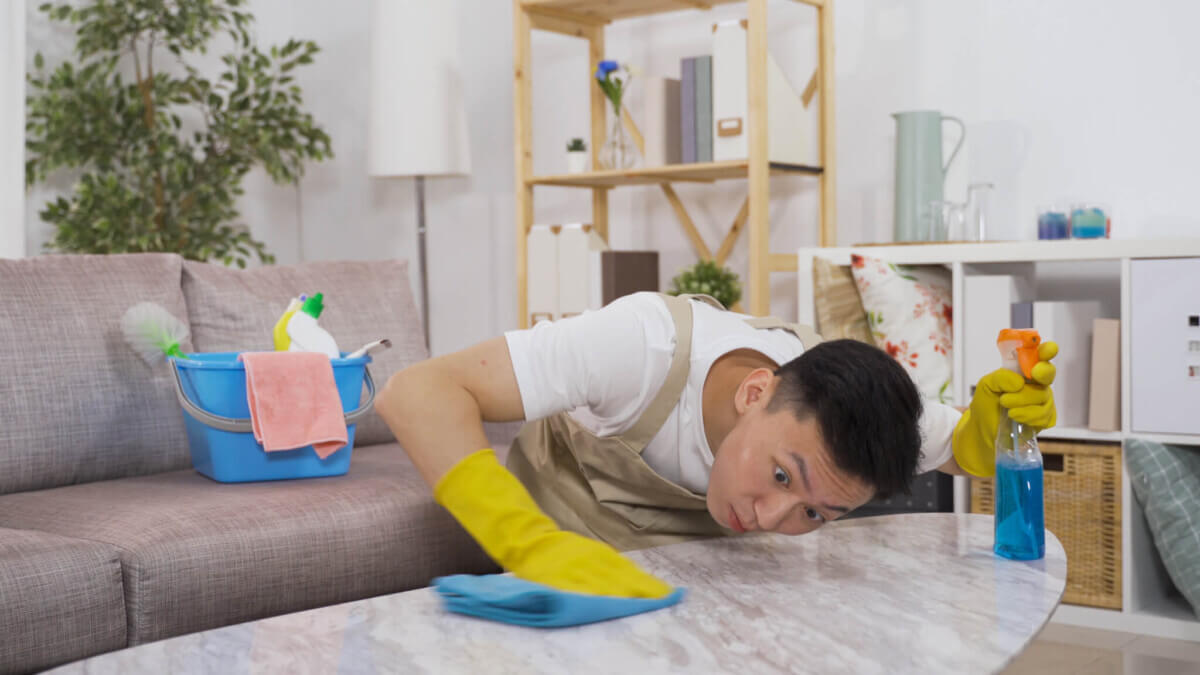
The results also found that 76% of parents plan on teaching their kids everything about cleaning that they were never taught, and 86% have already considered how they’ll teach their kids cleaning habits. In fact, 73% believe how they learned to clean growing up could have had a positive impact on how they clean today. For 65% of them, cleaning is now considered an art form.
A majority of parents believe it’s important their kids learn how to keep organized (75%), what types of cleaning products to use (69%), and how much soap or detergent to use while cleaning (68%). For most chores — folding laundry, washing dishes, floor cleaning, and taking out the trash — parents believe their kids can start participating by age 10. Meanwhile, chores like starting the laundry machines, yard work, cleaning furniture, and cleaning the toilet can all wait until age 11.
By age 12, parents believe their kids can handle cleaning out the fridge, and by 13, parents said their kids can take on lawn mowing. Instead of viewing it as a chore or punishment, 88% of parents believe cleaning can be made into a family activity — leaning into making cleaning something that brings everyone in the house together in a joyful, collaborative way.
“Overall, people are taught objective aspects of cleaning such as how much product to use, specific techniques, and how to use cleaning tools or machines, but are left to figure out their own personal preferences,” Grewal continues. “Regardless of whether they believe each chore is done right or wrong, most people still associate positive feelings with cleaning, and it reminds them of home.”
“Cleaning is part of everyone’s heritage one way or another – whether you learned how to clean from your parents or want to start your own cleaning traditions with your children, it is something that is passed down through generations.”
Survey methodology:
This random double-opt-in survey of 2,000 American parents of school-aged kids was commissioned by AlEn between June 14 and June 18, 2024. It was conducted by market research company Talker Research, whose team members are members of the Market Research Society (MRS) and the European Society for Opinion and Marketing Research (ESOMAR).


