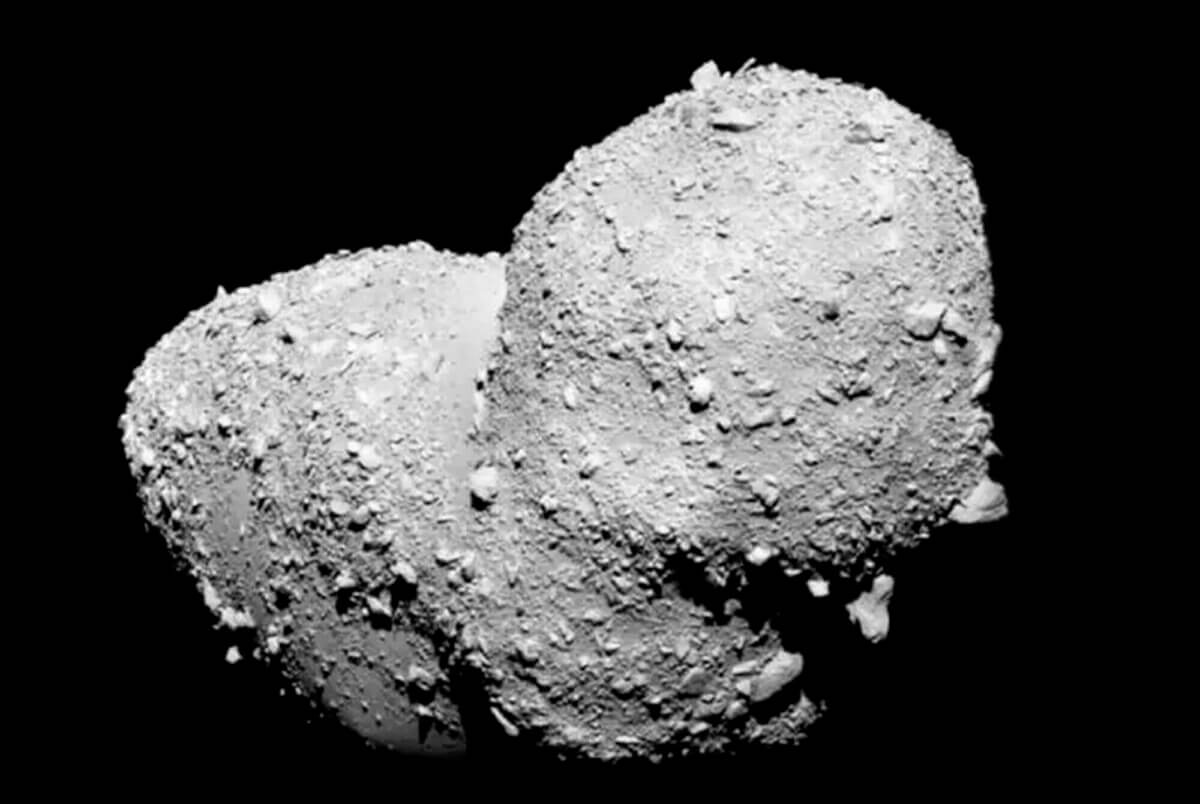
Asteroid Itokawa as seen by the Hayabusa spacecraft. The peanut-shaped S-type asteroid measures approximately 1,100 feet in diameter and completes one rotation every 12 hours. (Credit: JAXA)
TUSCON, Arizona — Tiny specks of salt found on an asteroid sample is the cause of big excitement among planetary scientists. The salt crystals, made of sodium chloride – ordinary table salt – were discovered on samples from asteroid Itokawa retrieved by the Japanese Hayabusa probe in 2005. Their presence suggests that water flows existed on asteroids in the early solar system – with implications for how Earth got its oceans.
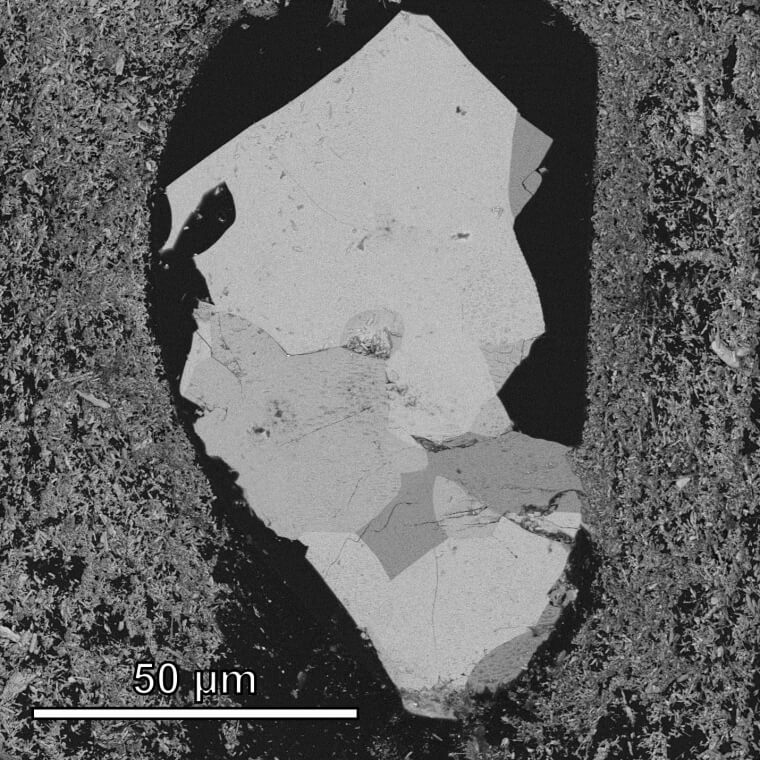
“The grains look exactly like what you would see if you took table salt at home and placed it under an electron microscope,” Zega said in a media release. “They’re these nice, square crystals. It was funny, too, because we had many spirited group meeting conversations about them, because it was just so unreal.
The salt crystals were found in rock samples from Itokawa classified as ordinary chondrites – the most common type of meteorite, making up about 87% of meteorites that fall to Earth. According to Dr. Zega, very few ordinary chondrites have been found to contain water-bearing minerals. “It has long been thought that ordinary chondrites are an unlikely source of water on Earth,” he said. “Our discovery of sodium chloride tells us this asteroid population could harbor much more water than we thought.”
The implication is that Earth’s oceans – long thought to have come from asteroids or comets from the outer solar system – could have arrived from asteroids much closer to the Sun.
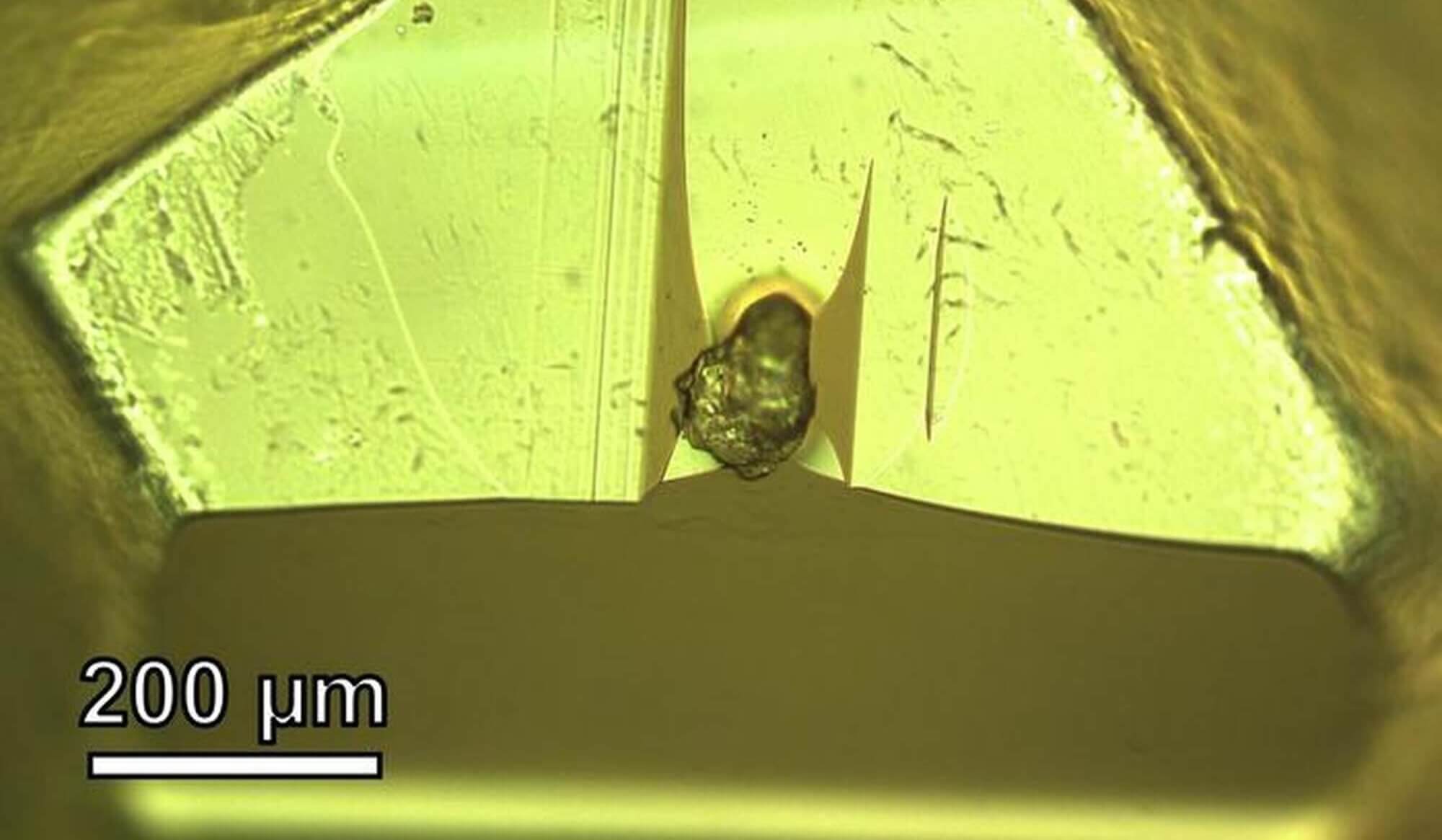
Shaofan Che and Tom Zega/University of Arizona)
Follow the Water
The study leader, Shaofan Che, a postdoctoral fellow at the Lunar and Planetary Laboratory, went to great lengths to demonstrate the salt did not result from contamination on Earth. This included taking “before and after” electron microscope images over five years that showed the salt deposits were unchanged. “We ruled out every possible source of contamination,” Dr. Che said.
The salt’s presence points to past liquid water on Itokawa’s parent asteroid long ago. Dr. Zega explained tons of rocky material from space rains down on Earth daily. “You need a large enough rock to survive entry and deliver that water,” he said.
Itokawa is just such a survivor – a peanut-shaped near-Earth asteroid about 2,000 feet long and 750 feet wide. It likely broke off from a much larger asteroid eons ago.
The researchers speculate that ice and frozen chemicals could have built up inside the parent asteroid. Radioactive decay and heat from meteorite impacts could have melted the ice and enabled chemical reactions between minerals and liquid water. “Once you have liquids form, you can think of them as occupying cavities in the asteroid, and potentially do water chemistry,” said Dr. Zega. The reactions could produce salts like the sodium chloride crystals found in the samples.
Eventually the parent body cracked apart, forming fragments like Itokawa and meteoroids containing traces of the salty liquid that splashed about inside. Hardy grains able to withstand a fiery plunge through Earth’s atmosphere may have delivered their vestiges of water to our planet when it was young.
New Thinking About Asteroids
Before this discovery, S-type asteroids similar to Itokawa were not thought to contain much evidence of water interactions. This oversight may have caused scientists to underestimate the overall water content of asteroids.
“Scientists largely agree that Earth’s water had to be delivered from the outer reaches of the solar nebula, where temperatures were much colder and allowed water to exist as ice,” explained Dr. Che. The new findings turn that theory on its head. Instead, asteroids originating much closer to Earth could have seeded our planet with water.
“If it now turns out that the most common asteroids may be much ‘wetter’ than we thought, that will make the water delivery hypothesis by asteroids even more plausible,” Dr. Zega concluded.
The traces of water found on Itokawa’s offspring suggest we may owe our existence to asteroids like it. According to Dr. Zega, “Several oceans worth of water could be delivered just by this mechanism.” As we explore our Solar System and unlock more asteroid secrets, we may discover Earth owes its blue marble existence to being in the right place at the right time billions of years ago.
Itokawa, the asteroid from which the samples were taken, belongs to a group called ordinary chondrites, accounting for about 87% of meteorites found on Earth. These meteorites are generally not associated with water-bearing minerals. However, the discovery of sodium chloride within the crystals challenges previous assumptions and suggests that this population of asteroids might contain more water than previously believed.
The study is published in the journal Nature Astronomy.


