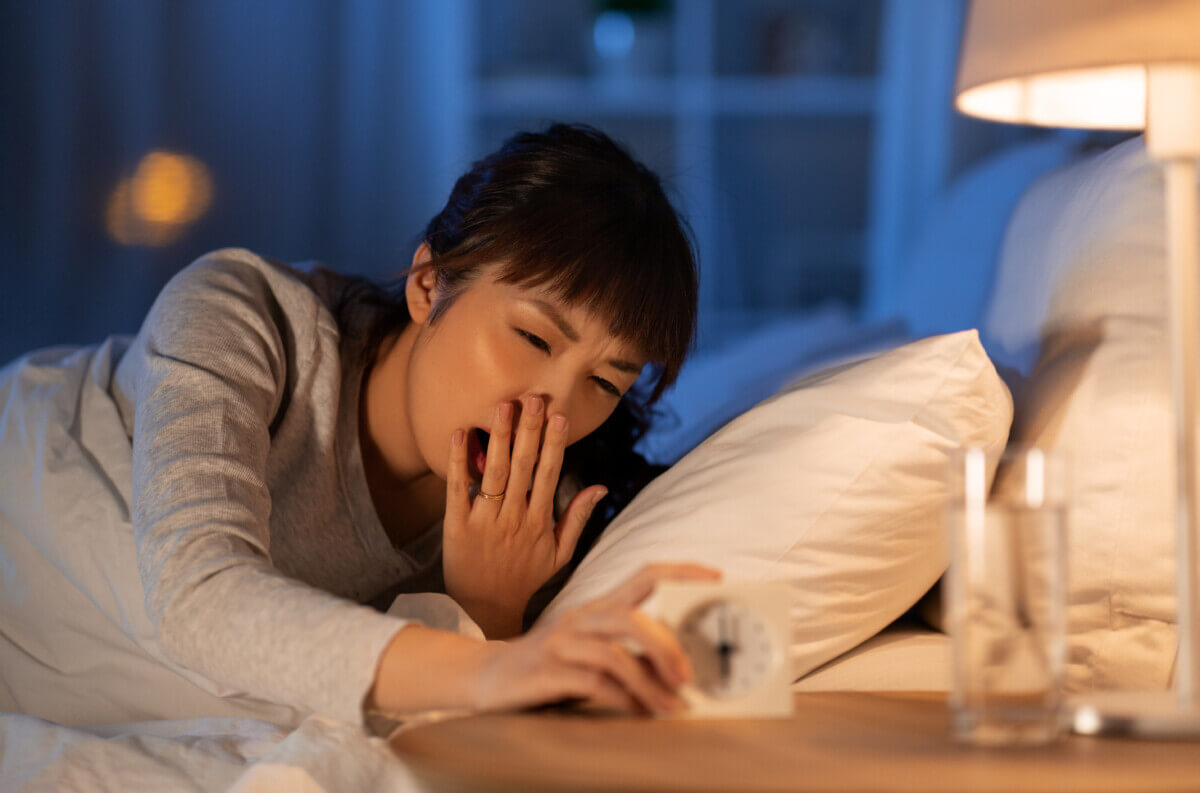
(© Syda Productions - stock.adobe.com)
Young Adults Reporting Indoor Noise Every Night Had 88% Lower Odds of Good Sleep
In A Nutshell
- Young adults who often reported hot rooms, bright rooms, or indoor noise slept worse than those who rarely did
- Only heat showed a same-night pattern: the same person slept worse on nights the room felt too hot
- Light and noise produced the biggest numbers, such as 88% lower odds of good sleep for indoor noise every night, but those compare extremes and are rough estimates
- Conditions were judged by participants, and the observational study cannot show that bedroom problems caused worse sleep
Young adults who often reported a hot room, a bright room, or noise inside the home slept worse than those who rarely did. That is what a Sleep Health study found after pairing wrist sleep trackers with morning surveys in 372 young adults over two weeks. Heat was the clearest result: on nights a room felt too hot, the same person slept worse than on their own more comfortable nights.
Light and noise had the flashier numbers, but on shakier ground. Young adults reporting indoor noise every night were estimated to be far less likely to call their sleep good, with odds 88% lower than those who never did. A bright room every night went with sleep starting about 111 minutes later. Those figures compare people at the two extremes, not a single loud or bright night.
Temperature, light, and noise are commonly thought to affect sleep, but few studies follow the same people night after night in their own bedrooms. Early adulthood can bring repeated moves between dorms, apartments, and family homes, and shared living spaces tend to have more variable light and noise.
Sleep Trackers Linked Frequent Bedroom Complaints to Worse Sleep Quality
Participants came from the Future of Families and Child Wellbeing Study, a long-running project that has followed children born in 20 large U.S. cities. At age 22, 614 joined the sleep portion, and 372 provided enough usable data for analysis. Of those, 60% were female, about half were Black, and roughly a quarter were Hispanic or Latino.
For two weeks, each person wore a wrist device that estimates sleep from movement and light exposure, collecting about 10 nights of data per person on average. Every morning, a phone app asked whether the previous night had been too hot, too cold, too bright, too noisy inside, or too noisy outside. Participants also rated each night’s sleep from very good to very bad.
Researchers ran two kinds of comparisons. One checked people who often reported a problem against people who rarely did. The other checked each person against their own typical nights. Results accounted for factors such as sex, race, and education. Complaints about light and noise were uncommon: a bright room was reported on 4% of nights and indoor noise on 6%, compared with 21% for heat. That scarcity makes the extreme comparisons shaky, so the 88% and 111-minute figures are best read as rough estimates.

Hot Nights Went With About 1% Lower Sleep Efficiency in the Same Person
Heat produced the most consistent results. Sleep efficiency, the share of the sleep period spent actually asleep, averaged about 90% across participants, which works out to roughly 45 minutes awake after first falling asleep. On nights someone called the room too hot, that person’s efficiency dipped about 1% below their own usual, a dip that works out to a few extra minutes awake. The odds of rating the night as good sleep were 45% lower, meaning a good night was noticeably less likely.
Comparing people instead of nights told a similar story. Young adults who reported a hot room on every night spent about 10 more minutes awake after first falling asleep than those who never did. Their sleep efficiency was about 2% lower. Heat showed no link to sleep timing.
Bright and Noisy Rooms Matched Poorer Sleep Quality Among Frequent Reporters
Young adults who reported a too-bright room on every night fell asleep about 111 minutes later than those who never did, and woke up later too. Their odds of calling sleep good were 90% lower. No night-by-night link appeared between brightness and sleep timing.
Indoor noise followed a similar pattern, with sleep efficiency about 3% lower among those who reported it every night. Noise from outside showed no link to any sleep measure. The authors noted that few participants reported outside noise, which may have limited the study’s ability to detect an effect.
Cold rooms gave mixed results. Young adults who reported cold on every night had 79% lower odds of calling their sleep good. On cold nights, sleep began about 16 minutes earlier than usual, but that result did not survive the researchers’ stricter statistical check.
Participants averaged about 6.6 hours of sleep a night, and no condition showed a reliable link to total hours slept; the differences appeared in timing and quality.
Dorm and Apartment Fixes Still Need Testing
Authors recommended that managers of dormitories and apartments invest in modern heating and cooling systems, light-blocking blinds or blackout curtains, sound-reducing building materials, and strict noise limits as practical fixes.
Some limits apply. Participants judged conditions themselves, with no thermometers, light meters, or sound meters, so the results describe perceived problems rather than exact temperature, brightness, or noise thresholds. The study is observational, meaning it watched people rather than changing their rooms, and cannot show that rooms caused worse sleep. Poor sleep could make people more sensitive to heat, light, and noise, as the authors pointed out.
Bedroom conditions look like a real piece of the sleep puzzle for young adults. Whether cooling, darkening, or quieting a room actually improves sleep is still for future studies to test.
Disclaimer: This article summarizes a single observational study and is intended for general information only. It is not medical advice, and anyone with ongoing sleep problems should consult a health care provider.
Paper Notes
Limitations
Environmental conditions came from participants’ own perceptions rather than objective sensor readings, so people may interpret “too hot” or “too noisy” differently. The surveys also did not capture the source of a disturbance, such as the origin of a noise or light. Because the study was observational, it cannot establish causation, and the authors noted that the relationship may run in both directions, since poor sleep could increase sensitivity to environmental disturbances. Self-reported sleep quality was measured with a single daily question. The sample size was moderate and, after corrections for multiple testing, the study was likely powered to detect only large effects, so null findings may reflect insufficient power. Participants came mainly from urban settings in a study that oversampled nonmarried mothers, and some participants were excluded for missing data. The authors found minimal differences between included and excluded groups but said results may not generalize to rural areas, other age groups, or other family structures.
Funding and Disclosures
Support came from the Eunice Kennedy Shriver National Institute of Child Health and Human Development of the National Institutes of Health under award number R01HD073352-10. None of the authors reported conflicts of interest related to the study. Outside the work, several authors disclosed honoraria, consulting fees, or grants from organizations including the National Sleep Foundation, universities, and private companies. Three authors who serve on the journal’s editorial board were not involved in the peer review of the article. The authors stated they did not use generative AI services.
Publication Details
Adwoa Dadzie, David A. Reichenberger, Yuqi Shen, Lindsay Master, Angel I.M. Collie, Gina Marie Mathew, Timothy R. Brick, Lauren Hale, Anne-Marie Chang, and Orfeu M. Buxton authored the study, titled “Daily associations between the physical environment and sleep among a diverse, national sample of young adults.” It was published in Sleep Health: Journal of the National Sleep Foundation, Volume 12 (2026), pages 800 to 810, after being received December 29, 2025, and accepted July 24, 2026. DOI: 10.1016/j.sleh.2026.07.010.


