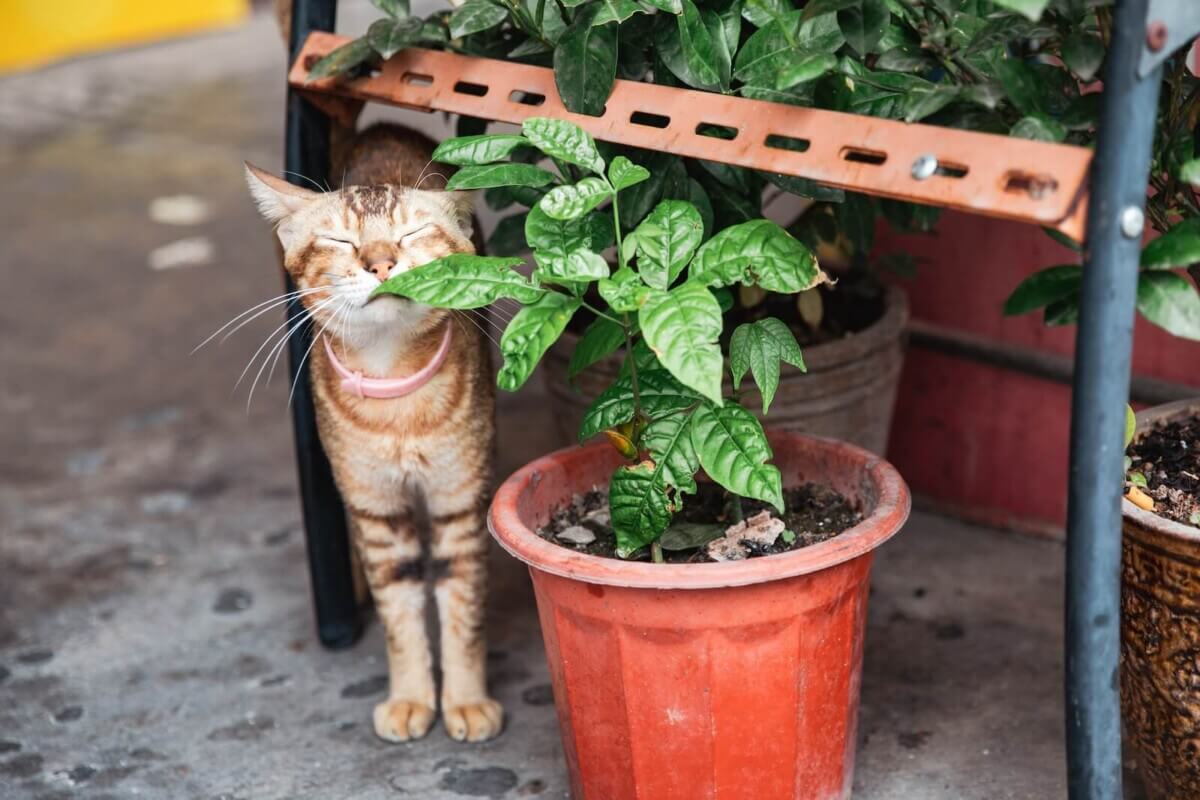
Photo by Christian Lendl from Unsplash
Do Cats Make Countries Happier? A 93-Nation Study Finds a Link, With a Catch
In A Nutshell
- Across 93 countries, more cats per person often went with higher happiness.
- Higher recent infection with cat-carried Toxoplasma among pregnant women went with lower happiness.
- Cat-heavy countries had less recent infection, a pattern the authors link to wealth but did not test.
- Country-level data cannot prove cats raise happiness or the parasite lowers it.
Countries with more cats per person often rank as happier. A new analysis of 93 nations found the link held up even when national health spending and parasite exposure were thrown into the mix.
Cats come with a catch, though. They are the definitive host of Toxoplasma gondii, a parasite that completes its life cycle inside them. People mainly pick it up by swallowing microscopic cysts that cats shed in their feces, which can contaminate soil and food, or by eating undercooked meat. An estimated 10 to 30 percent of adults in any given population carry it, often without knowing. In the same analysis, countries where more pregnant women showed signs of recent infection also scored lower on happiness.
A team including Javier I. Borráz-León of Mexico and Dario Maestripieri of the University of Chicago wanted to know whether happiness research has overlooked biology while focusing on money. Their results, published in PLOS One, matched the team’s main predictions.
A 93-Country Comparison Found Higher Happiness Where Cats Were More Common
Of 149 countries ranked for happiness, 93 had complete public data on every measure, and those made up the study. Happiness scores came from the World Population Review’s 2025 rankings, which blend Gallup polling on six factors, including income, social support, and life expectancy, and cover 2022 through 2024. Cat counts were converted to cats per 10,000 residents so large and small nations could be compared fairly. The average country in the sample had about 990 cats per 10,000 people, roughly one cat for every ten residents, though country rates ranged from about 67 to more than 3,200. Wealth figures came from the World Bank, and health spending as a share of national income came from the World Health Organization.
Parasite data came from a 2020 review of studies on pregnant women, who are routinely screened because the infection can pass to unborn babies. Those women stood in for each country’s overall exposure, since national data on the general public were scarce. The individual studies ran from 1976 to 2017, so the infection figures do not line up neatly with the happiness years. Each country landed in one of five levels on two blood tests, one flagging recent infection and one flagging long-standing infection.
Cat density’s link to happiness was fairly strong, though income and economic output tied in even more tightly. Happiness scores partly count national income, so some overlap is built in.

Higher Recent Toxoplasma Infection Levels Went With Lower Happiness Scores
Recent infection tracked with happiness more tightly than long-standing infection did, though both pointed downward.
A broader analysis weighed cat density, health spending, and both infection levels at once. Income and economic output were left out because they overlapped too heavily with each other, so health spending stayed in as the lone wealth-related measure. In that analysis, cat density and recent infection were the two best predictors of happiness, while health spending and long-standing infection added little. Together, the four factors accounted for 47 percent of the differences in happiness across the 93 countries.
Countries With More Cats Had Lower Recent Toxoplasma Infection Levels
More cats should mean more parasite exposure, or so the common assumption goes. The data showed the opposite: cat-heavy countries had noticeably lower levels of recent infection, with a smaller, borderline dip in long-standing infection.
Wealth may explain the reversal, according to the authors, though the study did not test this directly. In richer countries, cats are more likely to be kept indoors, fed commercial food, and given routine veterinary care, which may limit how much parasite spreads to people. In lower- and middle-income countries, cats more often roam freely, which may raise the odds of human infection.
A follow-up calculation found that lower recent infection lined up with a modest share of the cat-happiness link, and most of the link remained even after accounting for infection.
Country Averages Cannot Show That Cats Raise Happiness or Parasites Lower It
None of this proves that owning a cat makes a person happier, or that infection makes anyone sadder. Every figure describes a whole country rather than individual people, and the authors warn against using the results to judge personal risks. Wealthier, happier countries could also simply be better at caring for cats and controlling parasites. Cat density lumps together pets, strays, and feral cats, making it an imperfect stand-in for how many people actually own one. Less loneliness and stress are plausible explanations the authors raise, but neither was measured.
Cats and happiness rise together across 93 countries, with signs of recent parasite infection sliding the other way. Whether either one moves national mood remains unproven. Still, researchers who explain happiness through money alone are overlooking biological factors worth measuring.
Disclaimer: This article reports on research, not medical advice. Country-level patterns cannot show individual risks from cat ownership or Toxoplasma infection. Anyone with health concerns should talk with a doctor.
Paper Notes
Limitations
Parasite figures came from pregnant women, used as a stand-in for each country’s general population, and pregnant women may differ from the public in healthcare access and testing patterns. The infection data came from studies conducted between 1976 and 2017, while happiness scores covered 2022 through 2024, and cat counts were 2025 estimates and projections. Cat density combines pet, stray, and feral cats, which likely differ in how they affect happiness and parasite spread. Urbanization, climate, and sanitation were not measured, and the happiness index partly includes GDP, creating overlap with some predictors. Because the design is cross-sectional and correlational, cause and effect, reverse causation, and unmeasured influences cannot be ruled out. Built as an early look rather than a firm test, the analysis emphasized how large the links were instead of whether they cleared a strict statistical cutoff. The sample was large enough to reliably detect moderate links but not small ones, so results that missed that cutoff should be read cautiously. Data quality also varied by country.
Funding and Disclosures
Authors received no specific funding for this work and declared that no competing interests exist.
Publication Details
Wealth, health, cats and Toxoplasma gondii: An ecological correlational study of subjective well-being across 93 countries was written by Javier I. Borráz-León (Secretariat of Science, Humanities, Technology, and Innovation and National Institute of Psychiatry, Mexico City), Markus J. Rantala (University of Turku, Finland), Indrikis Krams (National Institute of Research and Innovation, Riga; University of Latvia; and Daugavpils University, Latvia), and Dario Maestripieri (University of Chicago, corresponding author). It appeared in PLOS One, Volume 21, Issue 9, e0357911, published September 30, 2026 (received January 12, 2026; accepted August 24, 2026). DOI: https://doi.org/10.1371/journal.pone.0357911. The paper is open access under a Creative Commons Attribution License, and the dataset is available at https://osf.io/urpkm.


