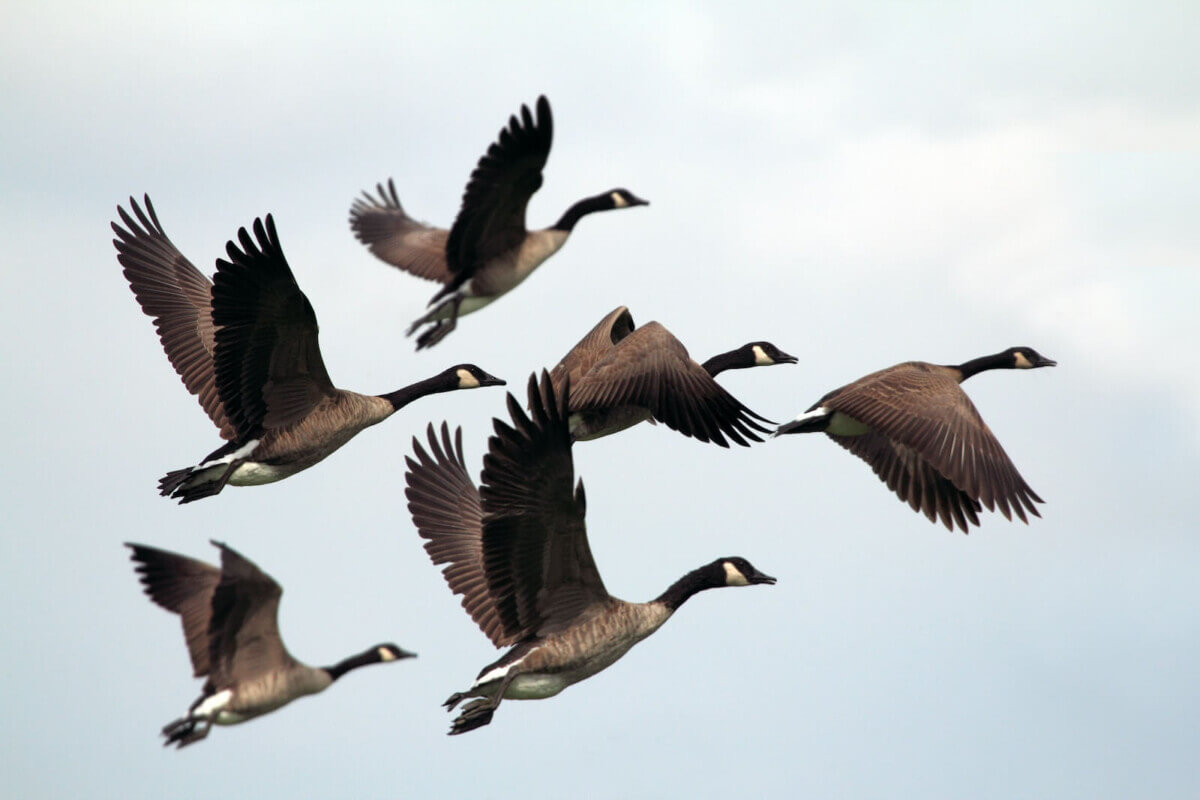
Photo by Gary Bendig from Unsplash
EXETER, United Kingdom — Birds of a feather flock together, especially after experiencing a death in their flock. Researchers from the University of Exeter have found that Canadian geese tend to strengthen existing friendships and even forge new connections after losing close associates from their flock.
These findings come from observations made of flocks of Canada geese both before and after a population-management culling took place — killing roughly 20 percent of the birds. When something like this happens to a group of animals, certain species increase their “social connectivity” in response, mixing with many new individuals. While this is somewhat of an understandable reaction, even from a human perspective, mingling with new animals often leads to the transmission of infectious diseases.
However, the geese analyzed in this study only strengthened their existing relationships and added just enough new associations to replace those they lost.
“Our findings shows that Canada geese are very robust to this level of social change,” says Dr. Nick Royle, from the Centre for Ecology and Conservation on Exeter’s Penryn Campus in Cornwall, in a university release. “They are socially conservative – they keep calm and carry on, responding to losses in the flock by strengthen existing ties rather than greatly expanding their social network. This ability to deal with social disruption – this resilience – might contribute towards their success as an invasive species.”
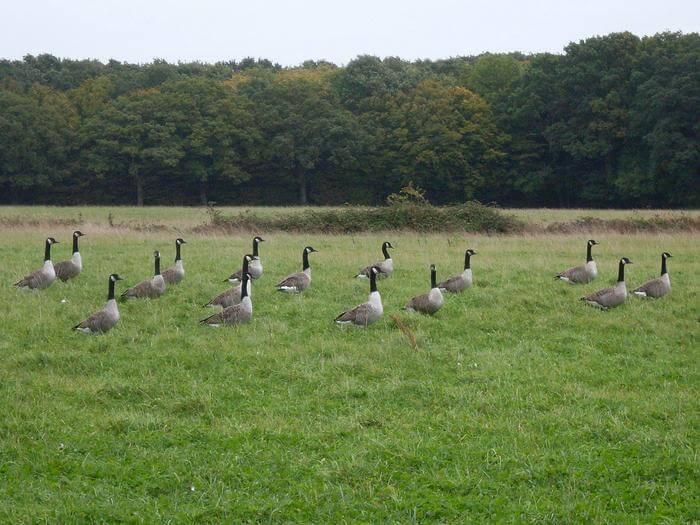
Besides just competing with native species, Canadian geese are also known to spread diseases such as the avian flu, which can crossover and infect humans. As such, these birds are culled in various areas of the United Kingdom, including the Cotswold Water Park, where researchers conducted this study.
Reducing the size of a problem population is a common method employed to reduce disease transmission. For certain species, though, this approach can backfire due to animals responding by forming multiple new social connections, which can eventually increase the spread of disease.
Conversely, after short-term adjustments to restore their social network, the studied population of Canada geese appeared largely robust to the effects of culling, predominantly strengthening existing “friendships” within the flock as opposed to forming lots of new associations, thus reducing the potential for an increased risk of disease transmission.
In conclusion, the research team believes their work highlights the key importance of properly understanding the social behaviors of different species while planning drastic management interventions like culling.
The study is published in the Journal of Applied Ecology.


