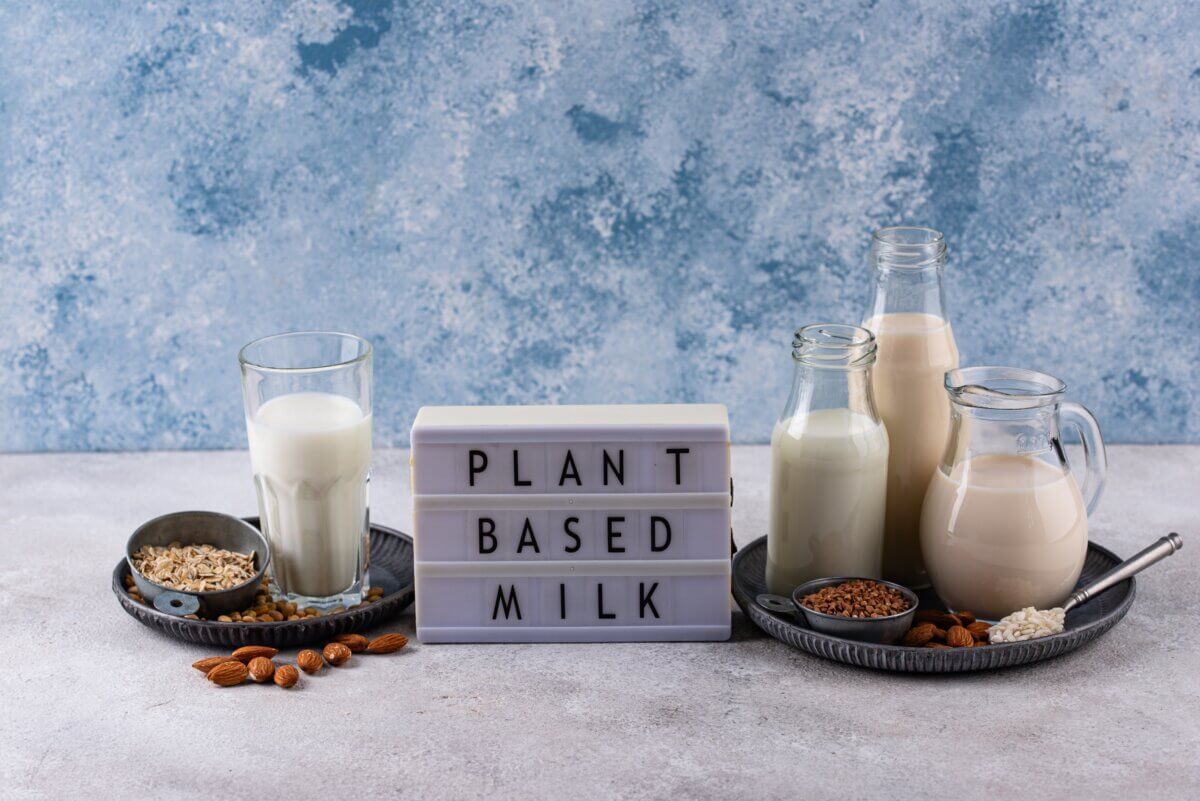
(Credit: Yulia Furman/Shutterstock)
In a Nutshell
- Replacing even a third of dairy products with plant-based alternatives can cut iodine intake by 9 to 21 percent, with teenage girls and young women hit hardest.
- Before any dietary change, more than half of teen girls studied already had inadequate iodine intake, and that number could climb to 80 percent if dairy were fully replaced with current plant-based products.
- Requiring iodine fortification in both plant-based dairy alternatives and bread could prevent most of these declines without causing anyone to get too much iodine.
Oat milk in the morning latte, a coconut yogurt at lunch, a cashew-based cheese on the dinner board: each swap feels like a small win for health and the planet. Yet trading dairy for plant-based alternatives quietly strips away iodine, a nutrient the thyroid and the developing brain depend on, and a new study warns that British teenage girls would pay the steepest price. More than half already fall short of the recommended amount, and that share could climb to 80 percent if they gave up dairy entirely.
Researchers from the University of Surrey, Queen’s University Belfast, and University College Dublin, writing in The Lancet Planetary Health, built a model using national UK dietary data and real product labels from plant-based milks, yogurts, and cheeses sold in supermarkets. They tested what happens when people replace dairy with plant versions at levels drawn from major sustainability recommendations, including the UK’s Net Zero plan and the EAT-Lancet Commission’s guidelines. Even replacing just a third of dairy measurably cut iodine, with young children, teenagers, and women of childbearing age hit hardest.
Iodine’s path into the food supply comes down to a quirk. Dairy products naturally pick up iodine through cattle feed supplements and disinfectants used in milking equipment, but most plant-based alternatives have no built-in source and aren’t required to add it back in. As climate guidelines push people toward oat milk lattes and cheese substitutes, that under-the-radar source of iodine is quietly disappearing.
How Scientists Modeled the Plant-Based Milk Swap
To figure out what would happen if people cut back on dairy, the team used detailed food diary data from more than 3,500 people across the UK, ages 1.5 to 100, drawn from the National Diet and Nutrition Survey. They focused on the 87 percent of participants, roughly 3,100 people, who reported eating some dairy, since the modeling needed a starting point of dairy consumption to replace.
From there, researchers digitally swapped out milk, cheese, and yogurt in each person’s diet for plant-based versions, gram for gram, at four levels: 20 percent, 35 percent, 50 percent, and a full 100 percent replacement. These numbers weren’t random. They reflect sustainability recommendations from the UK Climate Change Committee and the EAT-Lancet Commission, including targets for reducing animal-based food consumption. Nutrient levels for the plant-based products came from an earlier market survey of real items sold in UK grocery stores, capturing how much, or how little, iodine, calcium, vitamin B2, and vitamin B12 those products actually contain.
Four scenarios went into the model. One reflected today’s mostly voluntary approach to fortifying plant-based products. Another tested a policy requiring all plant-based dairy alternatives to be fortified with iodine and other nutrients. A third examined what would happen if bread, a food nearly everyone eats, were made with salt with added iodine instead of regular salt. A final scenario combined both fortification policies.

Iodine Deficiency Risk, by the Numbers
Under today’s mostly voluntary fortification rules, the modeled iodine losses add up fast. Replacing 35 percent of dairy with plant-based alternatives cut iodine intake by 9 to 21 percent, and raising that to 50 percent replacement pushed the decline to 13 to 28 percent. Calcium, vitamin B2, and vitamin B12 also dropped, though less sharply than iodine.
Teenage girls were already in trouble before any of this modeling even started. Among females aged 14 to 18, 54 percent already had inadequate iodine intake in their regular diets, with an average intake of just 97 micrograms a day. Under this scenario, things got worse once dairy replacement reached 35 percent or higher: inadequacy among adolescent girls climbed to 65 percent at 35 percent dairy replacement, and by full replacement it reached 80 percent among adolescent girls and 72 percent among adolescent boys. Women of childbearing age, 19 to 49, saw similar trouble, with inadequate iodine rising as dairy was swapped out at higher levels.
Researchers found no increased risk of excessive iodine intake under any of the scenarios tested, including the fortification options. That matters, because it means boosting iodine through food policy wouldn’t create a new problem while solving an old one.
Requiring plant-based dairy products to carry iodine, the way some already carry calcium or vitamin B12, made a real difference in the model. When this mandatory fortification was applied, iodine, calcium, and vitamin B2 intakes held steady at every level of dairy replacement compared to people’s usual diets. Still, iodine inadequacy remained common among the most vulnerable groups, affecting 56 to 59 percent of teenage girls and 32 to 37 percent of women aged 19 to 49, because mandatory fortification alone didn’t fully close the existing gap.
Adding iodine-fortified salt to bread told a similar story with an important twist. At low levels of dairy replacement, fortified bread noticeably improved iodine intake. Among teenage girls, inadequacy dropped from 54 percent at baseline to 37 percent once bread carried iodized salt, and average intake in this group stayed above baseline even at 20 and 35 percent dairy replacement. But as dairy replacement climbed toward 50 and 100 percent, that benefit faded, since the iodine lost from dairy eventually outpaced what fortified bread alone could replace. (Among women aged 19 to 49, for example, inadequacy fell from 32 percent at baseline to 24 percent with fortified bread, but crept back up to 44 percent once dairy replacement reached 100 percent.)
One approach held up across the board: mandatory iodine fortification of plant-based products and iodized salt in bread together. This combined strategy kept iodine levels strong across nearly every age and sex group, even when dairy was completely replaced. Among teenage girls, inadequacy fell from 54 percent at the starting level to 37 percent at 20 percent dairy replacement and stayed below that starting level even at full replacement, landing at 43 percent. Average iodine intake in this group actually rose above the starting level, reaching 108 micrograms a day at full replacement.
Closing the Policy Gap on Iodine Deficiency
Plant-based eating is often framed as an easy win for both health and the planet, and in many ways it can be. But this research shows that good intentions around sustainability can create hidden nutritional blind spots when policy doesn’t keep pace with changing habits. The UK has no formal program to add iodine to salt, as many other countries do, leaving dairy to carry much of the country’s iodine supply. As more people reach for oat, soy, or almond-based alternatives, that safety net is loosening, and the people most likely to fall through it, teenage girls and young women, are the same people who need steady iodine the most for healthy thyroid function and, down the road, healthy pregnancies. Fixing this doesn’t require asking anyone to eat differently. It requires food companies and regulators to put iodine back into the products that have taken over dairy’s role in daily diets.
Disclaimer: This article describes a modeling study, not a clinical trial or an observed dietary experiment. Researchers used national UK food-survey data and the nutrient content of real supermarket products to estimate how replacing dairy with plant-based alternatives would affect nutrient intake. The results reflect estimated intakes measured against recommended levels, not diagnosed deficiencies in individuals, and apply to the UK, where salt is not routinely fortified with iodine. Anyone weighing a major dietary change should speak with a doctor or registered dietitian.
Paper Notes
Limitations
Study authors note several caveats. The modeling assumes a population-wide shift toward plant-based alternatives that may not reflect how individual people actually eat or how much they personally want to switch. Because no data existed on which specific plant-based brands people actually buy, the model gave every product an equal chance of being “selected,” which may not mirror real shopping habits. The analysis also did not account for how well the body absorbs and uses nutrients from these different products, or how nutrients interact with one another. Finally, the study only included people who already reported eating some dairy, leaving out how fortification policies might affect people who eat no dairy at all.
Funding and Disclosures
Funding came from the Biotechnology and Biological Sciences Research Council FoodBioSystems program. The funder had no role in the study’s design, data collection, analysis, interpretation, writing, or the decision to publish. One author has received honorariums from Oatly UK, Dairy UK, and Dairy Council NI for delivering lectures and webinars to health care professionals. Another author has received an honorarium from Dairy Council NI for a lecture. The remaining authors declared no competing interests.
Publication Details
Paper Title: “The impact of replacing dairy products with plant-based dairy alternatives on iodine and other micronutrients: a modelling study and evaluation of policy options to support population intake”
Authors: Katie Nicol, Anne P Nugent, Jayne V Woodside, Kathryn H Hart, and Sarah C Bath
Journal: The Lancet Planetary Health (Volume 10, 2026, article 101515) and first appeared online on November 4, 2026.
DOI: 10.1016/j.lanplh.2026.101515
Open access under a CC BY license.


