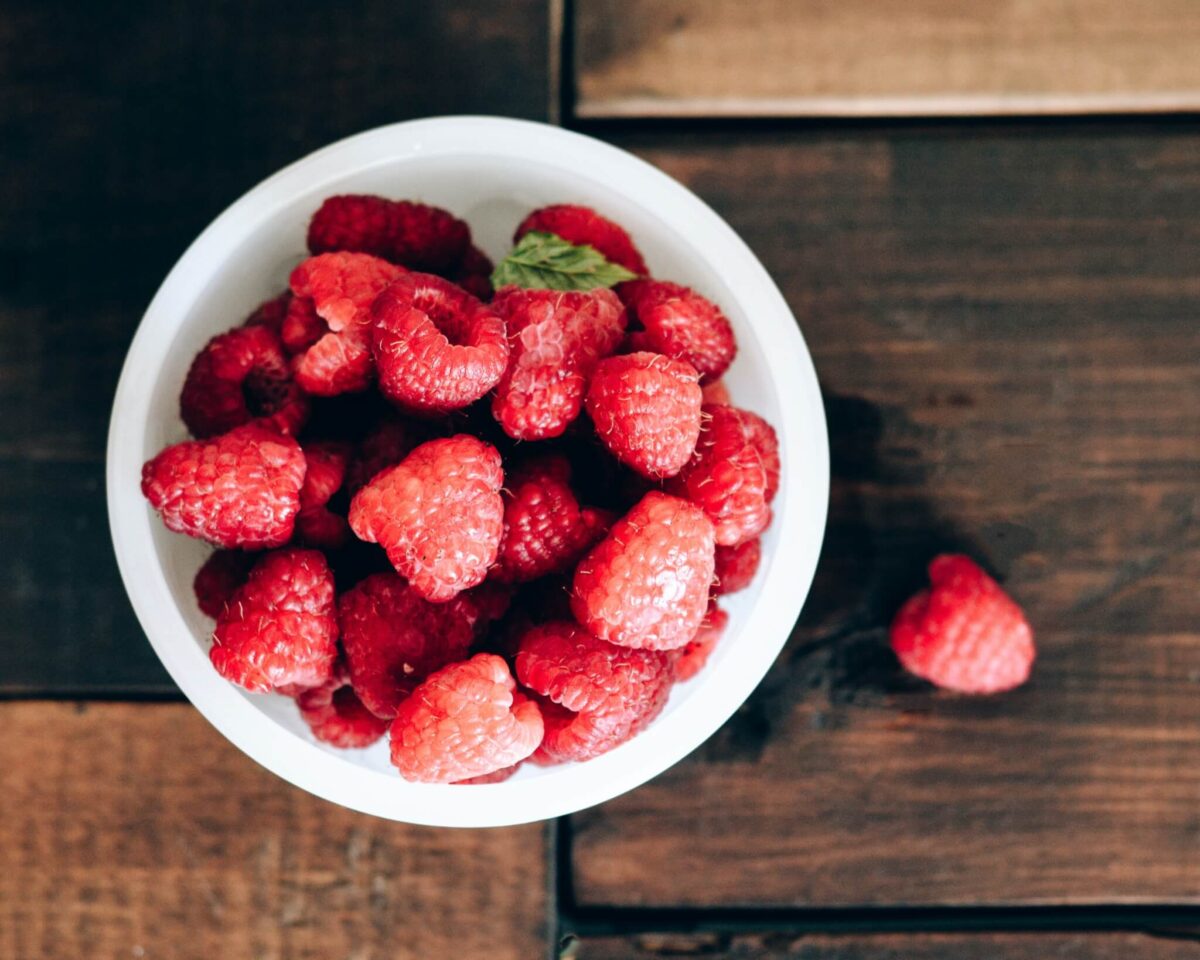
Berries are rich in flavanols. (Photo by Debby Hudson on Unsplash)
In A Nutshell
- Following standard dietary guidelines for fruits and vegetables does not reliably deliver enough flavanols to reach the level linked to heart benefits in a major clinical trial.
- Fewer than 1 in 4 of the healthiest eaters in two large studies consumed 500 mg of flavanols per day, the threshold established by the COSMOS trial.
- Even eating five daily servings of the most commonly consumed American produce made hitting that target unlikely, and choosing the highest-flavanol produce still kept the odds below 50%.
- No official U.S. or U.K. dietary guidelines currently include a recommended daily intake for flavanols.
Most Americans have been told their whole lives that loading up on fruits and vegetables is the key to a healthy heart. Follow the dietary guidelines, fill the plate with produce, and the body will take care of itself. But a large new study is raising doubts about that assumption, finding that playing by the rules may not be enough to reach a flavanol level that has been linked to cardiovascular benefits in a major trial.
Researchers set out to answer a surprisingly straightforward question. If someone actually follows the government’s dietary guidelines, eating the recommended amounts of fruits and vegetables and maintaining an overall healthy diet, do they end up consuming enough of a specific group of plant compounds called flavanols to protect their heart?
Flavanols are natural compounds found in foods like apples, berries, beans, tea, and cocoa products, and a major clinical trial called COSMOS had already shown that 500 milligrams per day was linked to significantly reduced cardiovascular disease mortality in older adults, making it the natural benchmark to test against.
Even among the most health-conscious eaters in the study, those who met or exceeded recommendations for fruit and vegetable intake and scored highest on overall diet quality, fewer than one in four consumed enough flavanols to reach that threshold. That does not mean fruits and vegetables are unimportant for heart health; it means they may not reliably supply this one group of compounds at the level studied in COSMOS.
Urine Samples Gave a More Accurate Picture of Flavanol Levels
Published in Food & Function, the study analyzed data from two large studies conducted on different continents. In the United States, COSMOS included more than 6,500 older adults, with women aged 65 and up and men aged 60 and up. In the United Kingdom, EPIC-Norfolk included more than 24,000 adults recruited between 1993 and 1997, ranging in age from 40 to 79.
Rather than relying solely on participants’ self-reported food diaries, a method known to be unreliable because people tend to misremember or misreport what they eat, the researchers used biological markers measured in urine samples. These markers are chemical byproducts the body produces after consuming flavanols, making them a more objective way to estimate absorption. Using these urine-based measurements, the team could estimate whether participants were likely to be at or above the 500-milligram-per-day flavanol level.
Diet quality was evaluated using established scoring systems. For COSMOS, researchers used a score reflecting adherence to the Dietary Guidelines for Americans, along with tracking fruit and vegetable servings. For EPIC-Norfolk, researchers used a comparable scoring system based on UK dietary recommendations and also measured blood levels of vitamin C as an additional indicator of produce intake.
Fewer Than 1 in 4 Healthy Eaters Hit the Daily Flavanol Target
Across both studies, the results were consistent. In COSMOS, only about 19% of all participants met the 500-milligram flavanol threshold. Among those who ate the most fruits and vegetables, the top quarter of the group, just 21% reached that level. Even participants who scored highest on overall diet quality only hit the target 22% of the time. In EPIC-Norfolk, the pattern was similar: only around 16% of participants in the top quarter of fruit and vegetable intake met the threshold.
One finding from the UK data stood out: participants who most closely followed dietary guidelines were actually among the least likely to reach the flavanol target. Higher tea intake was associated with better odds of reaching the threshold, but even among the heaviest tea drinkers in EPIC-Norfolk, only about 19% made it to 500 milligrams per day.
Researchers also ran computer simulations to model what would happen if someone ate five servings of commonly consumed fruits and vegetables per day, the kind of standard advice found in most dietary guidelines. When those servings were drawn from foods Americans most commonly eat, like bananas, apples, tomatoes, grapes, oranges, and carrots, reaching 500 milligrams of flavanols per day was unlikely. Even when the simulations were set up to favor produce with the highest flavanol content, the probability of hitting the threshold remained below 50%.
Part of the reason, the researchers explain, is that flavanol content in fruits and vegetables is highly variable. Even within the same variety of apple, the amount of these compounds can swing more than tenfold depending on the plant’s breed, growing conditions, and harvest timing. Dietary guidelines were never designed with flavanol levels in mind; they were built around nutrients like vitamins and minerals, so there is no reason to expect that following them would reliably deliver a specific flavanol dose.
A Gap That Current Heart Health Guidelines Can’t Fill
Getting specific benefits from specific compounds may require specific recommendations, and right now, no official government dietary guidelines in the United States or the United Kingdom include a recommended daily intake for flavanols. Eating well, it turns out, and eating to hit a specific heart-health target may be two very different goals.
Disclaimer: This article is based on a peer-reviewed study and is intended for informational purposes only. It should not be construed as medical advice. Consult a qualified healthcare provider before making any changes to your diet or health regimen.
Paper Notes
Limitations
Authors acknowledge several important limitations. The biological markers used to estimate flavanol intake have notable variability between individuals, particularly one marker that depends on gut bacteria, which can differ substantially from person to person. The validation of these markers was conducted in a generally younger population, and it is possible that older adults process these compounds differently. The threshold values used to define whether someone met the 500-milligram daily target were deliberately chosen to overestimate the number of people reaching that level, meaning the actual proportion is likely smaller than reported. Sensitivity analyses confirmed that even with significantly adjusted thresholds, fewer than half of participants meeting dietary recommendations reached the flavanol target. Additionally, COSMOS participants tended to have healthier diets than the general American public, which may mean the findings represent a best-case scenario for the US population. The study also notes that no validated biological markers currently exist for certain tea-specific flavanol compounds, limiting the ability to fully capture flavanol intake from black tea.
Funding and Disclosures
COSMOS received investigator-initiated research grant support from Mars Edge, a segment of Mars, Incorporated, which included infrastructure support and donation of study pills and packaging. Pfizer Consumer Healthcare (now Haleon) provided partial support through study pills and packaging. The study was also supported in part by grants from the US National Institutes of Health, and the Women’s Health Initiative program was funded by the National Heart, Lung, and Blood Institute. EPIC-Norfolk received funding from the Medical Research Council, the National Institute for Health Research, and Cancer Research UK. Two authors, J. I. Ottaviani and H. Schroeter, are employed by Mars, Incorporated. J. W. Erdman received investigator-initiated research support from Haleon and Abbott Nutrition during the study. H. D. Sesso and J. E. Manson received investigator-initiated grants from Mars Edge and Pfizer Consumer Healthcare, and H. D. Sesso additionally reported grants and honoraria from several other organizations. G. G. C. Kuhnle received an unrestricted grant from Mars, Incorporated.
Publication Details
Authors: Javier I. Ottaviani, John W. Erdman Jr., Francene M. Steinberg, JoAnn E. Manson, Howard D. Sesso, Hagen Schroeter, and Gunter G. C. Kuhnle | Journal: Food & Function (Royal Society of Chemistry) | Paper Title: “Adhering to dietary guidelines does not yield flavanol intake levels associated with beneficial cardiovascular effects” | DOI: https://doi.org/10.1039/d6fo00867d


