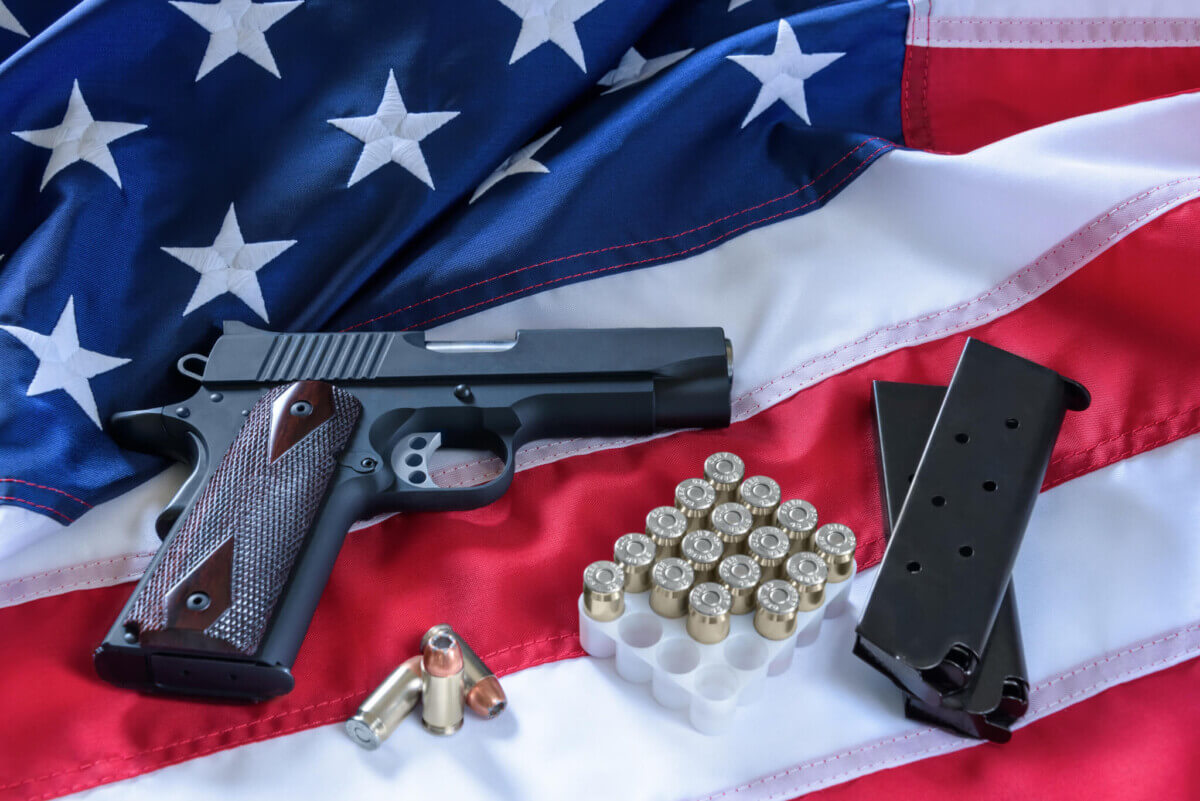
(© Olga Mendenhall - stock.adobe.com)
NEW BRUNSWICK, N.J. — A recent study by the New Jersey Gun Violence Research Center at Rutgers is providing fresh insights into how firearm owners across different states handle and use their weapons.
While studies have shown that having a gun at home can elevate the risks of injuries or fatalities, much of the existing research has been too generalized, often focusing on national samples. This has resulted in a limited understanding of the contrasts between firearm-owning communities across the country.
“Americans have a Constitutional right to own firearms, but individuals in different states exercise that right and use their firearms very differently from one another depending on the community they are in,” says study lead author Michael Anestis, executive director of the New Jersey Gun Violence Research Center, in a media release. “Because of this, the risk for firearm injury and death varies widely from state to state.”
Many studies from the past either didn’t accurately represent the broader population or are now outdated, especially in light of the recent surge in gun sales.
The research team from Rutgers examined data from a diverse set of states – New Jersey, Minnesota, Mississippi, Colorado, and Texas. These states were selected for their significant differences in geography, politics, culture, gun policies, and rates of firearm-related violence.
Findings showed stark contrasts in firearm ownership. Mississippi led the group with 45.6 percent ownership, whereas New Jersey was at the other end with just 13.2 percent. New Jersey residents were also less likely to have grown up in households with guns, registering only 18 percent, while other states surpassed 40 percent and Mississippi reached 53.2 percent.
In terms of firearm use, Mississippi and Texas stood out for riskier behaviors. Owners from these states more frequently stored loaded guns, carried firearms outside their homes, and in Mississippi, often stored them openly in vehicles. These states are known for their relaxed firearm regulations. Conversely, in New Jersey, where gun regulations are stricter, the use of gun safes is more common. Minnesota differed again, with firearm owners more inclined towards rifles and shotguns, and primarily citing hunting as their primary reason for ownership. In contrast, the main reason in all other states was home safety.
Anestis pointed out that lax storage and the recent relaxation in concealed carry laws can lead to more injuries and fatalities.
“The decision to bring a firearm into the home is a personal one and different families are comfortable with different levels and types of risk,” the researcher says. “What is troubling to me, however, is that some states seem to be fostering situations in which their firearm owning residents feel compelled to use their firearms unsafely – storing them unsecured in their homes or vehicles and carrying them frequently outside their homes – and are perhaps unaware of the risks associated with those behaviors.”
“In a nation with overwhelming rates of firearm injury and death, it is beholden upon our policy makers and leaders to ensure that firearm owners are empowered with accurate information about risk and that communities are protected by policies that foster safety. Alienating firearm owners is not the solution, but allowing politics to justify endangering families is not the solution either,” Anestis concludes.
The study is published in the journal Injury Prevention.


