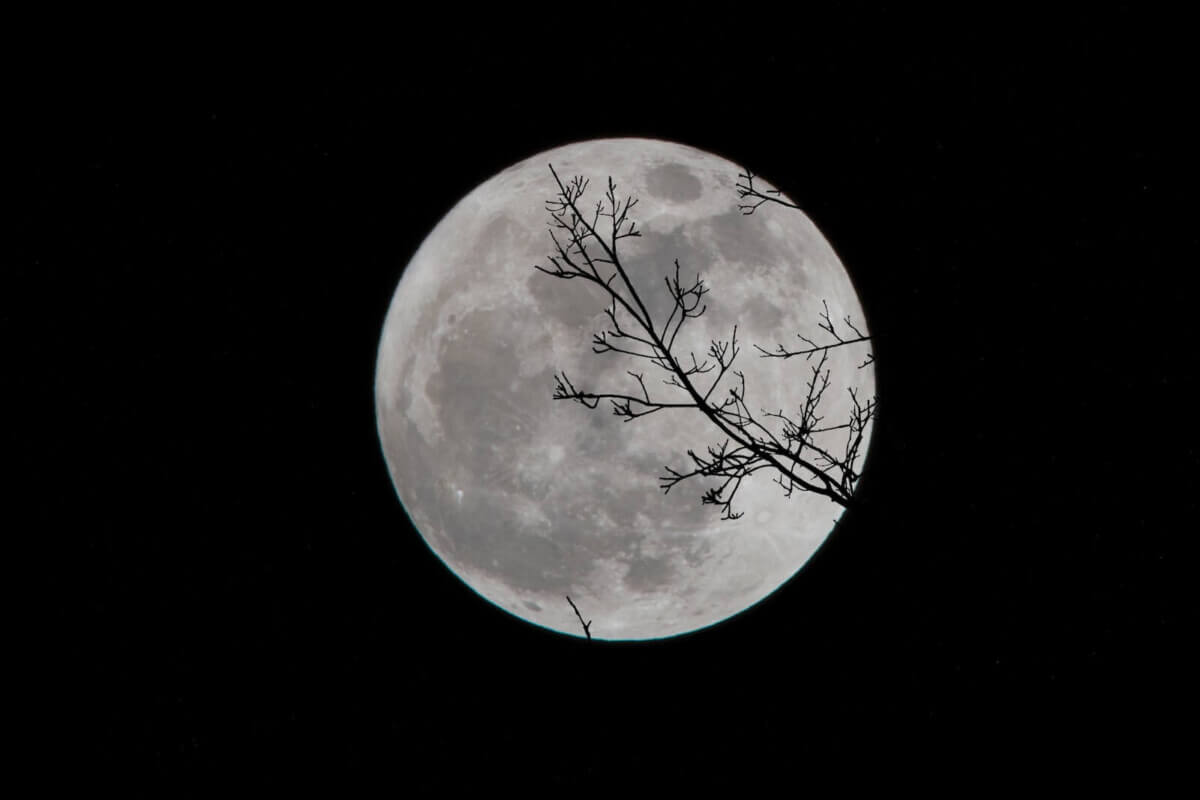
Photo by David Dibert on Unsplash
The Moon’s Darkest Corners Might Shelter Earth’s Toughest Microbes
In A Nutshell
- A new study finds that parts of the Moon’s south pole may not be as deadly to microbes as scientists long assumed.
- Permanent shadows near the pole block the ultraviolet radiation and heat that normally destroy microbial life.
- All five microbes tested could survive over a week in some deeply shadowed craters, though none could grow or reproduce there.
- The findings raise fresh questions about contamination as NASA prepares to send astronauts to that same region during Artemis III.
Humanity is about to return to the Moon, and scientists are raising a major question: could the microbes hitching a ride on astronauts actually survive once they get there?
For decades, the Moon has been treated as a near-sterile world, baked by radiation and temperature swings violent enough to kill almost anything biological. A new study published in Science Advances challenges that broad assumption, finding that certain regions near the Moon’s south pole may offer conditions where microorganisms could survive, at least for days. NASA’s Artemis III mission is planned to send astronauts to that exact region.
Researchers analyzed surface conditions at the lunar south pole using satellite data and computer models, then compared those conditions to how tough certain microbes are known to be. As the study’s authors put it, “Our findings suggest that lunar polar regions may be less hostile to microbial survival than previously assumed.”
Permanent Shadows Near the Pole Block the Radiation That Kills Microbes
Most of what scientists understood about microbial survival on the Moon came from studying conditions near the equator, where all previous crewed Apollo missions landed. There, the Sun beats down hard, blasting the surface with ultraviolet radiation and pushing temperatures to extremes. Under those conditions, microbes don’t stand much of a chance.
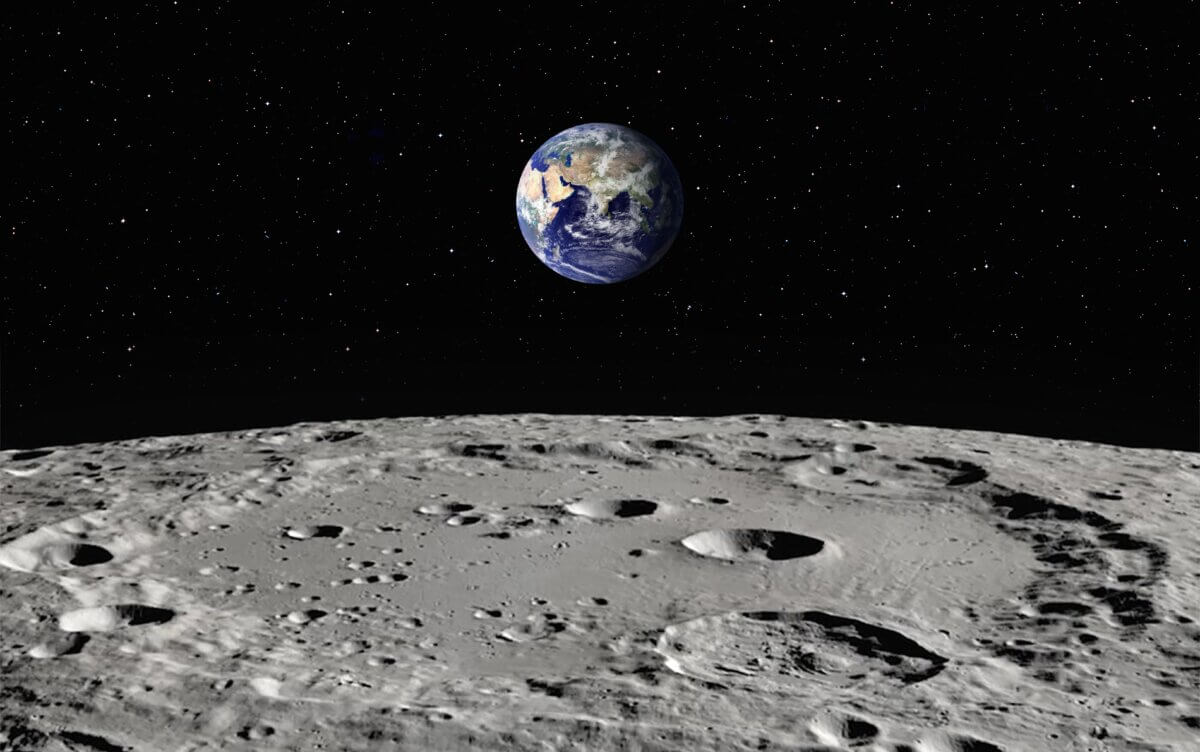
Near the south pole, things are different. Because of the angle at which sunlight hits that part of the Moon, large areas sit in near-permanent shadow, and some craters and depressions never see direct sunlight at all. These permanently shadowed regions stay extremely cold and receive little to no ultraviolet light, one of the most effective natural forces for killing microorganisms.
Previous models estimating microbial survival on the Moon didn’t account for how dramatically local terrain shapes these conditions at the poles. This study specifically set out to fix that gap.
Satellite Data Mapped Sunlight and Shadow in Fine Detail
Researchers drew on data from NASA’s Lunar Reconnaissance Orbiter, a spacecraft that has been mapping the Moon in extraordinary detail since 2009. An onboard instrument called Diviner recorded surface temperatures, while separate maps of the terrain tracked exactly where sunlight and shadow fall.
For specific sites being considered as landing zones for the Artemis III mission, the team modeled sunlight and shadow at a much finer resolution, detailed enough to account for the shadows cast by small hills, crater rims, and other surface features.
Researchers then selected five types of microorganisms to test against those conditions: three bacterial types, Bacillus, Deinococcus, and Staphylococcus, and two fungal types, Aspergillus and Fusarium. All five are commonly found in crewed spacecraft and space stations, making them among the most likely stowaways on any future lunar mission, and some have already demonstrated survival in open space during experiments on the International Space Station.
For each microorganism, researchers identified two critical thresholds: the maximum temperature at which it can grow, and the ultraviolet dose expected to render it nonviable. Those thresholds were mapped against actual conditions at the lunar south pole to identify where, and for how long, each microbe might survive.
Survival over at least one Earth day was the team’s benchmark, longer than the gap between consecutive spacewalks previously conducted on the Moon.
All Five Microbes Could Survive a Week in Shadowed Craters
Across all three Artemis III candidate landing regions studied, the models found patches of terrain where at least some of the five microbes could survive. Aspergillus, a fungus with exceptional resistance to ultraviolet radiation, showed the broadest potential for survival, with estimates suggesting it could survive in roughly 2 to 9 percent of non-shadowed surface area during lunar summer, and 15 to 30 percent during lunar winter.
Survival estimates for the other microbes were smaller, but still present. Inside a deeply shadowed crater near the pole, conditions were more favorable still, and the models found that all five microbes could potentially survive there for longer than a week in some areas, a result that doesn’t automatically extend to every shadowed region on the Moon.
Importantly, the researchers draw a careful distinction between survival and growth. Surviving doesn’t mean thriving. A microbe in survival mode is essentially dormant, not eating, not reproducing, just waiting for better conditions that, on the lunar surface today, never arrive. Still, even dormant microbial survival would mark a previously unrecognized situation: living Earth organisms persisting on another planetary body.
Every astronaut carries millions of microbes on their skin, and even more inside their body. Suits, airlocks, and equipment will inevitably release some into the lunar environment, and currently there are no bioburden requirements for spacecraft bound for the lunar surface. That matters because permanently shadowed regions are thought to trap ancient organic molecules, chemical relics from the early solar system, and contamination from Earth’s microbes, alive or dead, could muddy that record and make future measurements harder to interpret. Researchers suggest that thoughtful contamination tracking and stricter mitigation procedures would help protect the science.
Humanity is heading back to the Moon with more ambition than at any point in the last fifty years. The smallest passengers on those missions may end up being among the most consequential.
Paper Notes
Limitations
Researchers acknowledge several important constraints on their findings. Regional maps used for the south and north poles rely on assumptions of flat terrain, which can cause the models to overestimate ultraviolet exposure in poorly lit areas and underestimate it in well-lit ones. The study focuses on only five microbial types, which represent a small fraction of the microbes that could realistically be transported to the Moon. Additionally, the analysis focuses on survival over short timescales, primarily one to seven Earth days, and the authors note that many factors relevant to longer-term survival require additional study. Interactive effects of multiple environmental stressors occurring simultaneously, such as high temperature combined with ultraviolet radiation, were not fully modeled for all areas. Photoreactivation and other repair mechanisms that could increase survival likelihood were also excluded from calculations for simplicity. Higher-resolution terrain data and more detailed laboratory experiments in lunar-analog environments are identified as necessary for more accurate future estimates.
Funding and Disclosures
This work was supported by NASA grant numbers 24-PPR24-0003 and 80GSFC24M0006, the NASA Goddard Science Task Group Program, and the GSFC Sellers Exoplanet Environments Collaboration. Additional support was provided by the National Aeronautics and Space Administration (820GSFCS). One author acknowledges support from the CIFAR Earth 4D Subsurface Science Program. Computational resources were provided by the NASA Center for Climate Simulation at Goddard Space Flight Center. The authors declare no competing interests.
Publication Details
Authors: Prabal Saxena, Stefano Bertone, Heather V. Graham, Natalie M. Curran, Aaron B. Regberg, Andrew Needham, D. E. (Betsy) Puge, and Noah E. Petro. Authors are affiliated with NASA Goddard Space Flight Center, the University of Maryland, the National Institute for Astrophysics (INAF) Astrophysical Observatory of Turin, the Catholic University of America, and NASA Johnson Space Center. | Journal: Science Advances, Volume 12, Issue 34 | Paper Title: “Potential survivable niches for microbial life on the lunar south pole” | DOI: 10.1126/sciadv.aec0811 | Published: August 19, 2026


