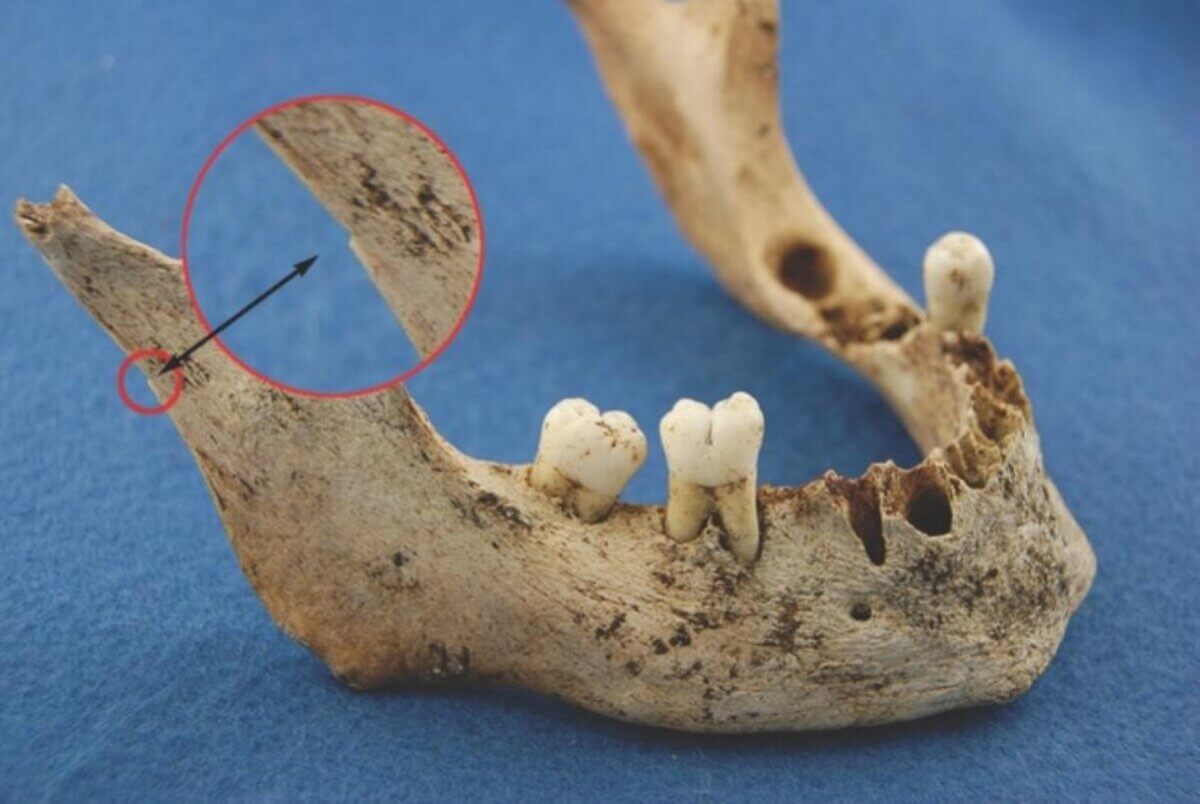
View of mandible NgLj-2:226 illustrating anthropogenic modification consistent with cannibalism: one of two small notches cut on posterior margin of left ascending ramus. (Photo credits: Anne Keenleyside)
WATERLOO, Ontario — In a shocking revelation, new DNA evidence suggests that a doomed expedition to the Northwest Passage 180 years ago likely ended in cannibalism! Researchers have identified the remains of Captain James Fitzjames, a key figure in the infamous 1845 Franklin expedition to discover the Northwest Passage. While the new study finally puts a name to the long-anonymous bones of one of these explorers, it also provides compelling evidence of the desperate measures taken by the expedition’s survivors.
The study, published in the Journal of Archaeological Science: Reports, took a fresh look at the Franklin expedition led by Sir John Franklin. The expedition set sail from England in 1845 with two ships, HMS Erebus and HMS Terror, in search of a sea route through the Arctic. The expedition’s disappearance sparked numerous search missions and captured the public’s imagination for over a century.
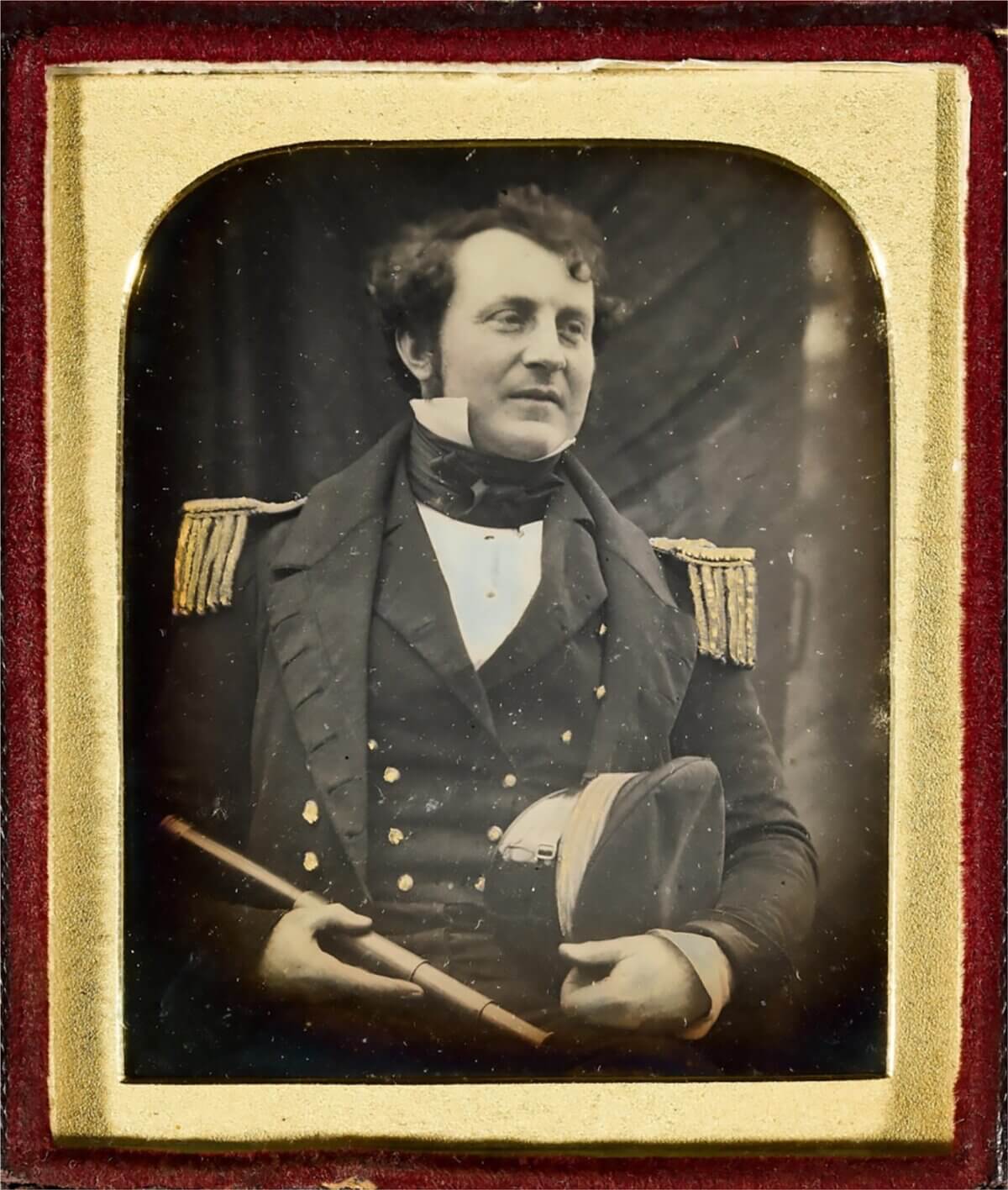
Now, using cutting-edge DNA analysis and genealogical research, scientists from the University of Waterloo and Lakehead University have matched remains found on King William Island in the Canadian Arctic to a living descendant of Capt. Fitzjames, the commander of HMS Erebus and third in overall command of the expedition.
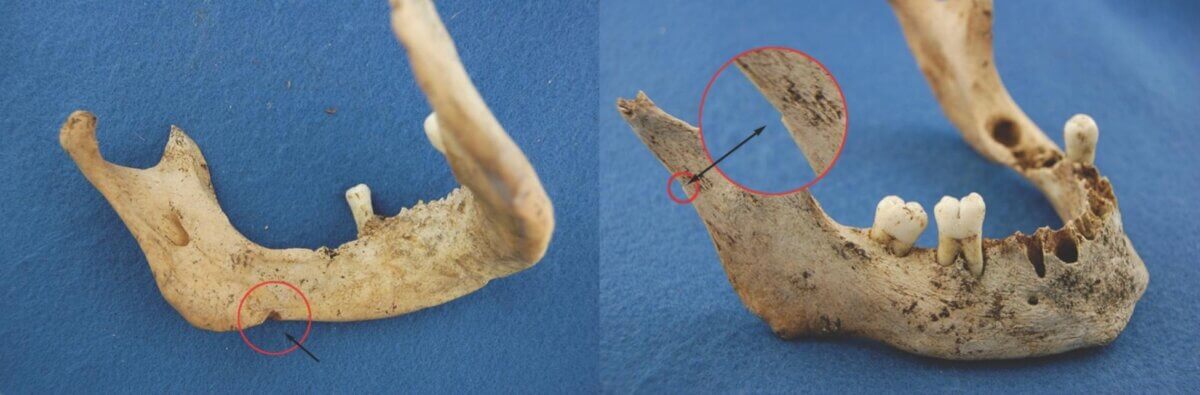
The study focused on a tooth extracted from a mandible (lower jawbone) found at a site known as NgLj-2 on King William Island. This site, discovered in 1861, contained the remains of multiple expedition members and a ship’s boat, suggesting it was a key location in the final days of the doomed voyage.
The researchers compared DNA from the tooth with a sample from a living descendant of Fitzjames’ paternal line. The results showed a genetic distance of just one, indicating a strong likelihood of a shared paternal ancestor. This finding allowed the team to confidently identify the remains as those of Captain James Fitzjames.
“We worked with a good quality sample that allowed us to generate a Y-chromosome profile, and we were lucky enough to obtain a match,” notes Stephen Fratpietro of Lakehead’s Paleo-DNA lab in a media release.
Unfortunately, the discovery did not end there. The mandible bore multiple cut marks, providing stark evidence of cannibalism among the expedition’s last survivors. This grim finding corroborates Inuit accounts from the 19th century and adds a tragic dimension to our understanding of the expedition’s final days.
“This shows that he predeceased at least some of the other sailors who perished, and that neither rank nor status was the governing principle in the final desperate days of the expedition as they strove to save themselves,” explains Dr. Douglas Stenton, adjunct professor of anthropology at Waterloo.
The identification of Fitzjames at NgLj-2, just 50 miles south of where the expedition’s last known message was left, suggests the captain of the Erebus died relatively early in the crew’s attempted escape south. His death would have been a significant blow to the expedition’s leadership at a crucial moment.
“It demonstrates the level of desperation that the Franklin sailors must have felt to do something they would have considered abhorrent,” adds Dr. Robert Park, a Waterloo professor of anthropology. “Ever since the expedition disappeared into the Arctic 179 years ago there has been widespread interest in its ultimate fate, generating many speculative books and articles and, most recently, a popular television miniseries which turned it into a horror story with cannibalism as one of its themes. Meticulous archaeological research like this shows that the true story is just as interesting, and that there is still more to learn.”
The study authors are urging other descendants of the Franklin expedition crewmembers to contact Stenton’s team, as DNA from the late captain helped to crack this cold case after nearly two centuries.
“We are extremely grateful to this family for sharing their history with us and for providing DNA samples, and welcome opportunities to work with other descendants of members of the Franklin expedition to see if their DNA can be used to identify other individuals,” the researchers conclude.
Paper Summary
Methodology
The researchers used two main approaches: DNA analysis and genealogical research. They extracted DNA from a tooth found in a jawbone at the NgLj-2 site on King William Island. This DNA was then compared to a sample from a living descendant of Capt. Fitzjames’ paternal line. The team used a technique called Y-chromosome analysis, which looks at genetic markers passed down from father to son. They compared 17 specific markers between the ancient sample and the modern one.
Key Results
The DNA comparison showed a genetic distance of one between the ancient sample and the modern descendant. This means they likely shared a common paternal ancestor. The probability of this match occurring by chance was calculated to be very low, with the remains being 2,092 times more likely to belong to a paternal relative of the descendant than to an unrelated individual. Additionally, the jawbone showed evidence of cut marks, indicating that the body had been subject to cannibalism after death.
Study Limitations
While the DNA evidence is strong, it’s important to note that the study relies on a single tooth sample and one modern descendant. The researchers also had to rely on historical records and genealogical research to establish the relationship between the modern descendant and Capt. Fitzjames. The interpretation of the cut marks as evidence of cannibalism, while consistent with other evidence, is based on forensic analysis of bone markings.
Discussion & Takeaways
This study provides the first identified victim of cannibalism from the Franklin expedition, offering a grim insight into the desperate final days of the crew. It also demonstrates the power of combining modern scientific techniques with historical research. The identification of Fitzjames at this location helps to reconstruct the timeline and events of the expedition’s final phase, suggesting that even high-ranking officers succumbed early in the escape attempt. This research contributes to our understanding of survival cannibalism in extreme conditions and the challenges faced by 19th-century Arctic explorers.
Funding & Disclosures
The research was primarily funded by the Government of Nunavut Department of Culture and Heritage, with additional support from the University of Waterloo and Lakehead University. The authors declared no competing financial interests or personal relationships that could have influenced the work.


