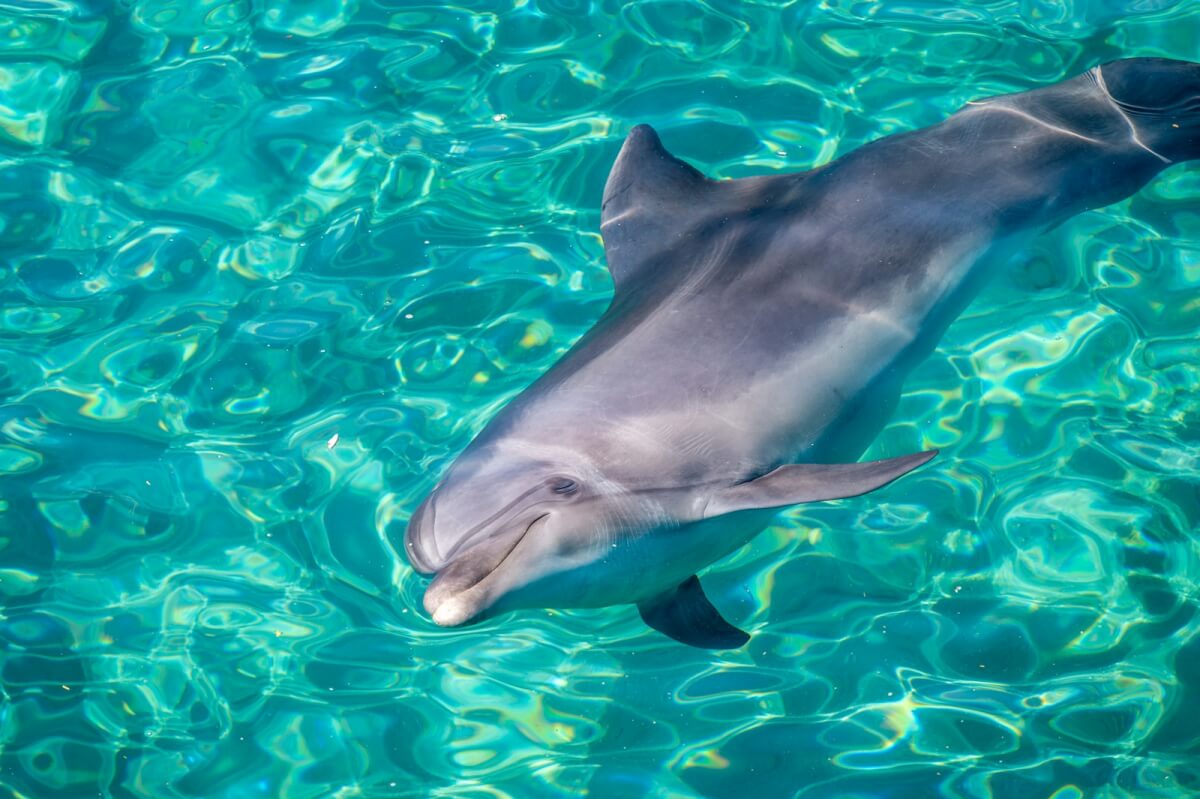
Photo by Ben Michel from Unsplash
A Robot Eavesdropped on Florida Dolphins, and Found Two Very Different Neighborhoods
In A Nutshell
- A two-month robotic survey along Florida’s Atlantic coast found dolphin whistles and echolocation clicks concentrated in largely different stretches of ocean.
- Whistles, tied to socializing, clustered near St. Augustine and Ponce Inlet, while echolocation, tied to foraging, clustered around Cape Canaveral and offshore near Long John Reef.
- Dolphin echolocation was more common in areas where noisy fish were also detected, hinting that dolphins may pick up on fish sounds as feeding cues.
- The study relied on a single season of data and could not identify which dolphin species made which sounds, so the patterns are promising but still preliminary.
Dolphins are loud, social, and surprisingly strategic. A new study published in PeerJ tracking their underwater sounds along Florida’s Atlantic coast has revealed something researchers hadn’t fully mapped before: dolphins appear to favor different stretches of coastline depending on the sounds they’re making, whether that’s social chatter or the clicks tied to finding food, and the ocean environment itself seems to be driving those patterns.
Scientists from Florida Atlantic University’s Harbor Branch Oceanographic Institute deployed a wave powered robot along the Florida Atlantic seaboard for two months, recording dolphin sounds around the clock. Dolphins weren’t scattered randomly along the coast. Their signals clustered in largely different stretches of water depending on what kind of sound they were making, suggesting dolphins may use different parts of the ocean for different purposes.
Pinpointing where dolphins likely feed versus socialize could help managers protect the ocean zones that matter most, especially as boat traffic and coastal development continue to grow.
A Robot That Listens So Researchers Don’t Have To
Studying dolphins across hundreds of miles of open ocean is no small task, since boat surveys are expensive, weather dependent, and limited in range. Researchers instead used an autonomous wave glider, a surfboard sized robot powered by ocean waves, which traveled the continental shelf from Fort Pierce to Jacksonville over 54 days in March and April 2019, recording sounds every five minutes. It also tracked water temperature, salinity, depth, currents, boat noise, and fish sounds, giving researchers a statistical basis for identifying which environmental factors predicted where each dolphin signal showed up.
Researchers reviewed nearly 62 hours of audio across nearly 15,000 recording files. Dolphins showed up in just over 11% of them. Whistles made up about 55% of detections, and echolocation clicks, short bursts of high frequency sound bouncing off objects and returning as a biological sonar for locating prey in murky water, came in at roughly 30%, with the remainder a mix of both.

Different Sounds, Different Places Along Florida’s Coast
Dolphin communication falls broadly into two categories. Whistles are social sounds used to keep groups together, identify individuals, and communicate over long distances. Echolocation clicks help dolphins navigate and detect prey, and the two sound types were associated with distinctly different ocean environments along the Florida coast.
Whistle detections clustered closer to shore, concentrated near St. Augustine, Ponce Inlet, and to a lesser degree Melbourne Beach. Cooler water temperatures and higher chlorophyll concentrations, a marker of a food rich environment, were both associated with more whistle activity. Fish sounds did not predict where whistles occurred, which tracks: dolphins catching up with each other don’t need to be near a meal.
Echolocation detections told a different story, concentrated in a wide band from Melbourne to Ponce Inlet centered around Cape Canaveral, and also appearing offshore near Long John Reef, a hard bottom habitat where fish gather. Unlike whistles, echolocation detections were positively linked to the presence of fish that make their own underwater sounds, a pattern researchers connect to foraging activity. Predicted habitat maps built from the models backed this up, pointing to the same two zones as the best matches for each behavior.
Could Noisy Fish Be Giving Away Their Location to Dolphins?
Some fish, including drum fish and toadfish, produce grunts and other sounds tied to spawning or group behavior. The study found delphinid echolocation was positively associated with fish presence, raising the possibility that dolphins pick up on those sounds as clues to nearby feeding opportunities.
Researchers also raise a reverse possibility drawn from prior predator avoidance research: prey species may go quiet when they detect the longer range whistles dolphins use, since a silent fish is harder to find. That could help explain why fish sounds weren’t a useful predictor of whistle activity, though the study measured overlap between sound types, not fish reacting to dolphins directly.
Boat noise complicated the picture too. Louder underwater noise was generally linked to fewer whistle detections, but researchers also saw a slight uptick at the highest noise levels, possibly reflecting dolphins calling more to stay in touch when boats drown out communication. There was also a clear seasonal pattern, with echolocation notably more frequent in March than April, lining up with known dolphin migrations along the coast as one stock heads north and clears out of northern Florida waters by spring.
Why This Research Matters for Dolphin Conservation
Knowing where dolphins likely feed versus socialize has real management value. Feeding grounds may be especially vulnerable to disruption from boat traffic or fishing activity, while social hubs represent areas where dolphins maintain essential group bonds.
It’s worth noting what this study cannot yet tell us. Without visual observation, researchers could not confirm which species produced which sounds, and several dolphin species share the Florida Atlantic coast with different habits and preferences. The findings also rest on a single two month deployment in one season, so the patterns, while compelling, remain preliminary until confirmed by repeated surveys.
Still, the approach shows how autonomous acoustic monitoring can help researchers identify likely feeding and socializing zones across large ocean areas without ever needing to physically spot a dolphin, just by listening.
Dolphins have been signaling where they live and what they’re doing all along. Scientists just needed a smarter way to listen.
Paper Notes
Limitations
Researchers identified several important limitations in the study. Acoustic monitoring, while noninvasive and highly practical, cannot capture every dolphin present, since animals may be in the area but not vocalizing, or their sounds may be masked by background noise. Only a single trained observer reviewed all the audio recordings, making it impossible to calculate a formal estimate of observer bias. Because visual observation was not available during this deployment, the study could not distinguish between different dolphin species that share the Florida Atlantic coast, some coastal, some offshore, each with potentially different acoustic behaviors and habitat preferences. The authors also note that the results are based on a single two-month deployment, and repeated surveys over multiple seasons and years would strengthen confidence in the patterns found.
Funding and Disclosures
This work was supported by the Harbor Branch Oceanographic Institute Foundation through specialty license plate programs titled “Protect Wild Dolphins” and “Protect Florida Whales.” The funders had no role in study design, data collection, analysis, the decision to publish, or preparation of the manuscript. The authors declare no competing interests. The authors also acknowledged the use of ChatGPT from OpenAI to troubleshoot coding scripts and for proofreading of small portions of the manuscript.
Publication Details
Authors: Jessica Carvalho, Greg O’Corry-Crowe, and Laurent M. Chérubin, all affiliated with Harbor Branch Oceanographic Institute, Florida Atlantic University, Fort Pierce, Florida. Paper Title: “Differential acoustic habitat use in delphinids along the Florida Atlantic coast” Journal: PeerJ Volume: 14 Article ID: e21547 DOI: 10.7717/peerj.21547 Published: July 31, 2026 Corresponding Author: Jessica Carvalho ([email protected])


