
(Credit: © Chris Reynold - stock.adobe.com)
In A Nutshell
- Most house spiders never lived outside at all. Species like the American house spider are adapted to indoor life, so putting them in the yard doesn’t return them to a native habitat, it exiles them from one.
- Cold, predators, and dehydration make relocation a likely death sentence. Species built for a house’s steady warmth and humidity often die fast once exposed to weather and predators outdoors.
- Not every spider in the house belongs there. Wolf spiders and other ground-hunting species wander in by accident, don’t build indoor webs, and are the ones that genuinely do better back outside.
- They’re already doing pest control for free. Indoor spiders eat flies, mosquitoes, and moths, so removing them trades a quiet pest-control service for an unnecessary death.
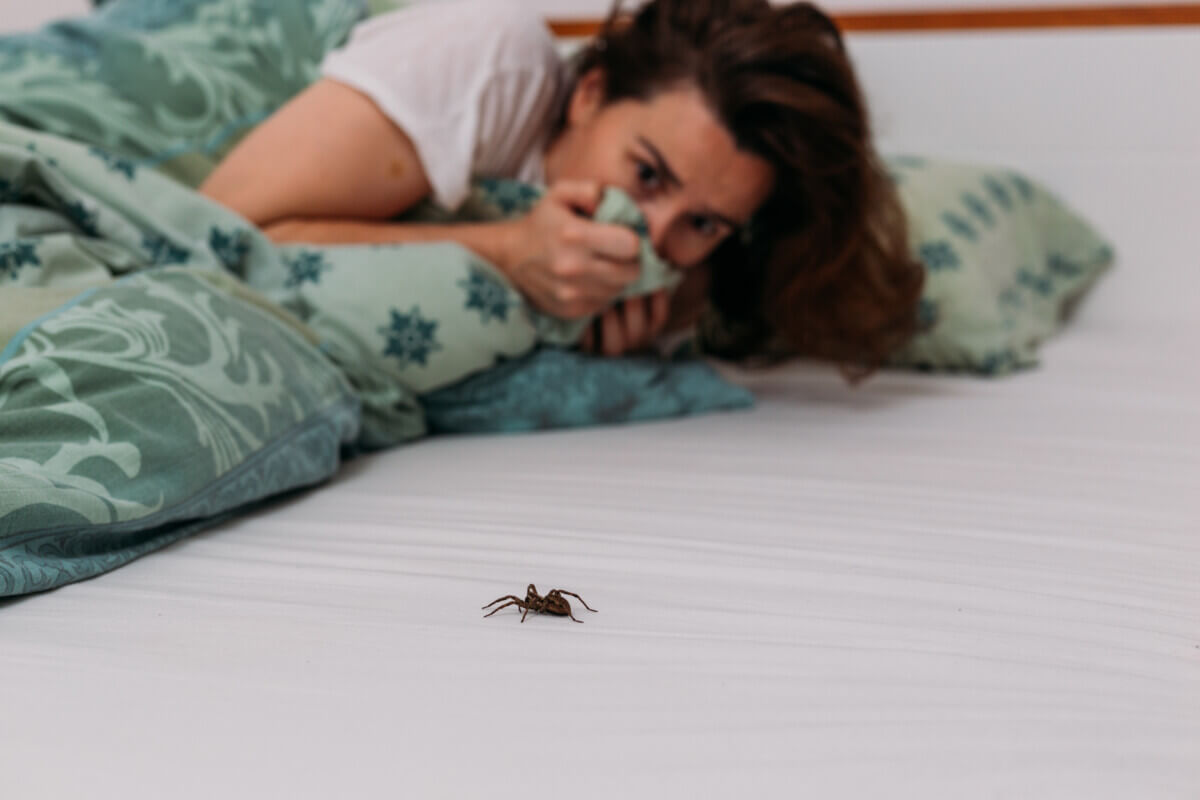
Before you scoop that creepy (yet likely harmless) bedroom spider into a cup and send it into the yard, consider this: for many of the web-builders living behind your couch or in the basement, outdoors isn’t home. In fact, relocating the arachnid outside won’t mean a new beginning, but rather will spell the end. These indoor specialists are adapted to the steady shelter of a house, where they help keep flies, mosquitoes, and moths in check.
A small number of species have adapted specifically to indoor conditions, and they make up most of what people find crawling across a wall or making a home in the corner of a room. The University of Minnesota Extension describes these as web-building spiders that “can survive and reproduce well indoors,” distinct from outdoor hunting spiders that only wander in by accident and don’t fare well once inside.
The American house spider, Parasteatoda tepidariorum, is the classic example. Rod Crawford, curator of arachnids at the Burke Museum of Natural History and Culture at the University of Washington, told Live Science the species is probably native to northern South America and does fine outdoors only in climates like Brazil’s.
The giant house spider, Eratigena atrica, tells a similar story: native to England, it now lives across homes in the northwestern United States, yet Crawford said it is “hardly ever found outside” even in Seattle, whose climate resembles London’s. Cellar spiders, genus Pholcus, and cobweb-building house spiders round out the group the University of Minnesota lists as reliably indoor dwellers.
Why Does Putting Them Outside Usually Kill Them?
The instinct to release a spider feels kind, but truth be told, it isn’t. “You can’t put something ‘back’ outside that was never outside in the first place,” says Crawford. These species evolved for the specific, narrow conditions of a building interior: stable temperature, low airflow, and a steady trickle of small insect prey. Strip that away and a spider adapted over generations to indoor life faces cold snaps, rain, wind, and predators such as birds and wasps that it has little defense against.
Crawford’s research points to a further wrinkle: even species that made the same climate-to-climate move humans did, like the giant house spider crossing from England to the similarly damp Pacific Northwest, still rarely survive outside a building. When Eratigena atrica does turn up outdoors, it’s typically sheltering in a man-made structure like a brick pile rather than open ground.
Not every arachnologist reads the evidence the same way. Rick Vetter, a retired entomology researcher at the University of California, Riverside, told Live Science he’d still toss spiders outside, since all spiders ultimately descend from outdoor ancestors, acknowledging the released spider “might die, but then again, they might find suitable habitat.”
Do Any House Spiders Actually Belong Outdoors?
Yes, and telling them apart matters. Hunting spiders such as wolf spiders don’t build webs and normally live outdoors in gardens, woodpiles, and leaf litter, occasionally wandering into a house by mistake, especially in fall.
The University of Minnesota Extension notes these species “do not survive well indoors and usually do not reproduce indoors,” which makes them the mirror image of the American house spider: for a wolf spider, outside is home, and a return trip to the yard is the right call.
So What Should You Actually Do?
Extension entomologists recommend a simpler fix than relocation for genuine house-dwelling species. He suggests moving the spider to a part of the home you don’t mind sharing, such as a basement or garage, rather than the yard.
Crawford notes that most spiders seen in a house are part of a larger resident population, so removing one barely changes the count. Sealing cracks around windows and the foundation, per University of Kentucky guidance, cuts down unwanted encounters more than catch-and-release ever will, while leaving the household’s free pest control team in place.


