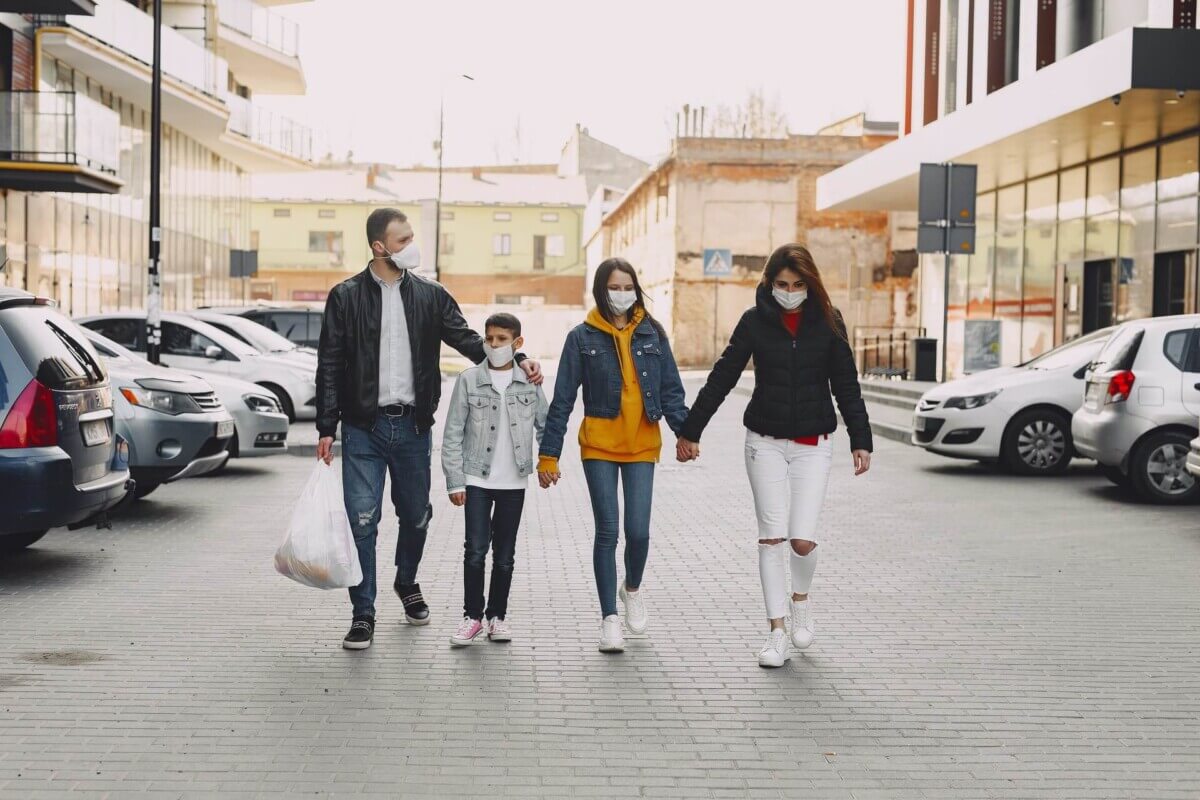
(Photo by Gustavo Fring from Pexels)
WATERLOO, Ontario — COVID-19 has disrupted countless lives around the globe and still serves as a daily, unavoidable stressor. Now, researchers from the University of Waterloo are revealing just how detrimental the pandemic has been for multi-child families.
To start, the study finds that within a multi-child family, one child typically tends to be more affected by the pandemic than their siblings — experiencing more stress, anxiety, anger, and depression. Unfortunately, this development appears to create a negative feedback loop of poor parenting decisions. Stressed out parents trying to navigate these uncertain times end up reacting harshly to the child in need of additional support.
“Our study shows that parents tend to be most reactive and least positive to the child showing the highest levels of mental health difficulties,” says lead study author Dillon Browne, a professor of clinical psychology, in a university release.
“Struggles with mental health among family members exacerbate each other in a feedback loop,” he continues. “Our study suggests that the direction of influence appears to go from the child’s mental health to parenting, not parenting to child mental health.”
Family therapy could fix this trend
Data was collected on over 500 caregivers and 1,000 siblings for this study. More specifically, caregivers with at least two children (ages 5-18) filled out surveys asking about their COVID stress, overall family functioning, and mental health on numerous occasions during a two-month tracking period.
“Understanding children’s mental health difficulties during COVID-19 requires a family system lens because of the numerous ways the pandemic affects the family as a unit. Comprehensive interventions for children’s mental health require an examination of caregiver, sibling, and whole-family dynamics,” explains Prof. Browne, who also holds the Canada Research Chair in Child and Family Clinical Psychology.
In light of these results, study authors believe countless families and households will likely benefit from some family therapy sessions. Moreover, individual psychotherapy sessions for both children and adults may be a useful tool as the world continues to endure the ongoing pandemic.
“A lot of research studies have pointed to mental-health challenges associated with the pandemic for children and parents. This work adds insight into how pandemic-related disruption goes beyond the individual and infiltrates the relational environment of the family unit,” Prof. Brown concludes.
The study is published in the journal Developmental Psychology.


