(© Oleg - stock.adobe.com)
Scientists Think They Know Why Catnip Often Falls Flat With Cats
In A Nutshell
- When given a free choice, cats in multiple experiments showed a strong preference for silver vine over catnip.
- Catnip actually contained far more of the key active chemical, meaning cats weren’t ignoring it due to a lack of potency.
- Researchers think the precise chemical blend matters more than sheer quantity, and that an intact catnip plant’s strong odor may actually work against it.
- If your cat ignores catnip, silver vine may be a more reliable alternative.
For decades, catnip has been the go-to treat for cat owners looking to give their pets a good time. Pet store shelves are packed with catnip toys, catnip sprays, and catnip-stuffed pillows, all built on the assumption that this herb is the gold standard of feline fun. But a new study says cats, given a free choice, show a strong bias toward something else.
Researchers tested both free-roaming outdoor cats and captive cats to see which plant they preferred when left entirely to their own devices: catnip or silver vine, a plant common in the forests of East Asia. Across several free-choice or close-comparison tests, cats showed a strong bias toward silver vine, rolling and rubbing against it with enthusiasm, while largely ignoring the catnip sitting nearby, even though the catnip contained far more of the active chemical that scientists had long believed drives the response in the first place.
That result cuts against a long-held assumption in animal behavior science: that the more potent a chemical is in a controlled lab test, the more reliably it will drive behavior in the real world. According to the study, published in the Journal of Chemical Ecology, that assumption simply doesn’t hold up once animals are free to make their own choices.
What Cats Actually Do With These Plants
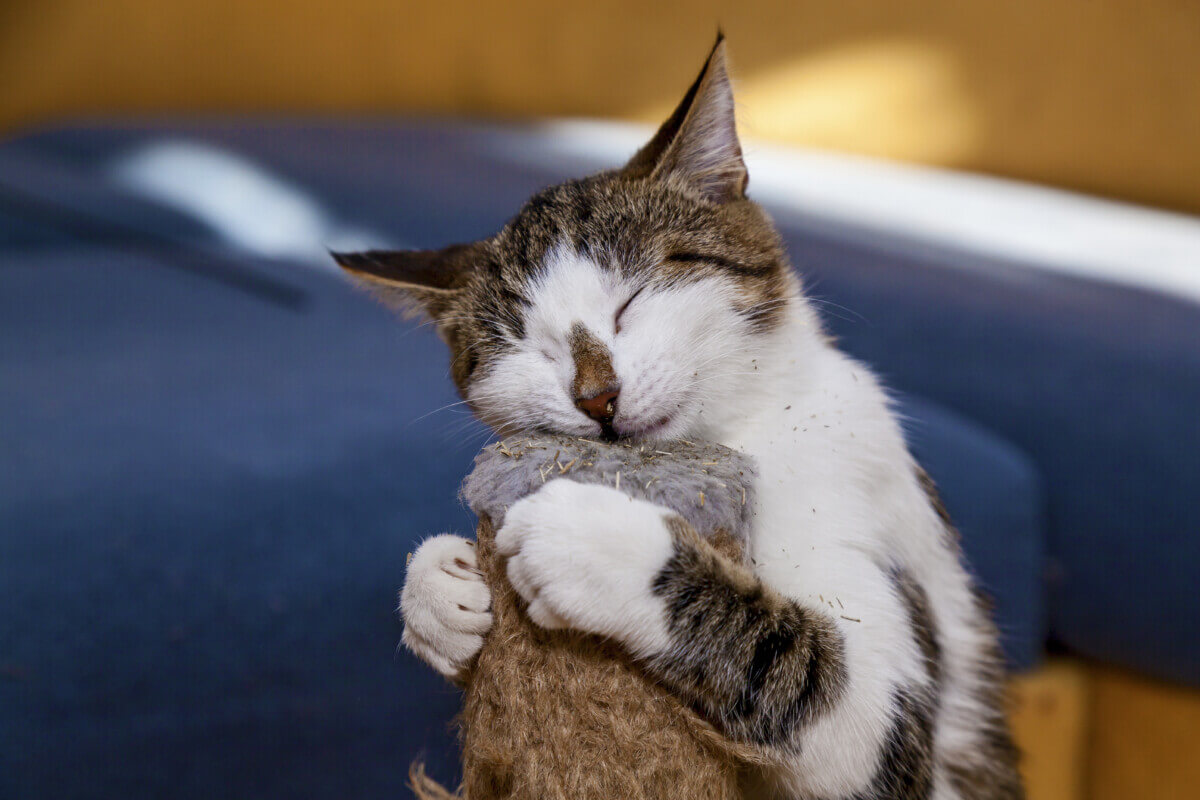
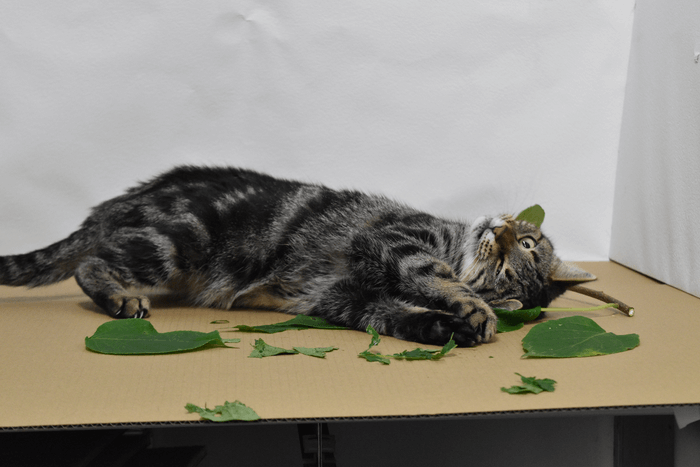
When a cat encounters catnip or silver vine, it often begins rubbing its face against the plant, rolling around near it, and sometimes licking or chewing it. Scientists call this “self-anointing,” a process in which the cat essentially transfers the plant’s chemicals onto its own fur. Previous research has suggested this behavior may help protect cats from mosquitoes, since the chemicals involved repel insects.
Both plants contain natural chemical compounds that trigger this rolling-and-rubbing response. Catnip’s main active ingredient is a compound called nepetalactone, while silver vine produces a different but related set of compounds, including one called nepetalactol, along with a more chemically varied blend of other related substances. Both plants have long been marketed as cat attractants, and both have been shown to work in laboratory settings. What this study set out to answer was simpler but more revealing: when cats can actually walk up to these plants on their own terms, which one do they go for?
Outdoor Cats Ignored Catnip Almost Entirely
In the first experiment, freshly cut silver vine branches were placed in an outdoor garden in Japan where a catnip plant was already growing. Free-roaming cats could enter and leave the garden by climbing the fence, and a trail camera recorded what they did. Across 10 presentation nights, six free-roaming cats made 23 recorded visits. They rubbed or rolled toward silver vine in 21 of the 22 visits counted for that response, while showing no such behavior toward the catnip plant or fresh catnip material at all.
In a follow-up outdoor experiment, the team applied liquid extracts of both plants to opposite sides of the same brick, so cats would encounter both smells at close range at the same moment. Even then, cats leaned clearly toward the silver vine side. One cat responded only to the silver vine extract across multiple visits and never to the catnip side.
To confirm this wasn’t a quirk of one group of outdoor cats, the researchers ran a third experiment with 22 captive purebred cats housed at two facilities in Japan. These cats represented nine different breeds with origins spanning the United States, the United Kingdom, Russia, and Iran, ranging in age from 3 to 16 years. Crucially, none had any known prior exposure to either plant. Filter papers soaked in catnip extract and silver vine extract were placed in the cats’ normal living area simultaneously, 15 centimeters apart.
Fifteen of the 22 cats responded to the silver vine extract but not to the catnip extract. Only three cats responded to the catnip extract but not to the silver vine. The remaining cats either responded to both or neither. The preference for silver vine was statistically clear.
Silver Vine’s Secret May Be in the Mix
When the team chemically analyzed their catnip extract, they found it contained substantial amounts of nepetalactone, the very compound known to trigger the rolling response. The catnip extract contained roughly 170 times more measured bioactive iridoids than the silver vine extract used in the study. So cats weren’t ignoring catnip because it lacked the right chemicals. It had plenty. They just didn’t seem to care.
The researchers also ran a fourth experiment testing two additional chemical variants of nepetalactone on a separate group of laboratory cats. One variant triggered rolling and rubbing in the majority of cats tested. The other produced a much weaker response. This points to the precise mix of chemicals, not just the total amount, as a meaningful factor in whether a cat will actually engage.
Why might a living catnip plant fail to attract cats even when it has the right chemistry? One possible explanation, raised by the authors, is that the strong, continuous odor released by an intact plant may actually reduce a cat’s motivation to engage. Silver vine’s blend, though far lower in raw quantity, may land in a more effective range. When a cat licks or chews silver vine, the plant’s chemical complexity also increases, possibly helping to sustain the animal’s interest. The authors are careful to note that some of this interpretation remains speculative and will require more ecological, behavioral, and genomic research to fully resolve.
What This Means for Cat Owners
The researchers are careful to point out that catnip is not useless. Cats did respond to catnip extracts in some situations, and dried catnip in pet products may work well precisely because drying reduces the intensity of its odor. But the broader point is about how scientists measure whether a chemical actually does something meaningful in nature. A compound can look incredibly powerful in a controlled laboratory test and still fail to reliably trigger behavior when an animal has the freedom to simply walk away.
For cat owners, the practical takeaway is simple: if catnip doesn’t do much for your cat, silver vine may be worth trying. Cats, it turns out, may have already been telling us that.
Paper Notes
Limitations
The authors identify several important limitations. The catnip came from a single cultivated garden patch, and the silver vine was collected from a single wild population, which limits how broadly the chemical findings can be generalized. The group of free-roaming cats was small, only six identifiable individuals from one outdoor site, and because the catnip and silver vine stimuli looked visually different, the researchers scoring the videos could not do so without knowing which stimulus was which, introducing the possibility of observer bias. In the captive experiment, cats were tested together in their normal group living space rather than in individual isolation, meaning social factors cannot be fully ruled out. The two filter papers were placed only 15 centimeters apart, so odor plumes may have partially overlapped. The free-roaming cats’ prior exposure histories were unknown, though the captive cats had no documented prior exposure to either plant. Whether the behavioral preference for silver vine reflects something inborn, something learned, or a combination of both remains an open question.
Funding and Disclosures
Open access funding was provided by Iwate University. Reiko Uenoyama was funded by the Japan Society for the Promotion of Science (JSPS) under KAKENHI Grant No. 22KJ0151. Masao Miyazaki was funded by JSPS under KAKENHI Grant Nos. 23H02526 and 26K02058, the Suntory Foundation for Life Sciences, and the Takeda Science Foundation under Bioscience Research Grants. The authors declare no competing interests.
Publication Details
Authors: Reiko Uenoyama, Tamako Miyazaki, Sae Ooka, Toshio Nishikawa, and Masao Miyazaki | Journal: Journal of Chemical Ecology (2026), Volume 52, Article 43 | Paper Title: “Free-Roaming and Captive Cats Prefer Silver Vine to Catnip for Self-Anointing” | DOI: 10.1007/s10886-026-01717-3 | Affiliations: Faculty of Agriculture, Iwate University; School of Veterinary Medicine, Iwate University; Graduate School of Bioagricultural Sciences, Nagoya University


