
Experts say taking your blood pressure with a bare arm is more accurate. (Credit: © amenic181 - stock.adobe.com)
In A Nutshell
- A dangling arm can push your reading into a different diagnostic category. A Johns Hopkins clinical trial found an unsupported arm overestimated systolic blood pressure by 6.5 mmHg on average, enough to shift some people from “elevated” to “stage 1” hypertension.
- Resting the arm in your lap isn’t much better. The same trial found lap support overestimated systolic pressure by 3.9 mmHg and diastolic by 4.0 mmHg compared with the guideline-recommended desk support.
- It’s not just the arm. Talking during the reading, crossed legs, an unsupported back, and a full bladder can each add several more mmHg on top of arm-position errors, according to the American Heart Association.
Why Does Something As Simple As Arm Position Change Blood Pressure Readings?
You sit down at the doctor’s office, slip on the blood-pressure cuff, and let your arm hang naturally at your side. It feels harmless — maybe even more comfortable than balancing it on a table. But that small detail could make your reading look high enough to raise concerns about hypertension, even when your blood pressure hasn’t changed at all.
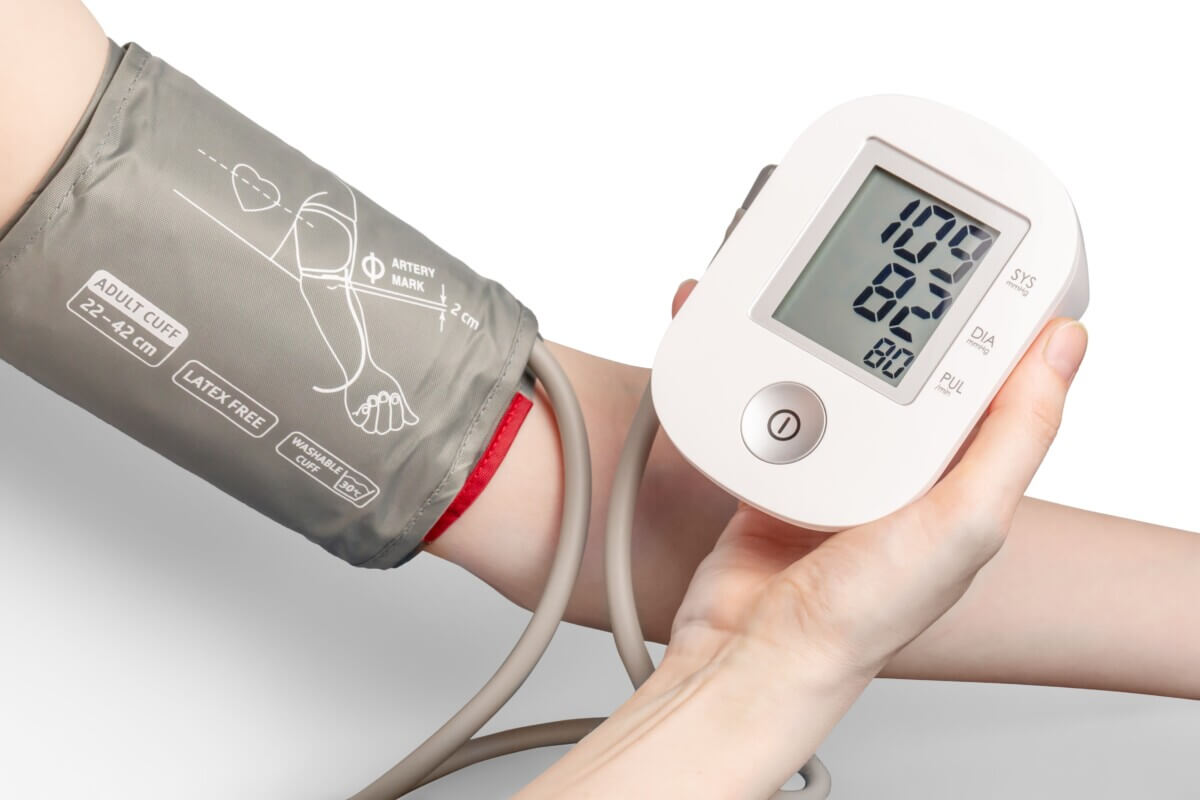
Blood pressure guidelines call for the arm to be supported on a desk or table with the cuff’s midpoint at heart level. When the arm hangs below that level, gravity adds extra hydrostatic pressure that the heart has to work against to push blood upward, and the cuff registers that added force as part of the reading. Supporting the arm removes that extra load, which is why it’s the reference position in clinical guidelines.
A randomized crossover trial led by Johns Hopkins Medicine, published in JAMA Internal Medicine in October 2024, tested this directly. Researchers recruited 133 adults in Baltimore, ages 18 to 80, and measured each person’s blood pressure with the arm supported on a desk, resting in the lap, and hanging unsupported at the side. Compared with desk support, an unsupported arm overestimated systolic pressure by 6.5 mmHg and diastolic by 4.4 mmHg; lap support overestimated systolic by 3.9 mmHg and diastolic by 4.0 mmHg.
Senior author Dr. Tammy Brady called the difference “huge” for a measurement clinicians use to decide who needs blood pressure medication. Study author Sherry Liu put the stakes in concrete terms: a 6.5 mmHg overestimate is roughly the gap between a systolic reading of 123 and 130, the exact threshold separating a normal reading from Stage 1 hypertension.
A related trial led by researchers at Ohio State University, published in the journal eClinicalMedicine, found a similar pattern from a different posture error. Patients measured while seated on an exam table rather than a proper chair had systolic readings averaging 7 mmHg higher and diastolic readings 4.5 mmHg higher than guideline-correct positioning, in a study of 150 adults presented at an American Heart Association scientific conference.
What Other Common Mistakes Skew The Reading?
Arm position is only one variable. According to the American Heart Association, citing American College of Cardiology figures, talking during the measurement can raise readings by up to 19 mmHg, crossed legs by up to 15 mmHg, and a full bladder by up to 33 mmHg, while an unsupported back or dangling feet can add roughly 5 mmHg. These are upper bounds from varied conditions, not a fixed effect every time, and aren’t directly comparable to the controlled Hopkins trial, but the direction holds: rushed, improvised positioning tends to push readings higher, not lower.
What Does Correct Blood Pressure Measurement Actually Look Like?
The American Heart Association’s guidance is specific: sit in a chair with back support and feet flat on the floor, and rest the bare arm on a desk so the cuff sits at heart level. Stay quiet during the reading, and make sure the bladder is empty and caffeine, exercise, and smoking have been avoided for 30 minutes beforehand.
At home, a pillow under the elbow can bring a low table up to the correct height, and a properly sized cuff matters too, since an undersized cuff is a separate, well-documented source of falsely high readings.
None of this means home or clinic readings are useless, but a single number taken with poor form is easy to misread as a diagnosis. Repeating the measurement under proper conditions, and tracking readings over time rather than reacting to one visit, gives a far more reliable picture.


