
Credit: © Kwangmoozaa - stock.adobe.com
In A Nutshell
- A major analysis of 47 trials and 6,230 patients found antihistamines produce little to no meaningful relief for eczema symptoms.
- Older drugs like Benadryl and hydroxyzine were linked to a real increase in cognitive impairment, including confusion and memory problems.
- Not all newer antihistamines carry the same risk: Claritin showed no increase in cognitive impairment, while Zyrtec and levocetirizine did.
- Researchers say antihistamines are now largely unnecessary for most eczema patients given better treatment options.
Millions of Americans reach for antihistamines like Benadryl or Zyrtec when their eczema flares. A major new analysis of 47 randomized controlled trials suggests that habit may be doing little good and, in some cases, harm.
Published in The BMJ, the study pooled data from those trials and 6,230 patients. Researchers found that while some drugs produced a small reduction in skin severity and itch, the effect was too small for most patients to notice. Older antihistamines like diphenhydramine (sold as Benadryl) and hydroxyzine were found to probably increase cognitive impairment, a category including worsened memory or motor performance, confusion, delirium, and hallucinations, measured during the treatment periods studied. These older drugs may also lead more patients to stop treatment because of side effects.
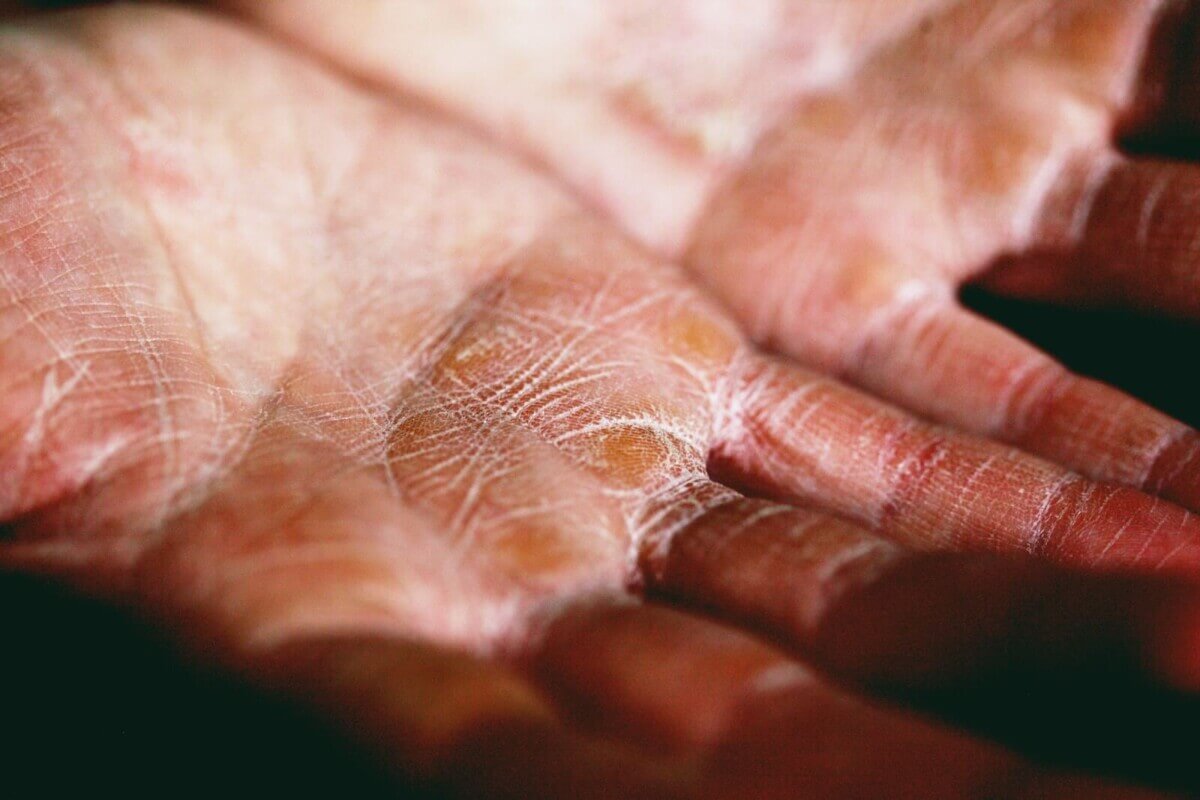
Eczema, the common name for atopic dermatitis, is a chronic inflammatory skin condition affecting roughly 13% of children and 7% of adults. It causes intense itching that can disrupt sleep, hurt mental health, and strain family life. Oral antihistamines have long been a go-to add-on treatment, used by more than 20% of eczema patients in recent UK estimates and 47% in recent US estimates. Yet the evidence supporting that use has, until now, remained murky.
Stronger Evidence After Decades of Uncertainty
For years, clinicians had a reasonable theory for why antihistamines might help eczema. Histamine, a chemical released by immune cells during an allergic reaction, triggers itching and inflammation. Blocking histamine made intuitive sense, and the sedating effects of older antihistamines seemed like a potential bonus for patients kept awake by relentless scratching.
Science has since moved on. Current understanding is that eczema-related itching is driven mostly by pathways that have nothing to do with histamine, and this study’s results back that up. Testing multiple drug types and generations across thousands of patients, researchers found no improvement in itching large enough for patients to actually feel. Evidence on whether the drugs improve sleep or reduce flare-ups was rated low certainty, weaker and less conclusive than the findings on severity and itch.
A 2019 review by Cochrane, an independent research network, looked at a smaller body of evidence limited to placebo-controlled trials and produced inconclusive results. This new analysis combined placebo-controlled trials and head-to-head drug comparisons in a single joint analysis, producing what the authors describe as a shift from absence of evidence to evidence of absence.
How Antihistamines for Eczema Were Tested
Researchers searched major medical databases through May 2025 and identified 41,381 records. After screening, 47 trials met the criteria for inclusion, enrolling 6,230 children and adults with a median reported average age of 20. About 52% of participants were female, and 57% of the trials focused on children. Most participants had moderate to severe eczema, and most were also using background treatments such as moisturizers or topical corticosteroids.
Both older antihistamines, including chlorpheniramine, diphenhydramine, and hydroxyzine, and newer ones, including cetirizine, levocetirizine, loratadine, and fexofenadine, were included. Researchers measured eczema severity, itch intensity, sleep disturbance, quality of life, flare-up frequency, and side effects.
To judge whether any improvement was actually meaningful to patients, researchers compared results against pre-established thresholds, the smallest change in a symptom that a patient would actually notice and care about. Newer antihistamines did nudge eczema severity and itch scores down by an amount researchers could measure, but both changes fell well below those thresholds. Older antihistamines produced no measurable improvement in eczema severity at all.
Not All Antihistamines Carry the Same Cognitive Risk
One of the more telling findings involves the cognitive side effects of newer antihistamines, which are generally marketed as non-drowsy. Because the eczema trials alone provided limited safety data, researchers strengthened these estimates using results from 132 randomized trials involving 14,853 people treated for chronic hives, a related allergic condition.
Loratadine (Claritin) showed no increase in cognitive impairment compared with placebo, with high certainty. Cetirizine (Zyrtec) was linked to 17 additional cases per 1,000 patients, with high certainty, while levocetirizine showed 16 additional cases per 1,000, with moderate certainty. The differences track how each drug penetrates the brain, according to the paper.
First-generation antihistamines showed an estimated 66 additional cases per 1,000 patients, with moderate certainty. These patients were also more likely to quit treatment due to side effects. None of the studied antihistamines increased serious risks over the study periods.
What This Means for Eczema Patients and Their Doctors
Individual patient circumstances still matter, researchers noted. For people who also have allergic conditions like hives or hay fever that do respond to antihistamines, continuing these drugs may make sense for those other conditions, even if they aren’t helping the eczema itself. Some patients may also wish to continue older antihistamines for their sedating effects, though no trial data confirmed those drugs actually improved sleep in eczema patients, a conversation best had with a doctor.
Still, the overall message is pointed. For the vast majority of eczema patients, the authors write, “the use of antihistamines is now largely superfluous,” given effective topical treatments and, for more severe cases, newer biological drugs and small molecule therapies.
This study was conducted to inform updated clinical practice guidelines from the American Academy of Allergy, Asthma and Immunology and the American College of Allergy, Asthma and Immunology. The findings are expected to inform those guidelines and could strengthen recommendations against routinely using antihistamines for eczema, though the final language and timing has not yet been determined.
Disclaimer: This article is for informational purposes only and does not constitute medical advice. Anyone considering changes to their eczema treatment, including stopping or reducing antihistamine use, should talk with a doctor or dermatologist first.
Paper Notes
Limitations
Several limitations are inherent to this review. Trial populations differed in baseline disease severity, though the researchers addressed this by analyzing changes from baseline and conducting additional subgroup analyses, which showed consistent results. Some crossover trials reported outcomes over the full trial period rather than by individual period, introducing potential carryover effects, which were evaluated through structured risk-of-bias assessments and subgroup comparisons. The analysis spans nearly 60 years of trials, during which how eczema is assessed and treated has changed considerably. Additionally, subgroup analyses may have been limited in their ability to detect effect differences due to small sample sizes within certain groups. Only one trial provided data on eczema-related quality of life for a specific drug, limiting conclusions in that area. The authors also note uncertainty about whether these findings can be applied to related conditions such as contact dermatitis or hand eczema.
Funding and Disclosures
This work was commissioned by the American Academy of Allergy, Asthma and Immunology and the American College of Allergy, Asthma and Immunology through the Joint Task Force on Practice Parameters for Atopic Dermatitis. According to the paper, the funder contributed to defining the scope of the review but had no role in study design, data collection, data synthesis, or interpretation. One author (JW) reported research support paid to their institution from the National Institute of Allergy and Infectious Diseases, DBV Technologies, and Siolta, and consultancy fees from DBV Technologies and Novartis, outside of the submitted work. All other authors declared no relevant competing interests.
Publication Details
Title: Antihistamines for atopic dermatitis (eczema): systematic review and network meta-analysis of randomised trials | Authors: Alexandro W L Chu, Aaron Wen, Gordon H Guyatt, Muhammad Rao, Layla Bakaa, Irene X Zhao, Yetiani Roldan, Jonathan M Spergel, Jennifer LeBovidge, Mark Boguniewicz, Stephen A Martin, Mary Laura Lind, Jonathan I Silverberg, Peter A Lio, Rachel N Asiniwasis, Julie Wang, Anna De Benedetto, Matthew Greenhawt, Kathryn E Wheeler, Peck Y Ong, Winfred T Frazier, Harrison Nelson, Monica O’Brien, Korey Capozza, Wendy Smith Begolka, Donna D Gardner, Lynda C Schneider, Derek K Chu | Journal: The BMJ | Citation: BMJ 2026;394:e100163 | DOI: 10.1136/bmj-2026-100163 | Published: July 29, 2026 | Systematic Review Registration: PROSPERO CRD42022345643


