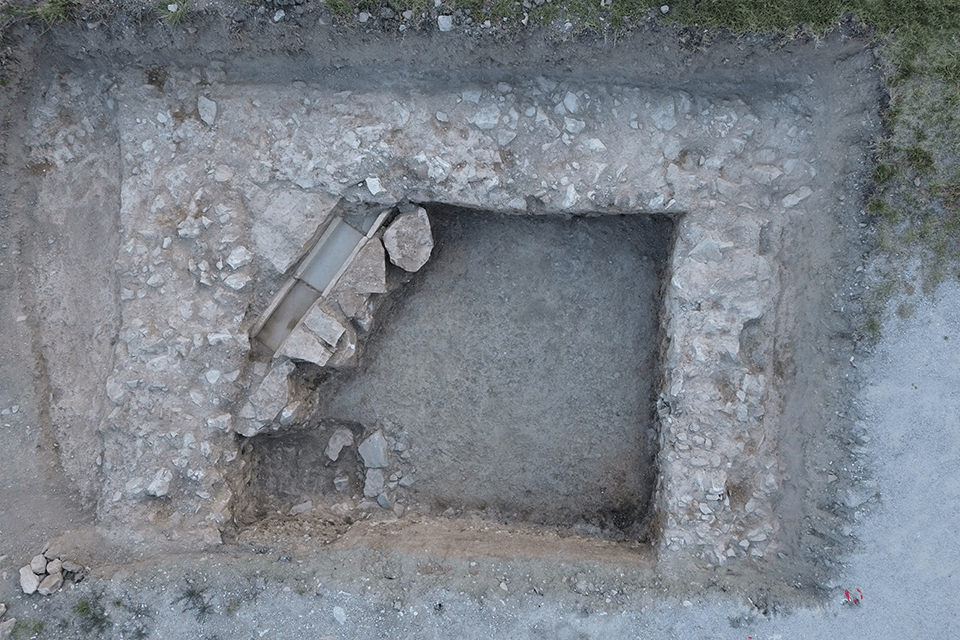
An aerial photograph of the newly-discovered Imperial Cult ruins by Douglas Boin, Ph.D., and his team. (Credit: Douglas Boin, Ph.D.)
ST. LOUIS — Beneath the modern-day streets of Italy, hidden under a parking lot, lies a discovery that challenges our understanding of one of history’s pivotal transitions: the Roman Empire’s shift from paganism to Christianity. This revelation, made by American researchers, uncovers an ancient temple dating back to the era of Constantine the Great, Rome’s first Christian emperor.
Their findings offer a profound glimpse into a time of cultural and religious flux, revealing a society that was more “multicultural” than previously thought.
At the heart of this discovery is Professor Douglas Boin of Saint Louis University, an expert in ancient Roman religious transitions. The discovery includes three ancient walls, believed to be part of a temple dedicated to the Imperial Cult. This temple, located in the town of Spello, is now considered the largest evidence of the Imperial Cult practice in fourth-century Italy and the late Roman Empire.
Boin’s team, including Dr. Letizia Ceccarelli of Politecnico di Milano, made this monumental discovery during a summer excavation. They revealed their findings at the Archaeological Institute of America’s annual meeting.
“We found three walls of a monumental structure that evidence suggests belonged to a Roman temple that dates to Constantine’s period,” Boin said in a statement, emphasizing the temple’s potential to reshape our understanding of the late Roman Empire’s social and religious landscape. “It would be a remarkable addition to the landscape of this corner of Italy. It will significantly aid in the understanding of the ancient town, the ancient townscape and city society in the later Roman Empire because it shows the continuities between the classical pagan world and early Christian Roman world that often get blurred out or written out of the sweeping historical narratives.”
What led Boin to the Roman Empire ruins?
Boin was drawn to Spello, a renowned medieval hilltop city, by a rescript—a fourth-century letter from Emperor Constantine to the townspeople. This letter, discovered in the 18th century, revealed a fascinating aspect of multicultural Roman society. It permitted the people of Spello to celebrate a religious festival in their own town, but with a significant condition: they had to erect a temple to Constantine’s divine ancestors, the Flavian family, and worship them.
The discovery of the temple provides concrete evidence of religious continuity between the Roman and early Christian worlds, challenging the notion that societal changes were abrupt. Boin explains, “Things didn’t change overnight. Before our find, we never had a sense that there were actual physical, religious sites associated with this late ‘imperial cult practice.’”
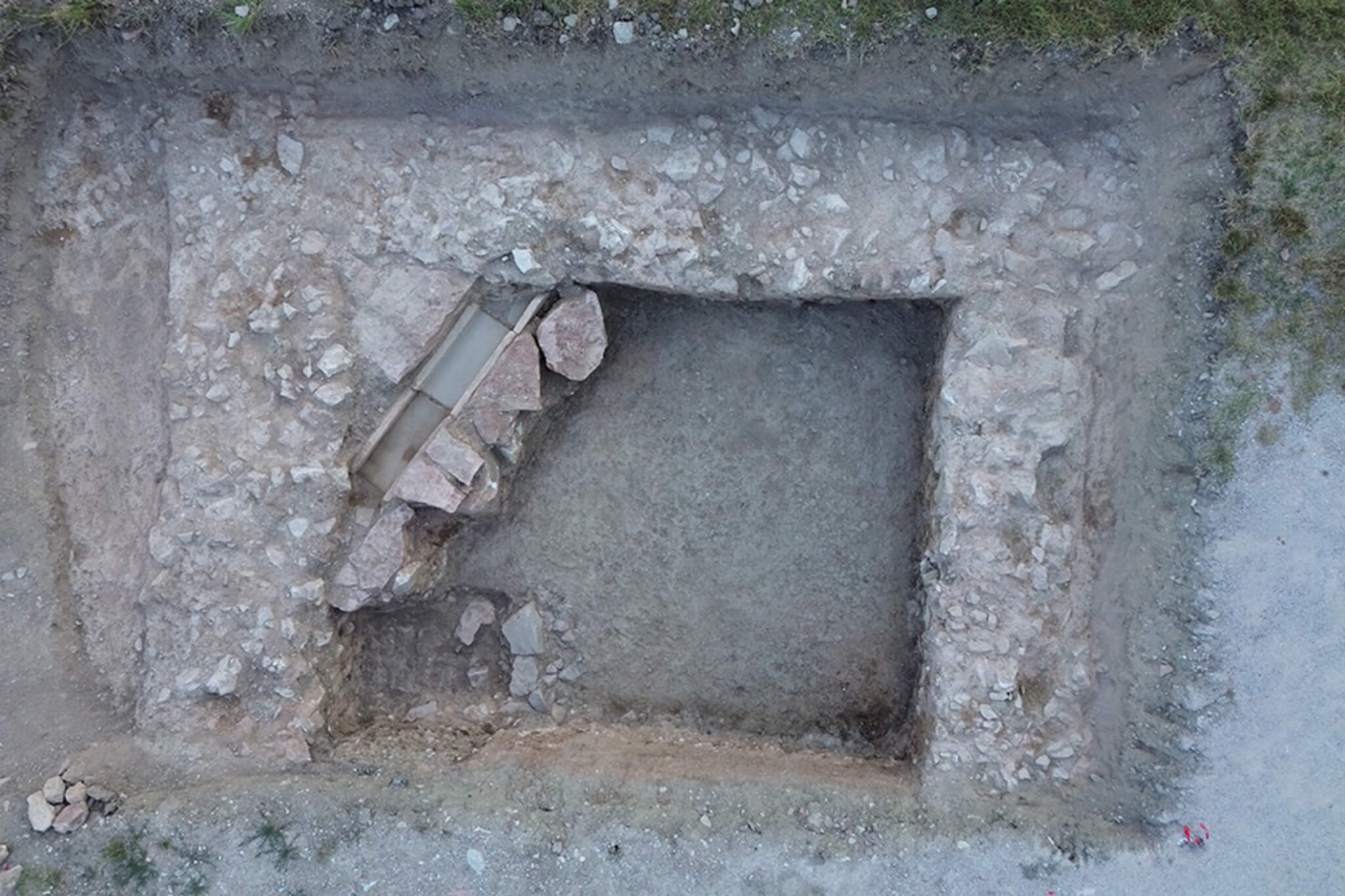
The journey to this discovery was arduous. Professor Boin and his team relied on underground imaging to locate potential ruins beneath a parking lot. Their perseverance paid off, leading to the uncovering of what is believed to be the temple’s inner walls. According to Professor Boin, this temple is the most significant evidence of the Imperial Cult in fourth-century Italy and the late Roman Empire.
‘Staying power of pagan traditions’
Boin’s discovery rewrites the narrative of the Roman Empire’s shift to Christianity. Though Emperor Constantine is known for his conversion to Christianity, it took nearly 70 years for Christianity to become the official religion under Emperor Theodosius. This temple highlights the gradual and complex nature of societal change, emphasizing the persistence of pagan traditions alongside the rise of Christianity.
“This building, in a very radical way on its own, shows us the staying power of the pagan traditions…and it shows us how the Roman emperors continued to negotiate their own values, their own hopes and dreams for the future of the emperor and the Empire without knocking down or burying the past,” Boin reflects on the significance of the find.
The excavation of the full temple is next on Professor Boin’s agenda, promising to further illuminate the nuances of this cultural shift.
“We are on the cusp of giving people a very visible piece of evidence that really upends the neat and tidy ways people think about big moments of cultural change,” he says. “Cultural changes are never as big as we think they are when living through them, and there’s a lot of grey area in between people’s customs and the broader society and culture.”


