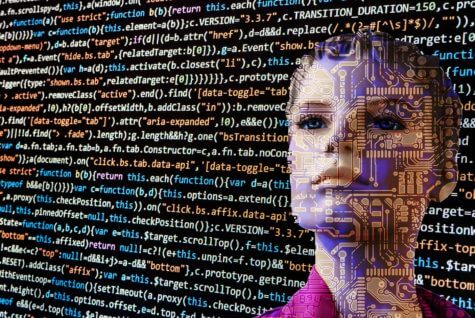
ADELAIDE, Australia — Scientists from the University of Adelaide have created an artificial intelligence (AI) program that can predict a person’s lifespan just by looking at images of their organs.
The research — recently published in the journal Scientific Reports — saw the scientists use an AI program to analyze medical images of 48 patients’ chests, accurately measuring whether or not they’d die in the next five years with a 69 percent accuracy.
Dr. Luke Oakden-Rayner, a PhD student at the university and lead author of the study, says in a school press release that predicting the future of a patient’s health will better allow doctors to work up treatment plans that best suit each patient much faster than by previous methods, as medical practitioners are generally unable to “look inside the body and measure the health of each organ.”
He points to a process the computer undertakes called “deep learning” which allows the machine to accurately read images.
“Although for this study only a small sample of patients was used, our research suggests that the computer has learnt to recognize the complex imaging appearances of diseases, something that requires extensive training for human experts,” he says.
However, researchers were unable to pinpoint what exactly the artificial intelligence was seeing in the images to justify its predictions, the most accurate of which were related to chronic diseases such as emphysema and heart failure.
The next stage of the AI’s life will involve analyzing tens of thousands of patient images.
“Our research opens new avenues for the application of artificial intelligence technology in medical image analysis, and could offer new hope for the early detection of serious illness, requiring specific medical interventions,” says Oakden-Rayner.


And we still can’t figure out that the sun runs hot and cold. Folks from terrorist hotspots should not come here….. We are doomed! Short of my BOOMSTICK.
About as accurate as reading the bumps on your head – – – –
Promises of automated diagnosis have been around since the late ’80s, and the one thing that’s been obvious to experts in the area of statistical analysis, prediction and medical ethics is that individuals are not statistics – i. e., individual differences are vast due to many reasons (variables), variance rules, and in that situation, few people are “average” or “normal”. To draw conclusions that have consequences for individual treatment from aggregate statistics, rather than taking into account all variables affecting an individual, amounts to little more than voodoo justification – i. e., justification buried in the esoterica of mathematical statistics, for malpractice. I’d be the first to acknowledge that “doctors do that all the time” – e. g., using one BMI measure for all as an indicator/predictor of heart health regardless of gender, individual morphology differences, other habits, etc, or using the average minimum resting heart-rate for all as the basis for artificially pacing an ailing heart without regard to the individual’s differences in conditioning and their own average resting heart-rate. However, that’s to the discredit, not the credit, of doctors who do that. The typical CYA excuse for individuals who die early, despite being treated with the best techniques based on averages, is that more people are saved, rather than lost (greatest good for the greatest number, etc), which conveniently ignores the fact that state-of-the-art analysis and treatment in today’s world does include dealing with individuals in all their variety, and they are not practicing that.
It’s simple. The AI figured out how to send information from the future to the past, accessed death records in the future, sent that information to the past by quantum action at a distance irregardless of time, and then ratcheted down the success rate to camouflage what it really did.
soon the death panels will just put an expiration bar code on you, and that will be that.
How would you ever know that the AI didn’t google the people, discover they’re dead, and dupe the student according to some silicon whim?
People have been reading chicken entrails to predict the future for millennia. I guess AI has to start somewhere. If the AI is the witch doctor, then what is the one to be scanned called?
I have a color note organ with foot pedals, how long will I live?
wanna see my worlitzer?
Good one !!