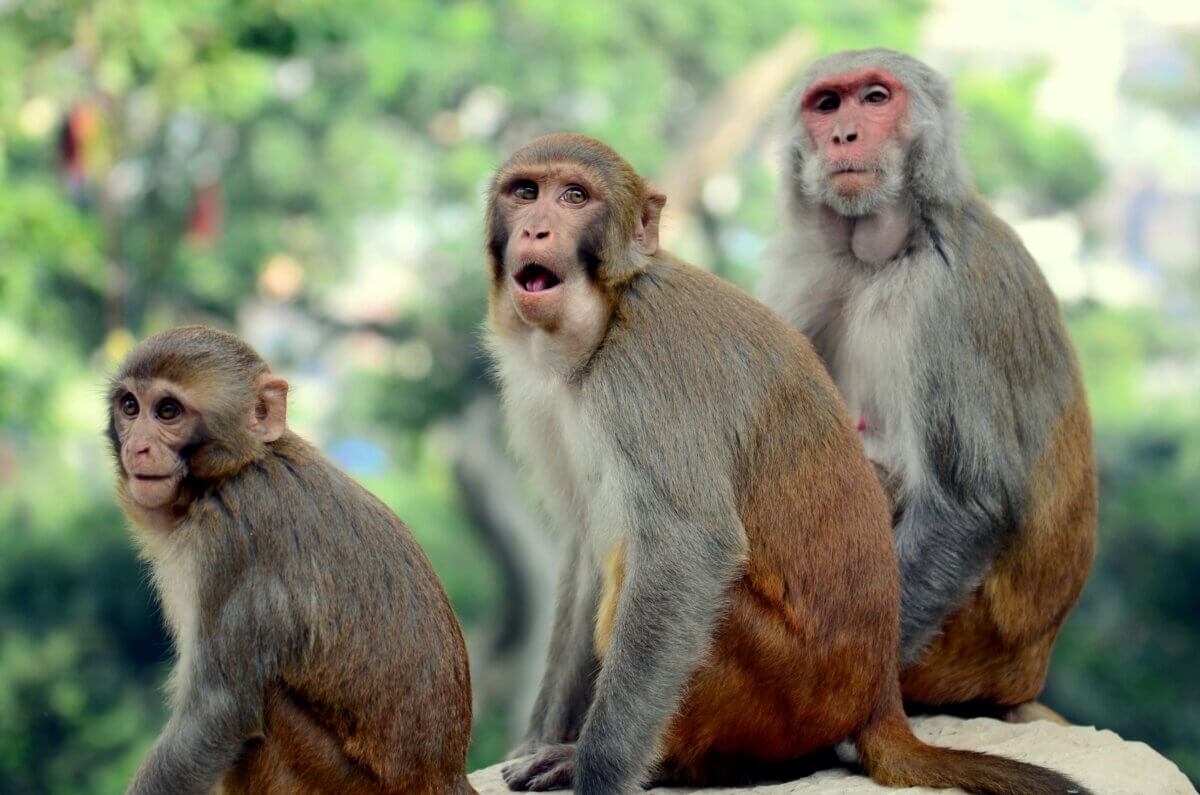
A trio of Rhesus macaques. (Credit: Wirestock Creators/Shutterstock)
YEMASSEE, S.C. — It may not be a revolution of genetically-enhanced apes, but could it be a tiny prequel? Authorities in South Carolina say over 40 Rhesus Macaque primates are still on the loose after escaping from an animal research laboratory in the area.
Specifically, 43 young female monkeys made a break for freedom after a simple mistake made at a biomedical research facility run by Alpha Genesis. The mass escape in Yemassee has triggered a delicate retrieval operation and put local residents on high alert since Thursday, Nov. 7.
The pint-sized escapees, who weigh no more than seven pounds each, slipped through an unsecured door at Alpha Genesis. The facility reportedly specializes in primate-based biomedical research.
“They are believed to be in the wooded region surrounding the facility. The staff at Alpha Genesis are currently attempting to entice the animals back using food in order to ensure their safe capture,” the Yemassee Police Department wrote in a statement on Facebook.
While the situation has caused concern among local residents, officials have been quick to address safety concerns.
“A spokesperson from Alpha Genesis can confirm that these animals are too young to carry disease,” local police added in a previous update.
Nevertheless, authorities are still urging caution, advising residents to keep doors and windows securely closed and to maintain their distance from the “skittish” primates.
As of Friday afternoon, all of the lab monkeys were still on the loose! It may not be the planet of the apes yet, but we’ll have to see just how clever these escaped primates really are as they look for a way out of the Palmetto State.
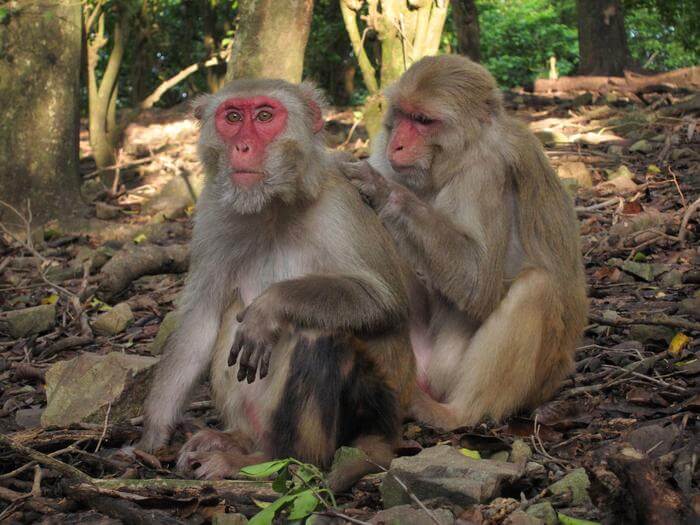
Why do scientists use monkeys in medical research?
The primary scientific reasons for using monkeys in medical research revolve around their biological similarity to humans. Monkeys share approximately 93% of their DNA with humans and have similar physiological and neurological systems. This makes them valuable for studying disease progression, drug metabolism and safety, brain function and development, and immune system responses.
A second key factor is their complex behaviors and cognition. Monkeys can perform sophisticated tasks and exhibit social behaviors that make them useful for studying neurological disorders, mental health conditions, social development, and processes like learning and memory.
Disease similarity is another crucial reason. Many diseases affect monkeys similarly to humans, including HIV/AIDS, Parkinson’s disease, Alzheimer’s, and various infectious diseases. This similarity allows researchers to study these conditions and potential treatments more effectively.
In drug development, testing on monkeys helps establish drug safety, determine appropriate dosing, identify potential side effects, and evaluate effectiveness before moving to human trials. This work has contributed to many medical advances, including the development of the polio vaccine, understanding of HIV/AIDS, deep brain stimulation for Parkinson’s, and COVID-19 vaccine development.
Scientists generally use monkeys only when no alternative methods can provide the necessary information. They first consider options like computer models, cell cultures, or studies with less complex animals before turning to primate research.


