(Photo by Prostock-studio on Shutterstock)
In a nutshell
- People with lower 2D:4D ratios (shorter ring fingers relative to index fingers) may perform better in endurance sports.
- The strongest link was with ventilatory threshold—how hard you can exercise before rapid breathing kicks in.
- This connection likely stems from prenatal testosterone exposure and its long-term effects on the body.
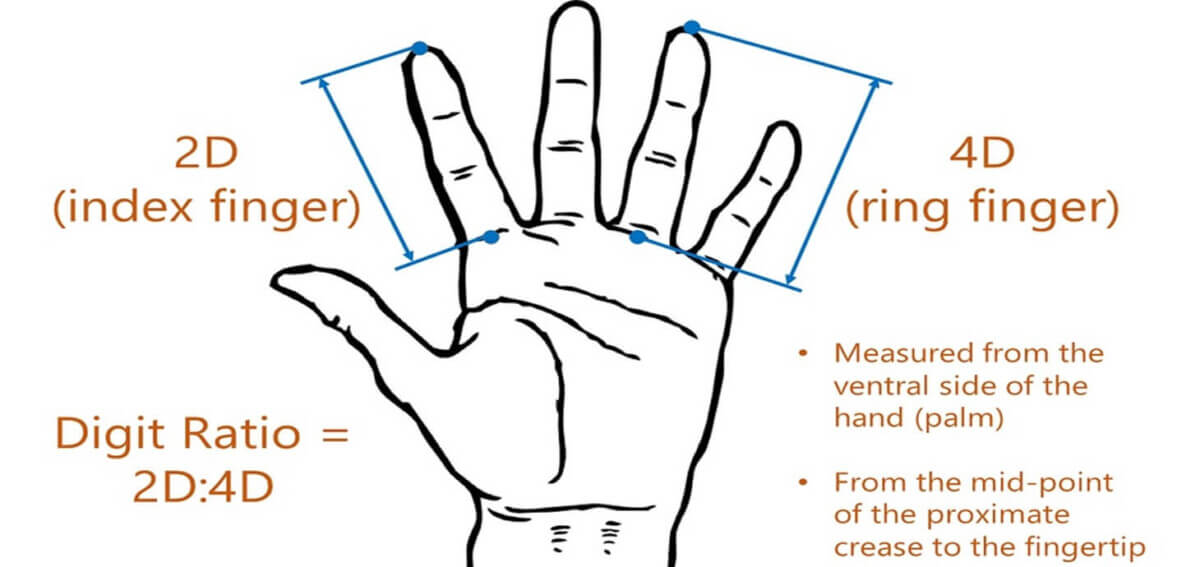
BRISBANE, Australia — Check your hands right now. Look at your index finger compared to your ring finger. Scientists say that simple measurement might tell you something surprising about your running ability, and it connects to hormones that affected you before birth.
A collaboration by researchers at the University of South Australia and the University of North Dakota discovered that people whose ring fingers are shorter compared to their index fingers often excel at endurance sports like distance running. This finger ratio, called 2D:4D by scientists, appears to reflect testosterone exposure in the womb, which may influence athletic potential throughout life.
A new study in the American Journal of Human Biology examined data from 22 research projects involving over 5,000 people across 12 countries. The team discovered clear links between finger ratios and certain types of fitness performance, though the connections proved more complex than expected.
The researchers found that people with lower 2D:4D ratios — meaning shorter ring fingers relative to index fingers — showed better exercise tolerance and performance in endurance activities. As the study authors wrote: “We found a significant strong negative correlation for ventilatory threshold [VT] and a significant weak negative correlation for exercise performance, indicating that individuals with lower 2D:4Ds had higher VT and better exercise performance.”
Ventilatory threshold refers to the point during exercise where your breathing rapidly increases because your body is working harder to get oxygen to your muscles.
In simpler terms: people with relatively shorter ring fingers could exercise harder before getting winded, and they performed better overall in endurance tests. But here’s the twist: they didn’t necessarily have higher maximum oxygen uptake, which doctors typically consider the best measure of cardiovascular fitness.

How Prenatal Hormones Shape Athletic Ability
The connection between finger length and athletic performance traces back to development in the womb. During pregnancy, hormones like testosterone and estrogen don’t just influence how fingers grow; research suggests they also affect the developing heart, blood vessels, muscles, and nervous system.
The ring finger has more hormone receptors than the index finger, making it more sensitive to these early hormone levels. Men typically have lower 2D:4D ratios than women (meaning longer ring fingers compared to index fingers), which reflects generally higher testosterone exposure during development.
Scientists believe that higher prenatal testosterone exposure may create lasting changes that benefit athletic performance, though the exact mechanisms are still being studied.
Connecting 2D:4D To Athletic Ability
The international research team uncovered some unexpected patterns in their analysis. While people with lower finger ratios performed better in endurance tests, the relationship varied across different fitness measurements.
The strongest connection appeared with the ventilatory threshold. People with lower finger ratios could push to higher exercise intensities before hitting this breathing barrier.
But when scientists looked at VO2 max — often called the gold standard of cardiovascular fitness because it measures how much oxygen your body can use during intense exercise — they found no meaningful relationship with finger ratios.
The influence might extend beyond just physical capacity. Some research suggests that prenatal testosterone exposure could also affect mental traits that matter in competitive situations, such as aggression or pain tolerance.
During group fitness tests or races, testosterone levels can increase in response to competitive pressure. People with lower 2D:4D ratios may experience stronger hormonal responses to these challenging situations, potentially giving them a psychological edge when conditions get tough.
Study Limitations Worth Noting
The research analyzed studies from 2007 to 2024, including participants from ages 10 to 40. About 54% were male, representing countries with different economic development levels.
Most studies focused on specific groups like competitive athletes, military students, or university students — people who likely already had above-average fitness. The results might not apply broadly since athletic populations represent a pre-selected group with less fitness variation than you’d find in the general public.
Age mattered in the analysis. The relationship between finger ratios and exercise performance was stronger in adults than children, suggesting these prenatal influences become more apparent as bodies fully mature.

Plenty Of Exceptions To The Rule
Your finger ratio might offer a small window into athletic potential, but it’s far from the complete picture. The research reveals interesting connections between prenatal development and adult fitness capabilities, but these biological tendencies are just starting points — not destinies.
Whether you’re naturally gifted or need to work harder for fitness gains, the most important factor remains consistent: showing up and putting in effort.
Paper Summary
Methodology
Researchers conducted a systematic review and meta-analysis, searching databases for studies published between 2007 and 2024. They included 22 studies with 5,293 participants from 12 countries, focusing only on research that objectively measured both finger ratios and cardiovascular fitness. Studies had to report direct correlations between 2D:4D ratios and fitness measures like running performance, maximum oxygen uptake, ventilatory threshold, or mechanical efficiency. The team used statistical methods to combine results across studies while accounting for population differences.
Results
The analysis revealed significant negative correlations between 2D:4D ratios and two fitness measures: ventilatory threshold (strong relationship) and exercise performance (weaker but significant relationship). People with relatively shorter ring fingers performed better on endurance activities and tolerated higher exercise intensities. However, no significant relationships emerged with maximum oxygen uptake or mechanical efficiency. Age influenced the relationship for exercise performance, with stronger associations in adults compared to children.
Limitations
Most included studies used convenience sampling and focused on specific populations like athletes or students rather than representative samples. The research was limited to cross-sectional studies, preventing causal conclusions. Substantial variation between studies couldn’t be fully explained by examined factors. The results may not apply broadly beyond young, relatively fit populations.
Funding and Conflicts
The authors received no specific funding for this work and declared no conflicts of interest. The research was conducted by investigators from the University of South Australia and University of North Dakota.
Publication Details
“The Relationship Between Digit Ratio (2D:4D) and Aspects of Cardiorespiratory Fitness: A Systematic Review and Meta-Analysis” was published in the American Journal of Human Biology, 2025, Volume 37, Article e70040. Authors: Bethany Gower, Matthew Russell, Jordan M. Tomkinson, Samantha J. Peterson, Marilyn G. Klug, and Grant R. Tomkinson.


