Winter in Washington Park, Albany (Photo by Anna on Unsplash)
BEIJING, China — We could potentially forget about a white Christmas this year because of global warming. As scorching heatwaves dominated the globe throughout the summer and fall of 2023, concerns rose about the possibility of an unprecedented warm winter ahead. Now, researchers are warning that the globe could see record-breaking temperatures this winter.
From June to October 2023, global temperatures soared well above the 1991-2020 average by significant margins. August and September, in particular, exceeded historical averages by 0.62 degrees Celsius and 0.69 degrees Celsius, respectively, breaking records set in 2016. This alarming trend, fueled by both global warming and the reappearance of the El Niño phenomenon after seven years, has captured worldwide attention.
To assess the potential impact of these developments, the Short-Term Climate Prediction Team at the Institute of Atmospheric Physics, Chinese Academy of Sciences, undertook extensive research. Their latest findings suggest an imminent Eastern Pacific El Niño, categorized as moderate to strong, which is expected to trigger unusual weather patterns across East Asia and North America, according to a media release.
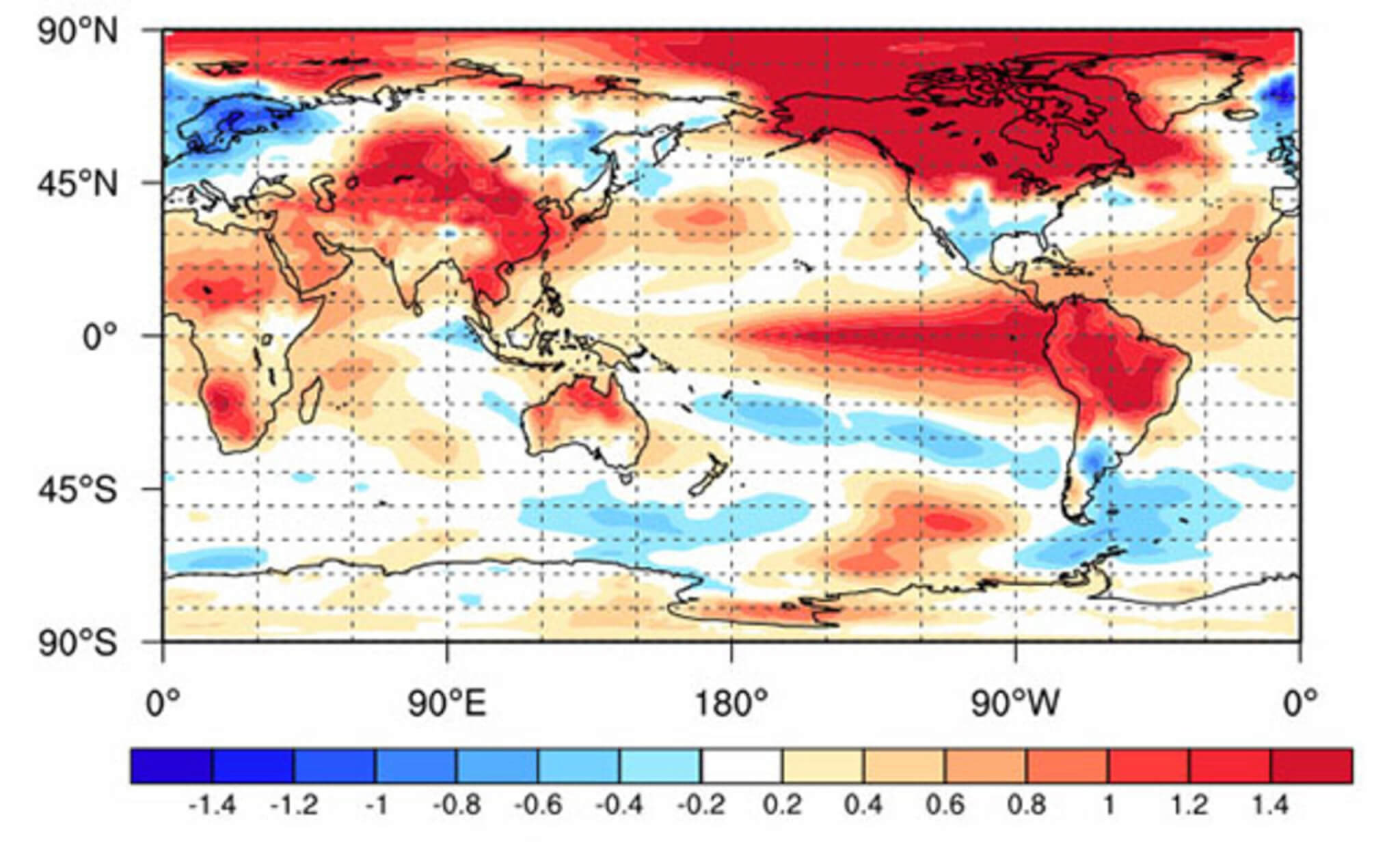
The report highlights the combined influence of the El Niño event and the ongoing global warming trend, painting a concerning picture for the 2023/24 winter. There’s a 95 percent likelihood that this winter will break historical temperature records globally, with regions in mid-low latitudes of Eurasia and most parts of the Americas bracing for an exceptionally warm season. In China, winter temperatures might even double the usual averages, potentially marking the highest winter temperatures since 1991.
Understanding climate predictions involves considering not only internal variability but also external factors. Recent research points to the impact of external forces, such as the 2019 Australian wildfires, which played a role in triggering multi-year La Niñas. These wildfires created low clouds over the Southern Ocean, reducing sea surface temperatures and influencing the climatic system.
Moreover, historical data on volcanic eruptions in the Southern Hemisphere, as studied by the Sun Yat-sen University Volcanic Research Team, reveals a correlation between eruptions and subsequent La Niña occurrences over three years. This underscores the potential cooling effect of volcanic aerosols on the Southern Ocean, similar to the cooling caused by wildfire-induced cloud formation.
As the world braces for potentially record-breaking warmth this winter, these findings underline the complex interplay of factors shaping our climate and the need for continued research to better understand and anticipate these patterns.
The study is published in the journal Advances in Atmospheric Sciences.


