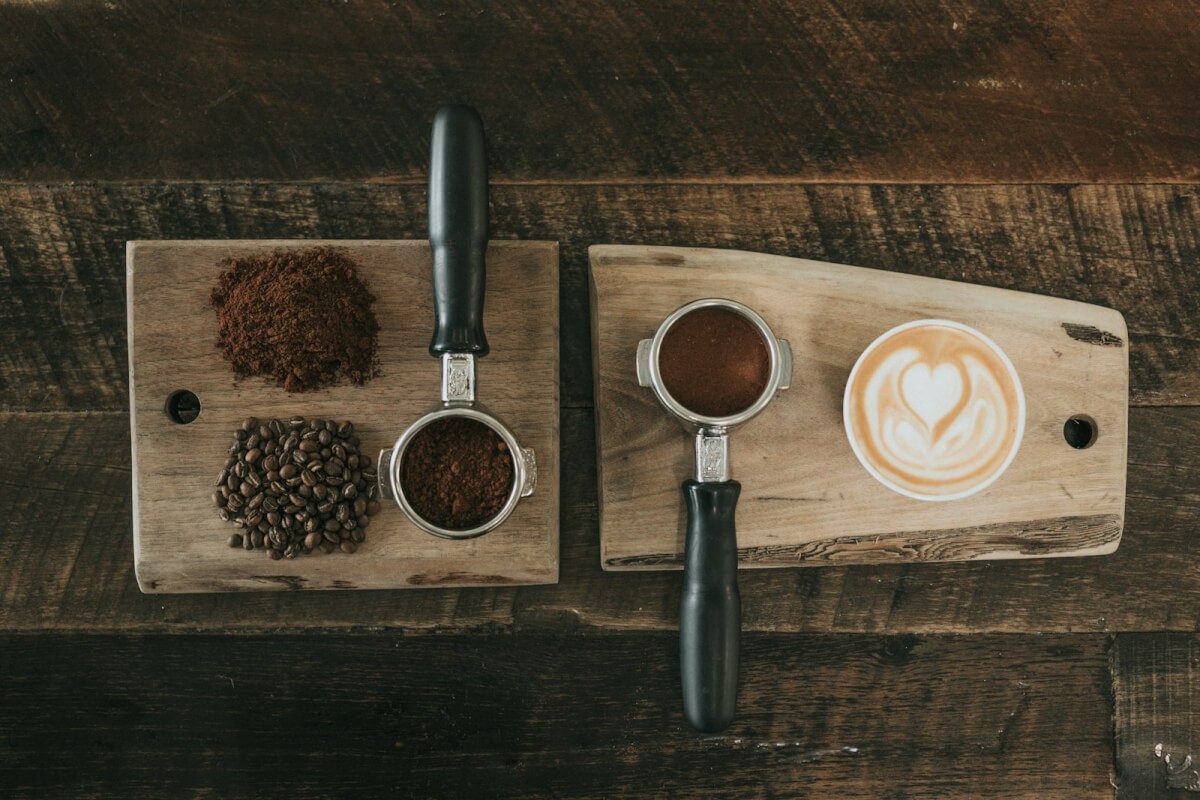
Photo by Nathan Dumlao on Unsplash
Coffee Quietly Tames Its Own Bitterness, and Roasting Is the Reason
In A Nutshell
- Roasting creates large molecules in coffee called melanoidins that bind to caffeine and cut its perceived bitterness roughly in half compared to caffeine on its own.
- A trained sensory panel found that caffeine added to real coffee at natural concentrations was essentially undetectable by taste, suggesting melanoidins mask its harshness in every cup.
- A previously suspected culprit, the pairing of caffeine with chlorogenic acid, was ruled out. That interaction exists at the molecular level but has no meaningful effect on bitterness.
- Researchers say this chemistry could eventually be used to reduce harsh bitter notes in instant coffee and other products, though more work is needed.
For more than 200 years, scientists have puzzled over a surprisingly simple question. If caffeine is one of coffee’s most abundant bitter compounds, why doesn’t a cup of coffee taste like medicine? The answer has been hiding inside the brew itself.
A new study published in the Journal of Agricultural and Food Chemistry finds that large, roasting-produced molecules in coffee called melanoidins physically latch onto caffeine and dramatically reduce how bitter it tastes. When tested with a trained sensory panel, a solution of caffeine combined with these coffee compounds was rated roughly half as bitter as plain caffeine dissolved in water at the same concentration. Coffee’s own chemistry, it turns out, quietly takes the edge off one of its most intense ingredients.
This discovery helps solve a riddle dating back to 1819, when a scientist named Runge, acting on a suggestion from the German writer Goethe, performed what may be one of the earliest recorded taste tests using green coffee beans. Runge reported that the resulting brew was “disgustingly sweet,” with no detectable bitterness at all. Now, there’s a molecular explanation for why a caffeine-rich cup so rarely tastes as harsh as the compound alone.
What Melanoidins Are and Why They Matter in Coffee’s Bitterness
Melanoidins are dark, large molecules formed during roasting, part of what gives coffee its deep brown color and rich character, produced when sugars and proteins react under intense heat. Previous research had shown these compounds can bind to aroma molecules in coffee. This study, led by Michael Gigl, Johanna Kreissl, and Oliver Frank, set out to determine whether melanoidins interact with caffeine the same way and whether that interaction affects taste.
To investigate, the team used a technique that works by bouncing radio waves off molecules to reveal how they behave in solution. When caffeine was added to a decaffeinated coffee beverage and analyzed this way, the caffeine’s molecular signals looked noticeably different than when dissolved in plain water, broader and shifted in ways suggesting caffeine was interacting with something else in the coffee.

Ruling Out the Obvious Suspect
Before zeroing in on melanoidins, the researchers examined a long-suspected candidate: a pairing between caffeine and chlorogenic acid, a naturally occurring compound found in both green and roasted coffee beans. The researchers confirmed the pairing forms in solution and that the two molecules influence each other at the molecular level.
When the sensory panel, 18 trained tasters between the ages of 23 and 31, compared a caffeine-chlorogenic acid mixture to plain caffeine at the same concentration, they found no meaningful difference in bitterness. The pairing was real, but it didn’t change how bitter the caffeine tasted. That pointed the investigation elsewhere.
How Melanoidins Suppress Caffeine’s Bitter Edge
When caffeine was introduced to isolated melanoidin solutions at increasing concentrations, the amount of caffeine freely available dropped by as much as around 62% at the highest concentration tested. The melanoidins were binding to caffeine, reducing the amount free to interact with the body’s bitter-taste receptors.
When the team broke the melanoidins apart chemically, removing certain roasting-derived building blocks caused the interaction with caffeine to drop significantly, though not disappear entirely, suggesting the full structure plays a role. It’s a finding that points to roasting itself as the engine behind coffee’s self-moderating bitterness.
The taste tests confirmed it. When the panel evaluated a combination of caffeine, chlorogenic acid, and melanoidins at concentrations naturally found in coffee, the bitterness score came in at about 2.5 out of 5. Plain caffeine scored a 5. Tasters described the combined mixture as “milder, more coffee-like, and overall, more pleasant,” while pure caffeine was “harsh, alkaloid, medical bitterness,” alkaloid being the sharp, drug-like quality that compounds like caffeine can carry on their own.
In a separate set of tests, the panel could not reliably detect caffeine spiked into decaffeinated coffee at concentrations naturally found in a typical cup. Only when caffeine was pushed to a concentration the authors say does not occur naturally in coffee beverages did tasters reliably identify its presence by bitterness.
The researchers also say it is possible melanoidins could make it harder for caffeine to activate bitter-taste receptors on the tongue. They plan to test that idea in future cell-based studies.
Why Coffee’s Bitterness Secret Could Change How We Make It
Understanding how coffee moderates its own bitterness could eventually give food scientists new ways to soften harsh bitter notes in instant coffee or other products. The authors suggest selected melanoidins might one day be added to improve taste, and that adjusting roasting could produce melanoidins with stronger caffeine-binding properties, but more work is needed to identify which melanoidins work best.
Roasting, it turns out, does more than develop flavor. It also builds in a natural buffer against the very bitterness it creates, an accidental piece of culinary engineering working in every coffee drinker’s favor for centuries.
Paper Notes
Limitations
The study acknowledges that coffee is an extraordinarily complex system, and the researchers worked with simplified model systems to isolate individual interactions. While these models are scientifically valid tools, they cannot fully replicate every variable present in a real cup of coffee. The researchers also note that the structures of coffee melanoidins are still not completely understood, which means it is not possible to identify and remove all potential binding sites through hydrolysis. Additionally, the sensory panel was composed of 18 individuals between the ages of 23 and 31, which may limit how broadly the taste findings apply across different age groups or populations. Pregnant individuals were excluded from the sensory studies. The authors note that cell-based taste receptor assays, which would provide more direct evidence about how caffeine interacts with human bitter-taste receptors, were not conducted in this study and are planned for future research.
Funding and Disclosures
The authors declare no competing financial interest. No specific funding sources or grant numbers were listed in the provided content of this paper.
Publication Details
Authors: Michael Gigl (Junior Research Group Food Processing and Health, ZIEL Institute for Food and Health, Technical University of Munich, Freising, Germany); Johanna Kreissl (Leibniz-Institute for Food Systems Biology at the Technical University of Munich, Freising, Germany); Oliver Frank (corresponding author). Michael Gigl and Johanna Kreissl contributed equally to this work. | Journal: Journal of Agricultural and Food Chemistry, published by the American Chemical Society | Paper Title: “Impact of Interactions between Melanoidins and Caffeine on the Bitter Taste of Coffee Beverages” | DOI: https://doi.org/10.1021/acs.jafc.5c17022 | License: CC-BY 4.0


