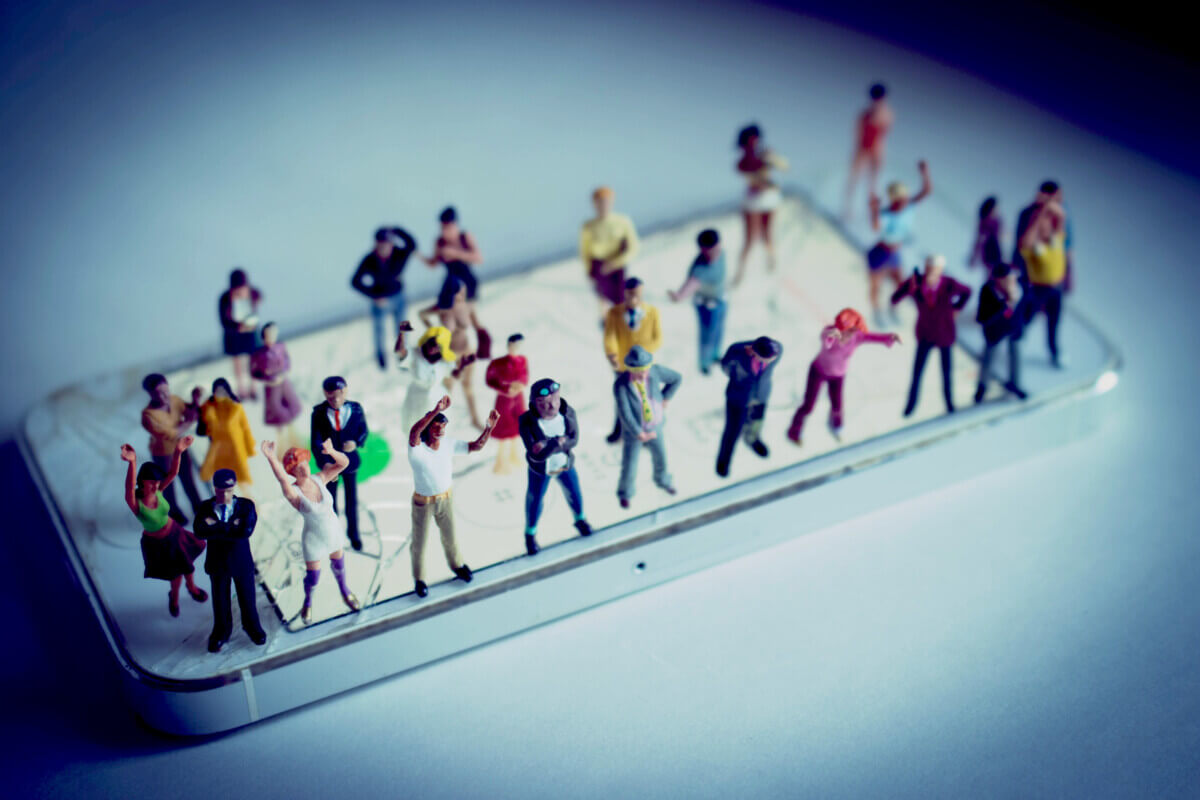
Many of the year’s winners reference the lack of meaning and certainty in our online interactions. (Image by Zenza Flarini on Shutterstock)
ANN ARBOR, Mich. — Hostile political arguments on social media seem to be as common as vacation photos these days. Could simply seeing all the anger and vitriol be changing how people view the political arena entirely? New research from the University of Michigan sheds light on a troubling trend: the rise of political anger and cynicism, fueled by exposure to hostile and uncivil attacks on these platforms.
The study, recently published in the International Journal of Press/Politics, investigates the relationship between exposure to political attacks on social media and political cynicism. Lead author Ariel Hasell, assistant professor of communication and media and an affiliate of the Center for Political Studies at UM’s Institute for Social Research, and her colleagues found that people who were exposed to more political attacks on social media were more politically cynical.
Political cynicism, as defined by the researchers, goes beyond healthy skepticism. It involves a wholesale rejection of people and processes in democracy, and a belief that politicians are guided by corrupt, self-serving interests rather than a commitment to the public good. This cynicism can delegitimize democratic processes, distort people’s interpretations of political information, and lead to disengagement from politics.
“It’s important to understand how feelings of cynicism emerge because we’re seeing many democratic governments facing crises of legitimacy,” Hasell says in a media release. “Our findings provide some of the first evidence of how exposure to political attacks on social media might relate to political cynicism in the context of a U.S. presidential election.”
The Amplification of Anger and Hostility on Social Media
The study’s results, based on a panel survey of 1,800 American adults fielded during the 2020 election, show that perceived exposure to political attacks was associated with more anger about the state of the U.S., which was subsequently related to greater levels of political cynicism.
This finding is particularly concerning given the current political climate in the United States. A 2019 NBC/Wall Street Journal poll found that nearly 7 in 10 Americans reported being angry about the political establishment, and a 2023 survey by the Public Religion Research Institute showed that about a quarter of Americans agree that “true American patriots may have to resort to violence in order to save our country,” up from 15% in 2021.
Social media plays a significant role in amplifying this anger and hostility. Political content on these platforms is often toxic, and algorithms reward and amplify attacks because they’re engaging. Studies show this makes outrage more potent and visible, giving users a warped view of what the public believes.
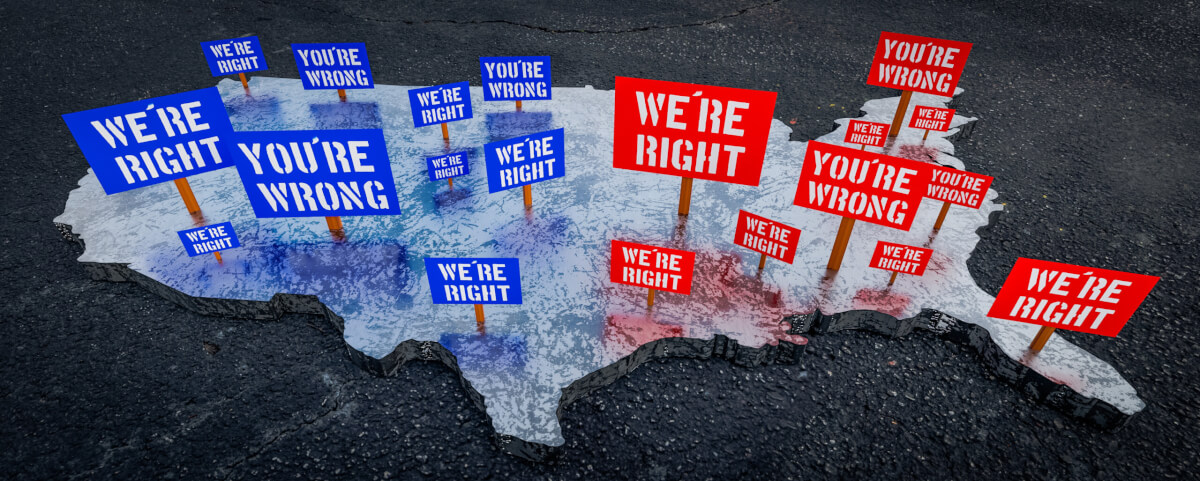
“If your main source of news is social media, you are more likely to perceive politics as hostile and angry,” Hasell said. “And beyond the feelings that political attacks provoke, it matters how people perceive and read the temperature of ‘public emotions’ because this can impact assessments about the country’s well-being and its ability to solve problems and accomplish goals.”
The study also found that anxiety, another negative emotion elicited by uncertainty and threats, can be driven by political fearmongering and social media toxicity during a presidential election. While negative emotions aren’t necessarily bad for democracy – they can drive people to the polls and motivate advocacy – relentless negativity about a country “under threat” can also lead to frustration, disgruntlement, and disengagement.
“Anger can affect our ability to see things as they are, and make measured decisions that are important in a democracy,” Hasell said.
Breaking the Cycle: The Importance of Civil Dialogue
The researchers warn that as more people turn to social media for news and information, repeated exposure to political attacks may further promote political cynicism. This is a concern because cynicism can make it harder for people to make sense of political information, leading to apathy, disengagement, or even a turn towards fringe parties and antidemocratic forms of participation.
So what can citizens who use social media do to break this pattern? “An easy way to avoid getting angry and cynical is to be mindful about focusing on nonhostile, civil dialogue,” Hasell said. “If you are seeing a lot of hostility in your social media, you can think about re-curating and unfollowing people who are fomenting this kind of hostility. We don’t find that social media use in itself is making people angry and cynical, it has to do with how we decide to use it.”
As the United States approaches the 2024 presidential election, it’s likely that political hostility will surge online. This study serves as a timely reminder of the potential consequences of this toxicity for our democratic processes. It’s up to each of us to be mindful of the content we consume and share on social media, and to actively seek out and promote civil, constructive political dialogue. The health of our democracy may depend on it.


