
(Photo by Sam Dan Truong on Unsplash)
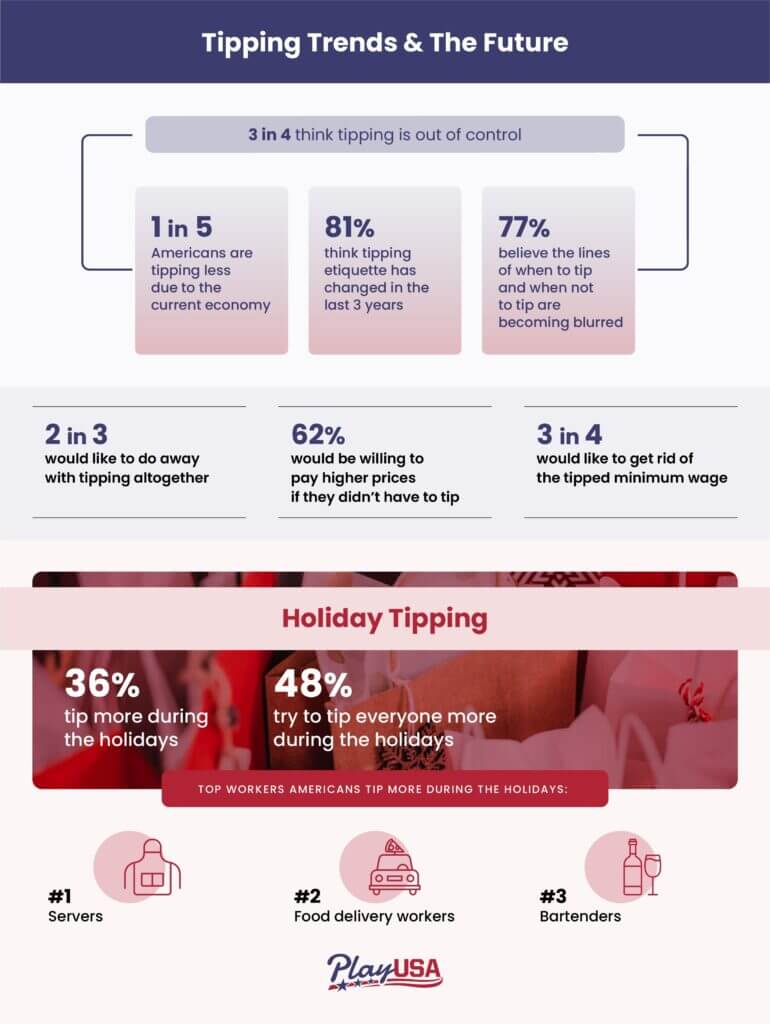
LAS VEGAS — The “season of giving” is fast approaching. Unfortunately, a majority of Americans say they’ve already given all they’ve got and are getting sick and tired of tipping during every transaction! In a new poll, three in four respondents think the practice of tipping for service is simply getting out of control. Moreover, three in five people say they’re actually willing to pay more for their goods just so they never have to tip again!
In the poll of more than 1,000 people, conducted by PlayUSA, researchers found that 56 percent feel pressure to tip when the option pops up on a screen during cashless checkout. That’s a small increase over the 54 percent who said the same in PlayUSA’s 2022 survey.
Many Americans admit they’re giving in to these digital tipping requests, with 47 percent confessing that they tip for services they normally wouldn’t because the screen told them to. Another 63 percent say they feel “overwhelmed” by all the requests for tips.
If you think more businesses are asking for a little extra during each purchase, you’re not alone. The 2023 poll finds a staggering 87 percent believe more businesses are openly asking for tips than ever before. Additionally, 71 percent claim digital tipping screens are offering higher percentage options than they used to.
Inflation is crushing generosity
With the price of almost everything going up in recent years, one in five respondents say cost of living issues keep them from leaving a good tip. Overall, 59 percent say they’re suffering from “tipping fatigue.”
With these issues in mind, two in three wish the practice of tipping would be abolished. Another three in four also want to get rid of the tipped minimum wage — the practice of allowing employers to satisfy minimum wage laws by combining a “cash wage” paid by the business with a credit or allowance for tips that the employee receives from customers.
Despite the added expenses of the holidays, cost of living hikes in 2023, and inflation overall, one in three Americans (36%) still say they try to tip more during the holiday season. Nearly half the poll (48%) say they try to tip “everyone” at the end of the year. However, Americans focus on tipping servers, food delivery workers, and bartenders.
What’s the right amount to tip?
While three in four people are sick of tipping, a surprising 84 percent still claim they’re “good tippers.” Baby boomers lead the way, with 89 percent saying they leave good tips. Gen X (83%) and Gen Z respondents (82%) followed closely behind, with millennials admitting they’re the stingiest tippers (73%).
So, what’s the “right amount” to leave your waiter or waitress? Over four in 10 (43%) say the standard rate is still 20 percent in a restaurant. Interestingly, two in three people feel pressure to tip even when they receive crummy service. One in five actually say “it’s rude” to tip under 20 percent.
It seems tipping is still a confusing art form, with tips varying widely depending on who’s actually getting the tip. The survey finds Americans typically give coffee baristas just a dollar or two. One in three people leave “a few dollars” for their bartender and one in five give a food delivery driver 20 percent.
At the end of the day, tipping largely comes down to what you have and what you’re willing to give. It’s your money, but even that advice — is just a tip.
Survey methodology:
In September 2023, PlayUSA surveyed 1,002 Americans from across the U.S. Respondents ranged in age from 18 to 83 with the average age of 42. 50% identified as male, 48% identified as female, and 2% identified as non-binary or transgender.


