(© tashatuvango - stock.adobe.com)
In A Nutshell
- Researchers interviewed 86 young people in the UK about how they evaluate mental health content from influencers on TikTok
- Teens judge factual claims by credentials and personal stories by relatability, but often try to verify doctors’ credentials on the wrong websites
- Most participants view TikTok as a place for entertainment, not education, which limits how seriously they take mental health content there
- TikTok’s fast-moving algorithm and design features make careful evaluation difficult, even for teens who understand how the algorithm works
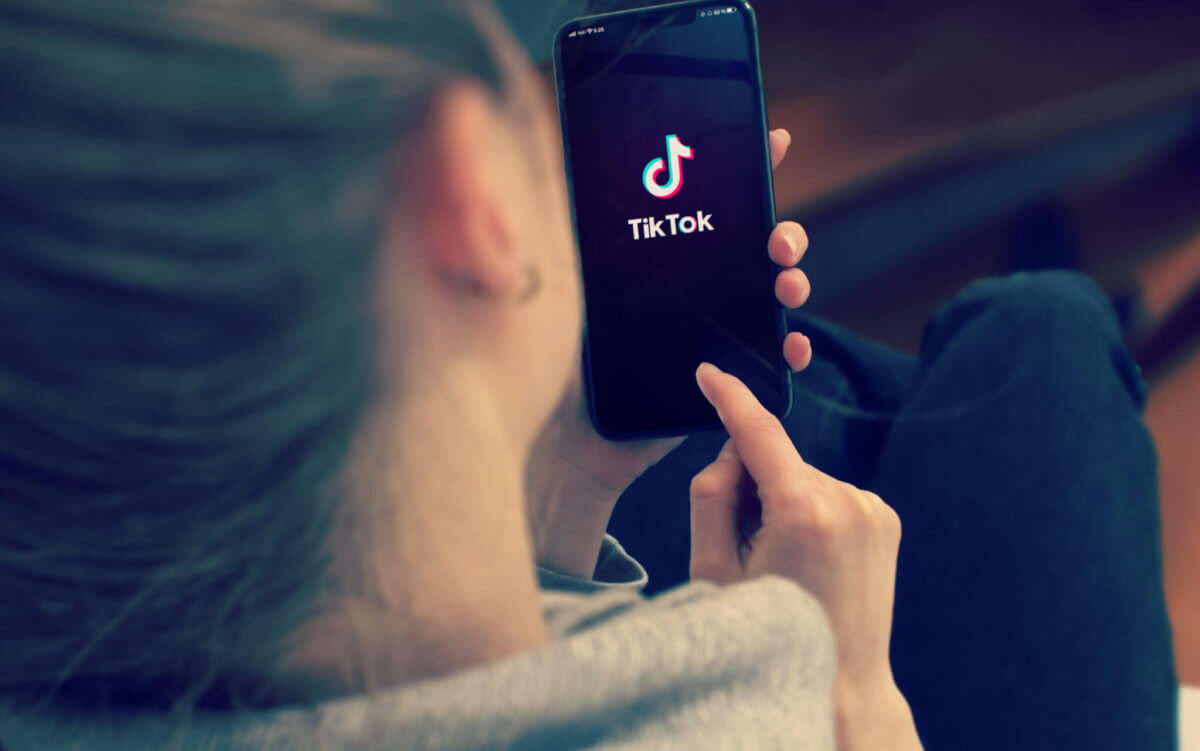
Most teenagers scrolling through TikTok at night aren’t looking for therapy. But mental health content finds them anyway. A new UK study, published in the journal Digital Health, asked 86 young people what they do with that content when it appears, and the answers were more thoughtful, and more troubling, than most adults might expect.
What emerged was a portrait of a generation that can spot a dubious wellness influencer from a mile away, but still can’t do much about it, because the app makes it hard to slow down long enough to try.
In a country where one in five young people had a probable mental disorder in 2023, and mental health treatment waits run far longer than waits for physical health treatment, social media has become an informal source of mental health support. Understanding how young people engage with that content is an urgent public health question.
Doctors Earn Trust Through Credentials, Everyday Creators Through Relatable Stories
Researchers conducted 18 group interviews with 73 participants at schools and colleges in the Midlands, plus 13 individual online interviews with participants aged 18 to 25. Group participants were mostly 16 to 18, female-majority, and racially diverse, including Asian, White British, and Black participants. Participants were shown three real TikTok videos about anxiety: one from a psychiatrist explaining clinical signs, one from a wellness influencer offering nutrition-based advice, and one from an everyday person sharing a personal recovery story.
Young people use two different standards to evaluate mental health influencers, and the standards often pull in opposite directions. For factual content, such as symptoms or treatments, young people wanted proof of expertise. Professional titles mattered, as one participant put it: “I feel like having a doctor online giving you information is really useful because they’ve got qualifications and experience.” But simply claiming to be a doctor wasn’t enough. Another noted, “He slapped the word doctor in front of his name, but like there’s no proof.” Young people said they would verify credentials by checking LinkedIn or what they believed was the NHS website. In reality, UK health professionals are listed on separate registries, so many were checking in the wrong places.
Relatability carried a different but equally powerful weight. When a creator shared a personal recovery story, participants found it more emotionally engaging and useful for managing their own mental health. “More people are inclined to not listen to educational videos but something that would relate more to their daily life,” one participant explained. Still, young people recognized the limits: “Certain methods of dealing with mental health might work for some people but then it doesn’t for others,” another observed. Participants also called out a lack of diversity among influencers, noting creators are “usually people who are younger and usually female,” and that young men faced social pushback for engaging with mental health content at all.

TikTok’s Algorithm Moves Too Fast for Careful Evaluation
Participants widely described TikTok as “a very unserious place” built for fun and entertainment. As one said, “I just don’t go on TikTok expecting to learn information about mental health and I don’t really know who goes onto TikTok purely for educational purposes.” For anything serious, young people said they would turn to YouTube for longer content, or Google for straightforward medical searches. That belief set a ceiling on how seriously they engaged with mental health content on TikTok, regardless of accuracy.
Then there is the algorithm, which pushes a personalized stream of videos without users having to search for anything. Young people understood how it worked and described strategies to steer it, but the speed and volume made careful thinking nearly impossible. “You could go one minute watching a video about anxiety, two scrolls later you’re watching like some random TikTok, just a joke or something. So like you never actually take it seriously I don’t think,” one participant explained.
Filtering out unwanted content came with its own friction. Scrolling past was easy but led to faster, more impulsive consumption, and the “not interested” button required extra steps many found cumbersome. Most young people had no idea TikTok had built-in features for scheduling breaks.
In particularly distressing cases, auto-playing content with sound could make unwanted material harder to avoid. One participant described hearing a video’s audio before they could scroll away from eating disorder content. Some also described saving such content intentionally as a form of self-punishment, a disturbing sign of how platform design can be turned against vulnerable viewers.
Researchers at the University of Birmingham, Aston University, the University of Nottingham, and the McPin Foundation concluded that public health campaigns cannot simply drop mental health content onto TikTok and expect it to land, since the app’s features and culture cut against the engagement such information requires.
Young people had clear ideas about what needs to change: better verification for health professionals online, recognizable markers of trustworthy content, and platform tools that help users manage what they see. Until those changes arrive, the gap between knowing good health information exists and actually trusting it will stay wide open.
Disclaimer: This article summarizes findings from a peer-reviewed qualitative study and is intended for general informational purposes. It is not a substitute for professional medical or mental health advice. Anyone experiencing a mental health crisis should contact a licensed provider or local emergency services.
Paper Notes
Limitations
The study’s authors acknowledge several important limitations. Because the research was conducted only in the United Kingdom, with English-speaking participants between 16 and 25, the findings may not apply to other countries, languages, age groups, or populations. The sample was also self-selected, meaning participants who chose to take part may have had stronger opinions or more active social media habits than those who did not, a factor the researchers note may have introduced social desirability into some responses. Data were anonymized at the point of transcription, which meant participants could not review their own interview transcripts for accuracy, a step that could have improved data quality. The study also focused exclusively on TikTok, and the researchers note that the rapidly changing digital landscape, including the rise of artificial intelligence tools that can generate or shape influencer content, may affect how these findings hold up over time. Future research should expand to include other platforms, other languages, neurodiverse groups, and populations with specific lived experience of particular mental health conditions.
Funding and Disclosures
The study was funded by the Economic and Social Research Council, grant number ES_Y001966_1. The authors declared no conflicts of interest related to the research, authorship, or publication of the article.
Publication Details
Authors: Alex Christiansen, Ruth Page, Shioma-Lei Craythorne, Michael Larkin, Paul Crawford, Evangelina Asiedu-Addo, and Emma Garavini. Christiansen and Page are based at the University of Birmingham. Craythorne and Larkin are affiliated with Aston University. Crawford is at the University of Nottingham. Asiedu-Addo and Garavini are affiliated with the McPin Foundation. | Journal: Digital Health, Volume 12, 2026 | Paper Title: “Media literacies, platform imaginaries and mental health influencers: How young people respond to mental health content on TikTok” | DOI: 10.1177/20552076261479043


