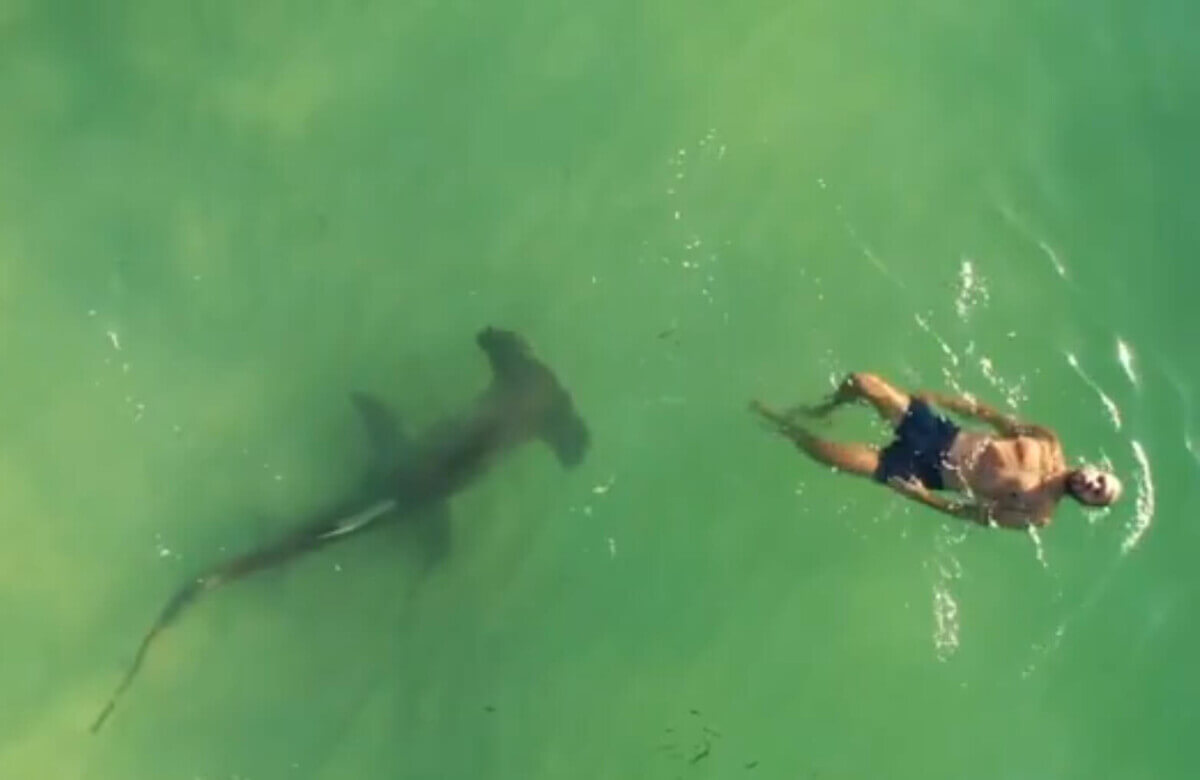
(Credit: UMiamiRSMAS / Jason McIntosh)
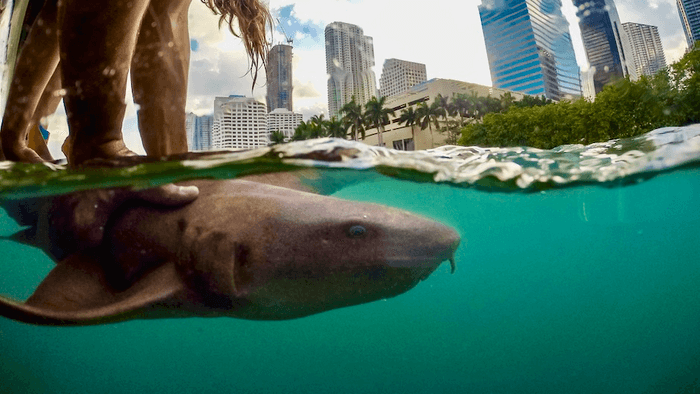
MIAMI — A new study is giving new meaning to the phrase “this city would eat you alive.” Scientists from the University of Miami say sharks are not avoiding the local shoreline. Instead, these predators are spending plenty of time quite close to the sights and sounds of the city.
On a global scale, the world’s coastlines are urbanizing at a rapid rate. So how is that impacting local aquatic life? Researchers decided to investigate by tracking the movements of three shark species on or around the Miami shoreline. This included the bull, nurse, and great hammerhead.
Considering the loud noises, chemicals, and bright lights, the research team fully expected the sharks to avoid South Beach like a bad habit. That’s not what they saw.
“Few studies have investigated the movements of ocean predators in relation to urbanization, but since other studies have shown that land predators are urban avoiders, we expected sharks to be too,” says lead study author Neil Hammerschlag, director of the UM Shark Research and Conservation Program, in a university release. “We were surprised to find that the sharks we tracked spent so much time near the lights and sounds of the busy city, often close to shore, no matter the time of day.”
Plenty of animals, like pigeons or raccoons, thrive in cities. These “urban explorers” usually eat human garbage as food. Meanwhile, “urban adaptors” spend some time in urban areas, but still largely rely on the great outdoors. On the other end of the spectrum, we find most land-based predators like wolves. These animals, called “urban avoiders,” want nothing to do with civilization.
Study authors hypothesized that sharks are urban avoiders, but ultimately conclude they act much more like urban adaptors.
What’s attracting so many sharks to busy shorelines?
Study authors speculate it may have something to do with the discarding of fish carcasses by various local businesses and fishermen.
Obviously, no one wants to go for a swim in the ocean and see a fin heading toward them. However, close proximity to humans may represent just as much of a threat to sharks as the other way around.
“By spending so much time close to shore, sharks are at risk of exposure to toxic pollutants as well as fishing, which could impact their health and survival,” Hammerschlag explains.
The study is published in the journal Marine Ecology Progress Series.


