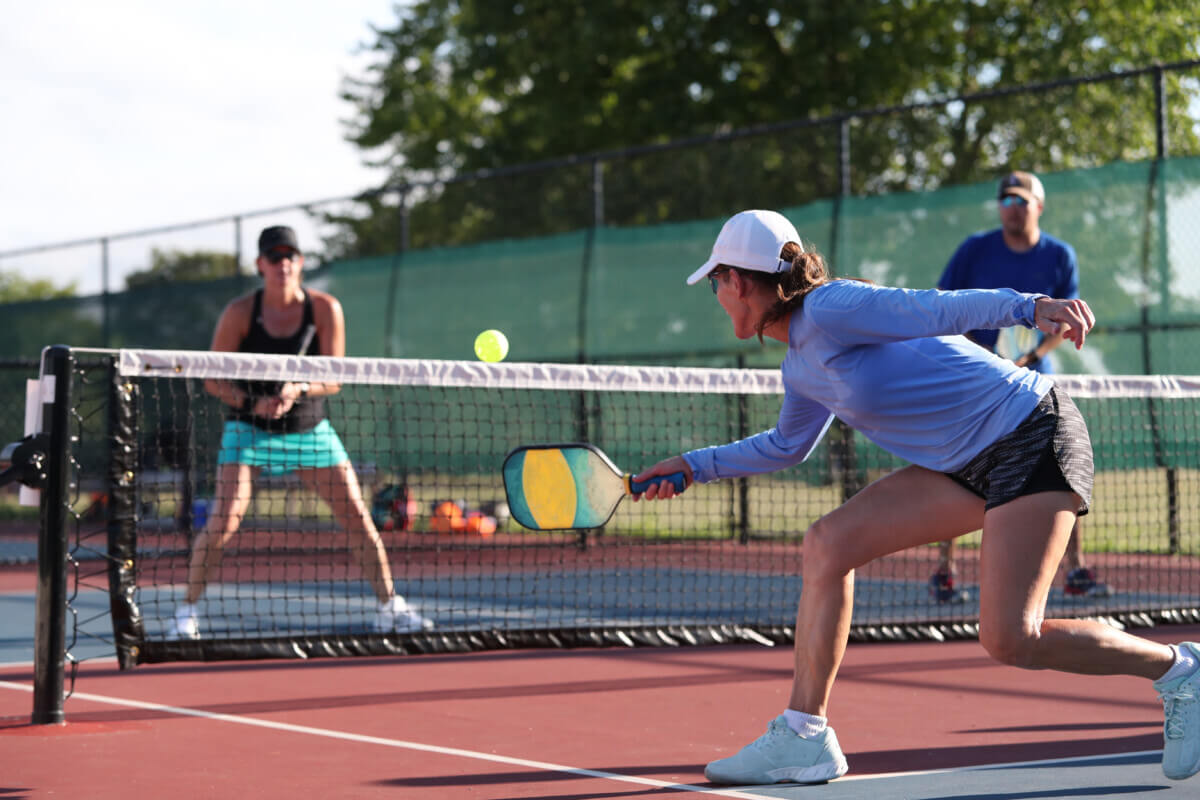
(© Ron Alvey - stock.adobe.com)
Goggles Remain Optional in Organized Pickleball Despite Rising Eye Injuries
In A Nutshell
- A pickleball strike pushed one woman’s eye pressure to more than triple her other eye’s.
- Medication could not control the pressure, so surgery followed.
- Drainage damage remained a year later, and long-term eye monitoring is needed.
- Goggles are optional in organized pickleball, and the authors say guidelines may be warranted.
Pickleball is America’s fastest-growing sport, and eye doctors are documenting a growing list of injuries to go with it. A new case report in BMJ Case Reports describes how one hit from a pickleball led to glaucoma, a disease that damages the optic nerve and can steal vision, and the doctors behind it argue that players need to start protecting their eyes.
A hard, fast ball and a bare eye make a bad mix. Players often stand close to the net, modern paddles can send shots past 60 miles per hour, and goggles are not required in organized play. Basketball and baseball have long dominated the list of sports eye injuries in the United States, but the authors say pickleball has joined it as a source of serious ones. Earlier reports have described torn retinas and a partly dislocated lens, and these injuries appear to occur mostly in older adults, often without protective eyewear.
Doctors at UMass Chan Medical School in Worcester, Massachusetts, focused on what can happen after the first injury. In glaucoma caused by an eye injury, fluid cannot drain properly from the eye. Like a clogged sink, the backup raises pressure, and over time that pressure can damage the optic nerve, the cable that carries images to the brain.
Pickleball Eye Injuries Can Lead to Glaucoma Months Later
A hard blow can tear tissue near the eye’s drainage system and damage how it works, a problem called angle recession. Bleeding in the front of the eye is often the first warning sign. The damage can then sit quietly, with glaucoma surfacing months or even years afterward. Because of that delay, the authors say doctors should watch for glaucoma after any eye injury that involves bleeding and a widened pupil, using regular pressure checks and a close look at the drainage area.

A Single Pickleball Eye Injury Needed Surgery After Medication Failed
A case report is a detailed account of one patient’s care rather than a study of many people. This one follows a woman in her early 50s who was playing recreational pickleball when her own teammate’s shot hit her left eye. She was not wearing eye protection. With players crowding the net in a fast game, it is easy to see how a friendly hit could happen to anyone. In the authors’ view, her profile, a middle-aged player with no major eye problems apart from LASIK, reflects a growing group of players at risk.
Her vision blurred right away, and she felt severe pain and sensitivity to light. At the emergency room, she could only count fingers held a foot from her face with that eye, and doctors found blood pooled in the front of the eye and a pupil stuck wide open. Pressure inside the injured eye hit 50 mmHg, the unit doctors use for eye pressure, more than triple the 15 in her other eye. She had no earlier glaucoma diagnosis, diabetes, high blood pressure, or blood thinners, though she had LASIK surgery in 2014 and a family history of glaucoma.
Drops and IV medication helped at first, but pressure spiked again two weeks later, along with new bleeding inside the eye. By three months, it was still high despite the maximum medication she could tolerate. A close exam found that tearing from the impact involved about 75% of the eye’s drainage tissue, and tests showed damage to her optic nerve and early blind spots in her vision. That confirmed glaucoma.
Many traumatic glaucoma cases start with medication, but a significant share end up needing surgery, according to the report. Four months after the injury, surgeons used a device called the OMNI Surgical System to open the eye’s clogged drainage channel from the inside. Eight days later, her eye pressure was down to 9 mmHg. Within a month, her vision had climbed to about 20/30 on an eye chart, a big step up from counting fingers, and she needed only one nightly eye drop plus a steroid that was being gradually reduced.
Surgery could not fully undo the injury, though. A year later, the drainage damage was still there. Her pupil was also still stuck wide open at the one-month check after the operation. She was counseled about a higher risk of cataracts, possible worsening of her glaucoma, and the need for long-term eye monitoring.
Pickleball Eye Protection Remains Optional in Organized Play
Squash and racquetball already have an established safety culture around eyewear, the authors point out, and they say pickleball may need similar guidelines. Their wish list also includes public awareness campaigns, doctor counseling for at-risk patients, and better tracking of eye injuries in the sport so the true scope can be measured. In their words, “these injuries will continue to occur unless proper safety measures are implemented.”
A single case cannot say how common these injuries are. Even so, goggles are a small ask compared with months of treatment, and as long as they stay optional, a friendly game carries a risk that is easy to prevent.
Disclaimer: This article is based on a single published case report and is intended for general information only. It is not medical advice and does not replace an evaluation by a qualified health professional.
Paper Notes
Limitations
This report describes a single patient, so it cannot show how common pickleball-related glaucoma is or how often a similar outcome would occur. The woman also had LASIK surgery and a family history of glaucoma, and one case cannot show whether either played a role. The authors note that case reports can point to areas for future research but should not be used alone to guide treatment choices or public health policy.
Funding and Disclosures
Authors declared no specific grant from any public, commercial, or not-for-profit funding agency. No competing interests were declared. Consent for publication was obtained directly from the patient. The report was not commissioned and was externally peer reviewed.
Publication Details
Titled “Traumatic angle-recession glaucoma following pickleball injury,” the case report was written by Sean Teebagy and Christopher Teng of the Department of Ophthalmology & Visual Sciences at UMass Chan Medical School, and Joseph Matte of UMass Chan Medical School, all in Worcester, Massachusetts. It was published in BMJ Case Reports on November 23, 2026 (2026;19:e275922) after acceptance on October 20, 2026. DOI: 10.1136/bcr-2026-275922.


