
(© Burlingham - stock.adobe.com)
UNIVERSITY PARK. Pa. — It’s hard to argue that Americans don’t love their pills. Recent estimates tell us that over 60 percent of U.S. adults take prescription drugs, and over 45 percent have taken a prescribed drug over the prior 30 days. Now, worrying new predictive research from Penn State reports young Americans born in 2019 can expect to spend a significant portion of their lives medicated.
In fact, study authors estimate these young Americans will likely spend more years on prescription meds than being married or receiving an education!
Led by Jessica Ho, associate professor of sociology and demography at Penn State, the research also points to some gender disparities. American males will be on prescription drugs for 48 percent of their lives. That percentage balloons to 60% for females.
“As an American, I’d like to know what medications I’m putting in my body and how long I can expect to take them,” says Prof. Ho, who is also an associate of Penn State’s Social Science Research Institute, in a university release. “The years that people can expect to spend taking prescription drugs are now higher than they might spend in their first marriage, getting an education or being in the labor force. It’s important to recognize the central role that prescription drug use has taken on in our lives.”
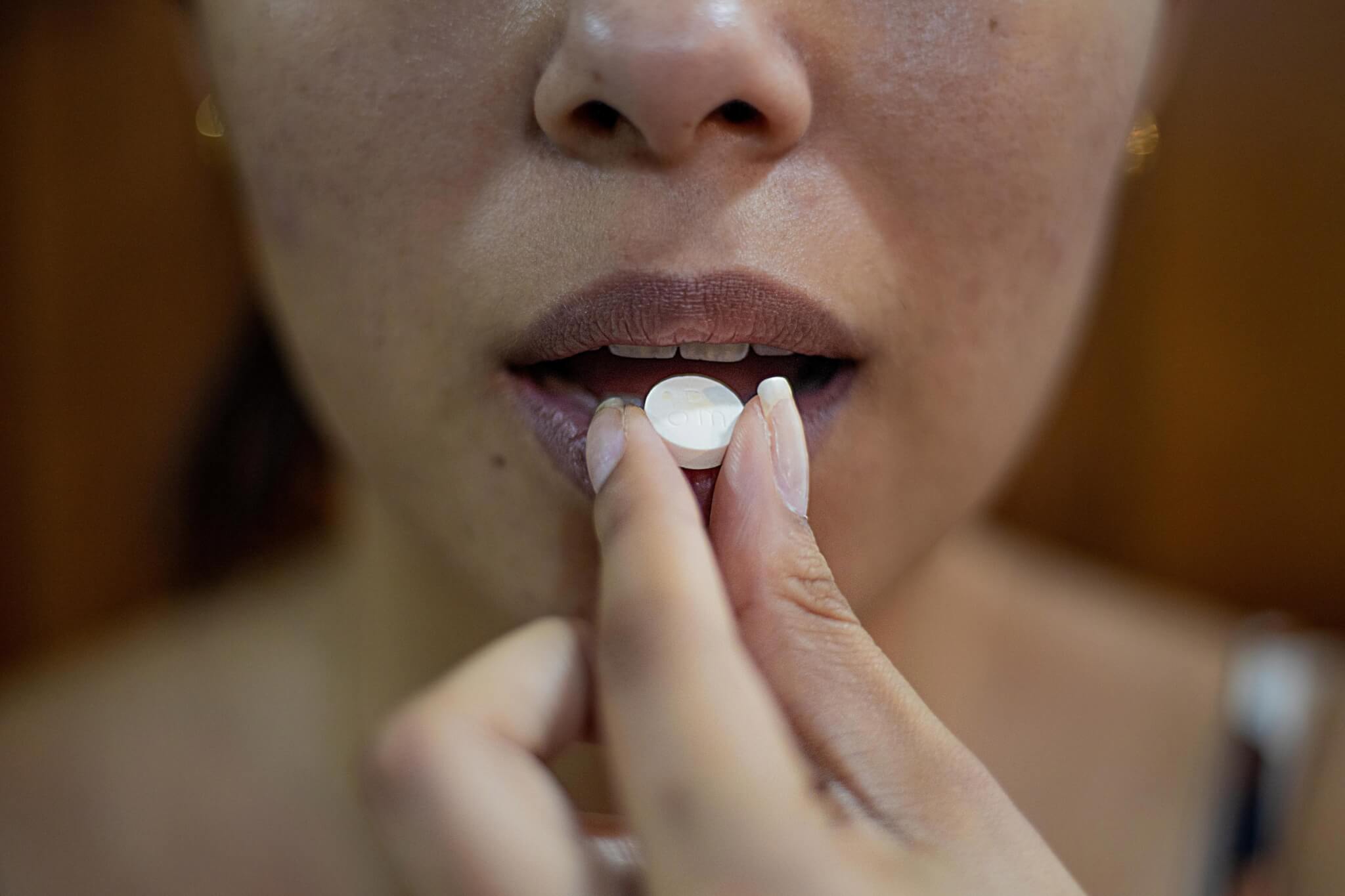
Prescription drug use by the numbers
Researchers made use of prior nationally representative surveys conducted by Agency for Healthcare Research and Quality (AHRQ), as well as the Centers for Disease Control and Prevention (CDC), between 1996-2019 in order to analyze prescription drug use across the entire country. Those surveys encompassed data pertaining to roughly 15,000 households – each of which was chosen annually and then had information collected every five months. This approach led to more accurate answers than surveys taken once a year.
Additionally, close to 70 percent of survey respondents permitted the AHRQ and CDC to verify their prescriptions with their pharmacies, which provided the surveys with higher levels of accuracy.
Next, mortality data provided by the National Center for Health Statistics and the Human Mortality Database was used to estimate how long Americans born in 2019 can expect to live on average. That information was then combined with the survey data in order to estimate lifetime percentages spent taking prescription medications.
Researchers report most American men take prescription drugs by age 40, while most American women are taking prescription drugs by age 15. A newborn male born in 2019, on average, should expect to take meds for about 37 years, or 48 percent of their life. A newborn girl born in 2019, meanwhile, could expect to stay on meds for approximately 47.5 years, or 60 percent of her life.
“We see that women start taking prescription drugs earlier than men do, and some of that is related to birth control and hormonal contraceptives,” Prof. Ho adds. “But it is also related to greater use of psychotherapeutic drugs and painkillers among women. If we consider the difference between men and women, excluding contraceptives would only account for about a third of the difference. The remaining two-thirds is primarily driven by the use of other hormone-related drugs, painkillers and psychotherapeutic drugs used to treat conditions such as depression, anxiety and ADHD.”
It’s worth noting that men also tend to take more statins and other medications to treat cardiovascular disease. However, statin use was also found to vary widely across races and ethnicities.
“Non-Hispanic Black men have lower rates of statin use than non-Hispanic whites or Hispanics,” Prof. Ho continues. “That’s concerning because we know that cardiovascular disease, diabetes and other metabolic disorders are really high among Black men. There’s no reason that they should be taking these drugs for fewer years of their lives than men in other racial and ethnic groups. Health care access, differential treatment by medical providers, and available socioeconomic resources vary across populations and may help to account for these differences.”
Importantly, the study also found that rates of polypharmacy, or a scenario in which a person takes five or more drugs at the same time, have risen considerably in recent years to alarming levels. Backtrack to the 1990s, and most people prescribed meds were on just one drug. Nowadays, people taking prescription medications are equally likely to be taking five or more medications.
‘Growing concern over how much is too much’
All in all, study authors say their work holds implications for Americans’ health and healthcare expenditures moving forward. Many drugs that individuals are taking for decades have only been available for the past 50 years or so. Thus, their long-term effects on the body remain largely unknown. Professor Ho stresses that polypharmacy can put an individual at a much greater risk of drug interactions and adverse health outcomes.
Regarding health care costs, prescription drug expenditures reached $335 billion in 2018. Out-of-pocket expenditures on prescription medications, meanwhile, made up 14 percent of drug spending, with prescription drug spending projected to hit $875 billion (15.4% of national health expenditures) by 2026.
“This paper is not trying to say that use of prescription drugs is good or bad,” Prof. Ho concludes. “Obviously, they have made a difference in treating many conditions, but there are growing concerns about how much is too much. There’s a large body of research that shows Americans are less healthy and live shorter lives than our counterparts in other high-income countries. The prescription drug piece is part and parcel of that reality. What we find is, even above and beyond what we might expect to be seeing, the rates of prescription drug use in the United States are extraordinarily high.”
The study is published in Demography.


