
© myskin - stock.adobe.com
In A Nutshell
- A Rutgers study of 821 U.S. adults found that impulsivity and heavy drinking, two top predictors of violence, were far more weakly tied to violent acts among people currently taking GLP-1 drugs like Ozempic than among former users.
- The link between impulsivity and violence was about 62 percent weaker among current users; the alcohol link was about 52 percent weaker, though the alcohol result was less stable.
- The drugs did not appear to lower impulsivity or drinking directly, suggesting they may act on the path from those traits to violence rather than on the traits themselves.
Drugs like Ozempic and Wegovy were built to lower blood sugar and shrink waistlines. A study out of Rutgers University hints they may be doing something else that is far harder to measure: softening the link between a hot temper and an actual punch thrown.
Researchers looked at a national sample of American adults and found that two of the most reliable predictors of violent behavior, impulsivity and heavy drinking, lost much of their punch among people currently taking a GLP-1 medication. Among former users, a quick-tempered, impulsive streak tracked closely with violent acts in the past year. Among current users, that connection nearly flattened out.
This study was a snapshot in time, not an experiment, so it cannot prove the drugs are doing the work. But the pattern, published in Criminology, was strong enough, and consistent enough across the researchers’ follow-up checks, that they are calling for a much closer look at a question almost nobody was asking a year ago.
How GLP-1 Drugs May Change the Path to Violence
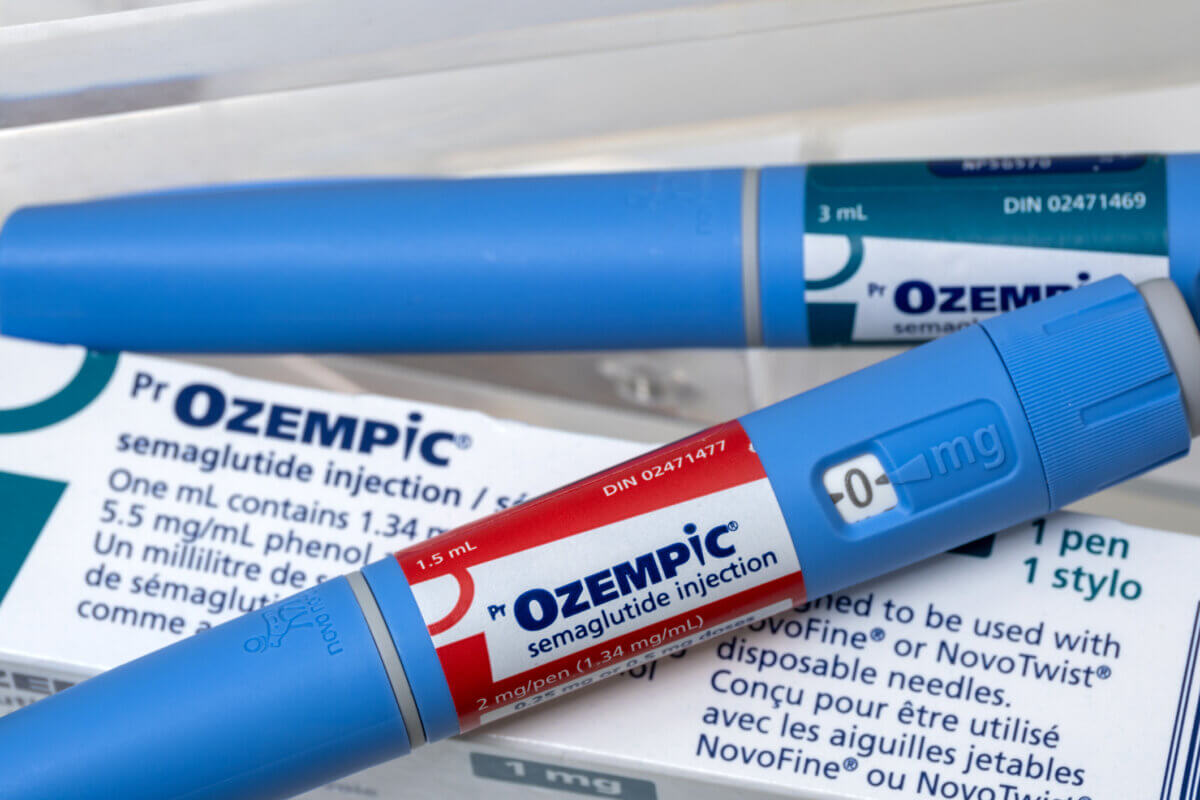
GLP-1 receptor agonists, the drug class that includes Ozempic, Wegovy, Rybelsus, and Trulicity, were approved to treat Type II diabetes and obesity. Roughly one million new users picked them up in the U.S. between 2011 and 2023, and the number has climbed steeply since. Along the way, doctors and researchers noticed side effects that had nothing to do with weight: people reported less interest in alcohol, fewer cravings, calmer impulses, even less of the mental “food noise” that nags at dieters.
That cluster of changes got the study’s authors, Daniel C. Semenza and Christopher Thomas, thinking about crime. Impulsivity and drinking are two of the most studied risk factors for violence in all of criminology. If a medication can quiet cravings and steady impulse control, the reasoning went, it might also weaken the chain that turns a moment of provocation into a fight.
Their idea was not that the drugs erase a hot temper or stop someone from drinking. It was subtler. They proposed that GLP-1 medications might change the conditions under which a short fuse actually leads to harm, the way therapy can teach someone to pause before reacting without removing the anger itself.
Inside the GLP-1 and Violent Crime Study
To test the idea, the team used survey data from a nationally representative group of U.S. adults, collected through Ipsos KnowledgePanel between June 24 and July 7, 2025. Of 7,521 people who qualified, 821 said they had used a GLP-1 drug at some point. Within that group, 597 were taking one at the time of the survey and 224 had stopped.
Comparing current users against former users was a deliberate choice. Both groups had already decided to try the medication, so they tend to look alike on things like weight, diabetes, and access to health care. That makes them a cleaner comparison than stacking GLP-1 users against the general public. The researchers also ran a statistical balancing technique so the two groups matched closely on income, education, age, race, sex, neighborhood safety, and more.
Violence was measured with a confidential questionnaire asking how many times in the past 12 months a person had done any of five things, among them hitting someone who insulted them, getting into a physical fight, or threatening or robbing someone with a weapon. Impulsivity came from a seven-item personality scale with statements like “I jump into things without thinking.” Drinking was scored from questions about how often and how heavily a person drank.
Raw numbers tell the story before any modeling. Among former users, the average violence score was 0.20. Among current users, it was 0.09, less than half.
What the Numbers Showed About Impulsivity and Alcohol
Run through the statistical models, the effect sharpened. For former users, each step up in impulsivity was tied to nearly a threefold jump in violent acts, and heavier drinking carried a similar weight. For current users, those same risk factors barely moved the needle, and the connection was no longer statistically meaningful.
Put in plain terms, the tie between impulsivity and violence was about 62 percent weaker among current users, and the tie between alcohol use and violence was about 52 percent weaker. The impulsivity result held up across nearly every stress test the authors threw at it. The alcohol result was shakier, fading in and out depending on how the data were sliced, so the researchers treat it as the more fragile of the two.
Worth a mention: the drugs did not appear to lower people’s baseline impulsivity or drinking directly. A separate analysis testing that pathway came up empty. Whatever is happening seems to operate on the link between those traits and violence, not on the traits themselves, which is exactly the pattern Semenza and Thomas predicted.
Why might a diabetes drug reach into something as human as aggression? The leading guess points to the brain. GLP-1 signaling interacts with the reward and stress systems, including dopamine pathways tied to impulse control and the stress hormones that spike during a confrontation. By dialing down reward-seeking and stress reactivity, the medication might make it less likely that a provocation tips into a swing. The authors are careful to label this a hypothesis, not a proven mechanism, since their study was not built to test biology.
A few hard limits keep this finding in its lane. Because everything was measured at a single point in time, the study cannot say the drugs caused the lower violence; it can only show the two travel together. People who quit a GLP-1 might do so for reasons, side effects, cost, lost insurance, that are themselves connected to behavior. And violent acts were rare across the whole sample, so the results describe a broad population pattern rather than a precise effect among high-risk groups. The authors say the real test would be a long-term study, ideally one that follows people over time or randomly assigns the medication.
Even with those caveats, the door the study pries open is a provocative one. For decades, criminology has treated violence as a product of personality, circumstance, and environment. A growing body of work, this paper included, asks whether a person’s biology can be nudged in ways that change behavior, much as ADHD medication has been linked to lower crime rates during treatment. Semenza and Thomas are blunt that they are not proposing to medicate aggression away, and they warn against any reading that strips out the social and economic roots of crime. What they are proposing is that a pill millions of Americans already take for their blood sugar may quietly be touching something far down the chain that ends in violence, and that the question deserves a serious answer.
Disclaimer: These findings come from a single observational study and do not establish cause and effect. The results suggest a possible association that will need to be tested in longer-term research. Readers should not interpret the study as proof that GLP-1 medications change violent behavior.
Paper Notes
Limitations
The study carries several constraints the authors name directly. It is cross-sectional, meaning all the data were captured at one moment, so it can establish only that GLP-1 use and lower violence occur together, not that one causes the other. The statistical balancing method targets people whose profiles overlap between current and former users, which limits how far the results stretch beyond that group. Unmeasured reasons for stopping the medication, such as side effects, cost, or loss of insurance, could be tied to violence on their own and muddy the comparison. The violence index weighted all five acts equally despite differences in severity, though a backup analysis predicting any violence at all returned the same core result. The violence questions covered the prior 12 months while drug use reflected the moment of the survey, a timing mismatch the authors partly addressed with a model limited to people who had used a GLP-1 within the past year, where the impulsivity result still held. Finally, violent behavior was uncommon in this general-population sample, so the findings are best read as a population-level pattern rather than a firm estimate for high-risk groups.
Funding and Disclosures
The authors reported having nothing to disclose regarding funding or acknowledgments. They declared no conflicts of interest. A disclosure statement notes that the views expressed are those of the authors and do not reflect Rutgers University. The data supporting the findings are available from the corresponding author on reasonable request.
Publication Details
The paper, “Glucagon-like peptide-1 receptor agonist use and violent crime among US adults,” was written by Daniel C. Semenza and Christopher Thomas of Rutgers University. Semenza is affiliated with the Department of Urban-Global Public Health in the School of Public Health and the New Jersey Gun Violence Research Center; Thomas is in the Department of Sociology, Anthropology, and Criminal Justice. It appears as a Research Note in the journal Criminology (2026), published by Wiley Periodicals on behalf of the American Society of Criminology. The article was received October 21, 2025, revised May 12, 2026, and accepted May 18, 2026. DOI: 10.1111/1745-9125.70058. Suggested citation: Semenza, D. C., & Thomas, C. (2026). Glucagon-like peptide-1 receptor agonist use and violent crime among US adults. Criminology, 1–16.


