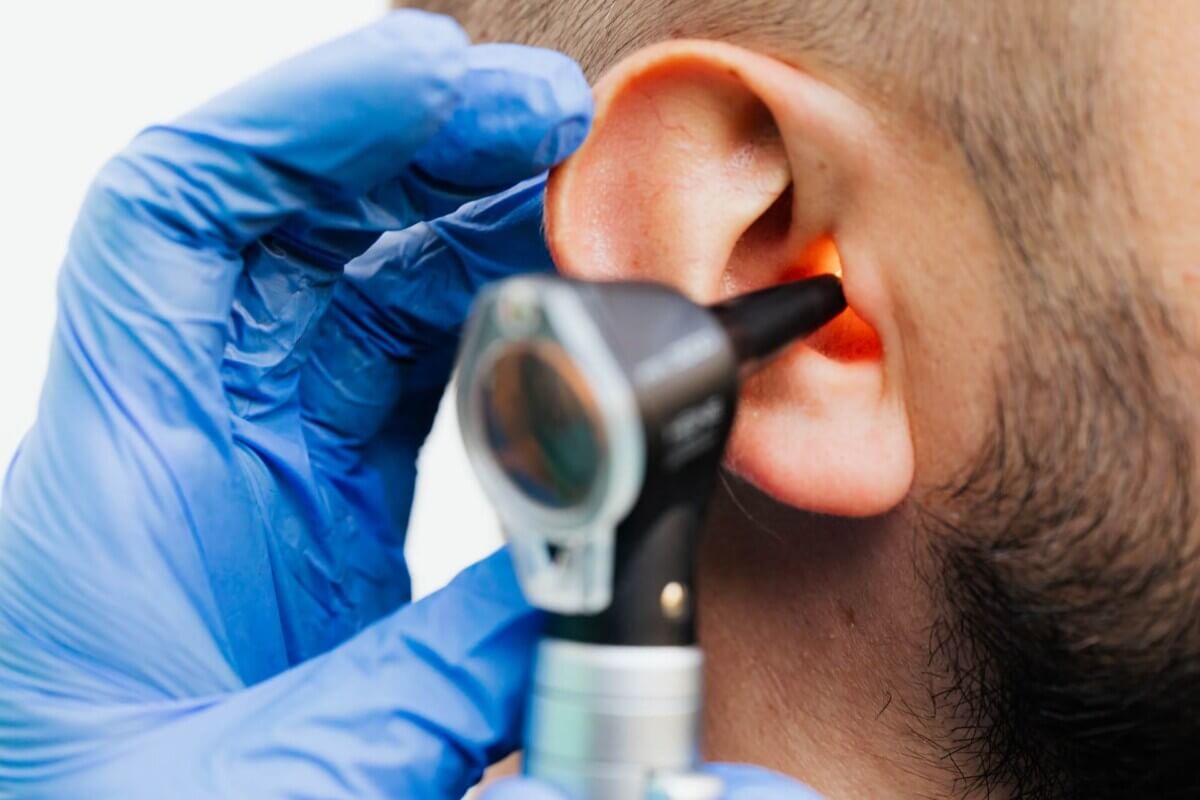
(Credit: Karolina Grabowska from Pexels)
PITTSBURGH — We’ve all experienced that ringing feeling in our ears after a loud concert or construction work. For some, the effects are temporary; for others, the hearing damage is permanent. Now, new research from the University of Pittsburgh School of Medicine has uncovered the molecular mechanism behind noise-induced hearing loss, pointing to possible treatment options. That includes a potentially game-changing over-the-counter medication that’s now under development.
Researchers at the University of Pittsburgh say they are testing a drug that has the potential to reverse hearing impairment due to loud noise and also offer protection against future damage.
The researchers identified that noise-induced hearing loss is a result of cellular damage in the inner ear, linked to an excess of free-floating zinc — a mineral crucial for cell function and hearing. They discovered that medications acting as molecular sponges to absorb excess zinc can either recover lost hearing or, when used preemptively, can safeguard against hearing loss.
“Noise-induced hearing loss impairs millions of lives but, because the biology of hearing loss is not fully understood, preventing hearing loss has been an ongoing challenge,” says Professor Thanos Tzounopoulos from the Pittsburgh Hearing Research Center, in a media release.

While noise exposure is common – from battlefield explosions to jackhammers to rock concerts – the impacts on hearing can be severe. The cellular damage causes not only muffled sounds but also phantom noises like ringing or buzzing, a condition called tinnitus. This constant distraction severely diminishes quality of life for those impacted.
The research involved studying the inner ear cells of mice. Scientists exposed mice to loud noise fittingly resembling the sounds at a loud rock concert. They found that hours after exposure, zinc levels in the inner ear spiked dramatically, leading to cellular damage and impaired cell communication.
Zinc is an essential mineral for many cellular functions, including hearing, but excess zinc is toxic. The flood of zinc after noise exposure causes cells in the inner ear to start dying and disrupts their usual channels of communication.
Fortunately, mice treated with a slow-releasing compound that captures excess free zinc showed reduced susceptibility to hearing loss and were shielded from noise-induced damage. Mice given this slow-releasing zinc “sponge” before or after noise exposure didn’t suffer nearly as much cellular damage or hearing loss as their untreated counterparts. This breakthrough suggests a potential strategy for addressing hearing loss and lays the foundation for the development of effective, non-invasive treatments.
The researchers are optimistic about further testing this treatment, aiming to make it accessible as a straightforward, over-the-counter option for individuals seeking to prevent hearing loss.
For those already struggling with hearing impairment or tinnitus, the study also brings optimism for future treatment options targeting zinc regulation in the ears. Still, Tzounopoulos says, the best approach is prevention.
The study is published in the journal Proceedings of the National Academy of Sciences.
You might also be interested in:
- Massive Global Study Warns Gamers At Much Higher Risk Of Hearing Loss, Tinnitus
- Stem cell breakthroughs closing in on treatment to reverse hearing loss
- Study challenges long-held theories about human hearing
- ‘Love hormone’ oxytocin may save brain from Alzheimer’s disease
-
Smelling happiness: Familiar scents may help treat depression


