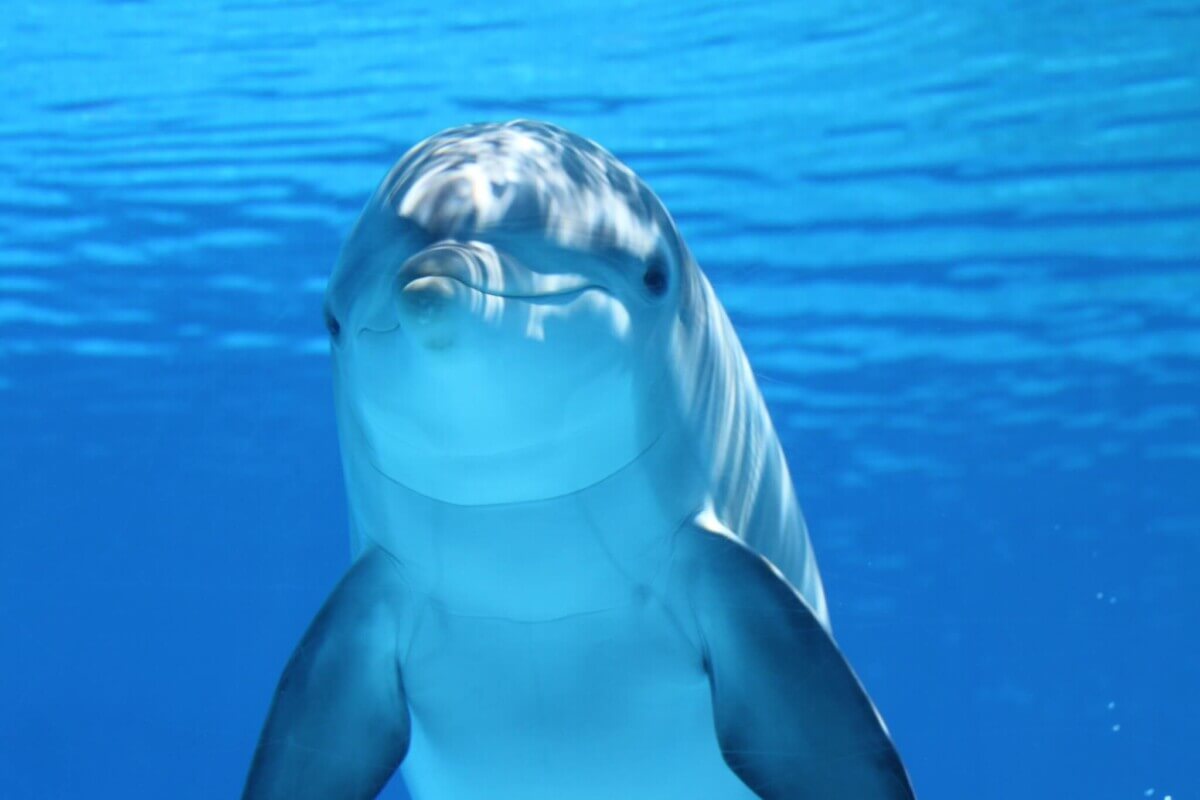
(Photo by Pixabay from Pexels)
Fishing Nets Kill Dolphins. Recycled Bottles Might Help.
In A Nutshell
- Recycled glass and plastic bottles were tested as cheap alternatives to costly electronic pingers meant to warn dolphins away from fishing nets.
- The bottles showed no measurable benefit in surface-set nets off Peru, and Zanzibar recorded no dolphin bycatch at all, leaving nothing to compare.
- In Brazil, bottom-set nets fitted with plastic bottles saw fewer dolphin catches and higher fish catches, though the dolphin result fell just short of statistical significance.
- Researchers are calling for larger follow-up trials to confirm whether the low-cost fix could help small-scale fisheries worldwide.
Every year, dolphins get tangled in fishing nets they never saw coming. For decades the best fix, small electronic alarms attached to nets, has been too costly for the fishing communities where the problem is often worst. A new study suggests an upcycled water bottle might do a similar job for a fraction of the price.
Researchers tested recycled glass and plastic drink bottles as low-cost tools to warn dolphins away from nets in three countries across two continents. Results were mixed, and the type of fishery mattered. The devices showed no measurable benefit in Peru’s surface-set nets, and in Zanzibar no dolphins were caught at all, leaving nothing to compare. The only encouraging signal came from bottom-set trammel nets on the ocean floor in Brazil, where fewer dolphins turned up in bottle-rigged nets and fish catches went up too. That pairing of protection and profit, the team says, is promising enough to justify larger follow-up studies.
Published in Fisheries Research, the study arrives amid real urgency. Dolphins, porpoises, and other large sea animals caught in gillnets, mesh curtains suspended in the water, face one of the most serious threats to their survival. Small-scale fishing operations in developing countries bear much of the responsibility, yet have largely been left out of efforts to fix the problem, mostly because affordable fixes have been in short supply.
Recycled Bottles Turn Into Simple Dolphin Bycatch Deterrents
Researchers built two devices from recycled bottles. The first was a glass bottle pinger: a 300 to 350 ml glass drink bottle fitted with a steel bolt hanging inside on a string. As the bottle moves with the waves, the bolt swings and strikes the glass, producing a clinking sound meant to mimic an electronic alarm, a handmade wind chime for dolphins.
A second device used sealed plastic bottles as acoustic reflectors, bouncing back the sonar-like clicks dolphins use to navigate, much like a bat in the dark. Many gillnets are hard to detect this way, since the netting reflects only a weak signal, sometimes not until it’s too late. A sealed plastic bottle filled with air reflects sound far better. Lab tests at Newcastle University showed plastic bottles produced a reflection 100 to 1,000 times stronger than a typical gillnet, strong enough to make a net easier for a dolphin to detect and avoid.
Commercial electronic devices cost $35 to $100 per 100 meters of net, steep for a fisher hauling nets by hand. A recycled drink bottle costs almost nothing in materials, though attaching one still takes time and cooperation.

Three Countries, Three Very Different Dolphin Bycatch Outcomes
Trials ran across three fishing regions from 2017 to 2022. In Zanzibar, Tanzania, researchers worked with 36 vessels fishing surface-set nets targeting tuna and other large fish. In Peru, trials took place off Salaverry, where sharks are the main target but dolphins are frequently caught as bycatch. In Brazil, the focus was a fishery off Torres and Passo de Torres, targeting Brazilian flounder and whitemouth croaker with bottom-set trammel nets.
At all three locations, independent observers rode along on fishing boats to record catches. Trips were randomly assigned to bottle or control conditions, using per-trip coin tosses in Peru and Brazil and vessel-level assignment in Zanzibar. Trials covered more than 1,100 net sets in Zanzibar, about 456 in Peru, and 105 in Brazil.
In Brazil, no dolphins were caught during trips using plastic bottle reflectors, while four were caught in comparison trips without bottles. The difference trended in a promising direction but fell short of statistical certainty, so researchers can’t yet call it definitive. Fish catch weight was also significantly higher in nets with plastic bottles. One theory: the bottles may work better in deeper, darker water, since dolphins likely rely more on echolocation in low light, though this remains unconfirmed.
In Peru, neither bottle type meaningfully reduced dolphin bycatch, with the noisy acoustic environment near the surface flagged as a possible reason. In Zanzibar, no dolphins were caught in any sets, bottle or control, making it impossible to evaluate the devices. The authors flagged the absence as worth investigating, raising declining dolphin populations as one explanation among several, though stressing this remains speculative.
One unexpected result: nets with plastic bottles in Zanzibar recorded significantly more tuna than control nets during catch events. One possibility is that the bottles reflected light in ways that attracted fish, though the team stresses this is speculative, and a welcome bonus for fishers either way.
A Low-Cost Path Forward for Dolphin Bycatch Prevention
Across all three countries, fishers reported no negative effects on their target catches, a signal researchers identified as meaningful on its own. Acceptance by fishing communities is one of the most persistent barriers to adopting any bycatch-reduction tool, alongside cost, and these devices appeared to clear both hurdles in Brazil.
Accidental entanglement of dolphins and other large sea animals represent the single greatest threat to dolphin and porpoise populations worldwide, researchers say, yet the problem has gone largely unsolved in small-scale fisheries. No single fix is waiting to be discovered. For fishing communities that can’t afford anything else, though, a solution made from recycled bottles may be a practical starting point worth testing at a larger scale.
Paper Notes
Limitations
The study’s authors acknowledge several important limitations. Dolphin bycatch rates observed during the trials were lower than rates recorded in prior studies used to calculate how many fishing sets would be needed to detect a meaningful effect, particularly in Zanzibar, where no dolphins were caught at all, making any assessment of the devices’ effectiveness impossible at that location. This lower-than-expected bycatch rate meant the trials may not have had sufficient sample sizes to reliably detect a reduction even if one existed. In Brazil, the result trended in a promising direction but didn’t reach conventional statistical significance, so it should be treated as preliminary until confirmed by further trials. The authors also note that plastic bottles compress under water pressure at depth, which could affect how well they reflect sound, an effect that requires further study. The Brazil trial did not include glass bottle pingers because of concerns they might attract other marine mammals and lead to unwanted interactions with catch. Finally, the dispersed and informal nature of small-scale fisheries makes standardizing observations and data collection inherently difficult.
Funding and Disclosures
The study was funded by the US Marine Mammal Commission (Grant MMC18-162), the US NOAA Bycatch Reduction Engineering Program (Grant NA18NMF4720298), and WIOMSA (Grant MASMA/CP/2014/01) and WWF UK (Project number GB085402) for the trials in Zanzibar. Author Andrew J. Temple is supported by the KAUST Global Fellowship Program under Award No. ORA-2022-5001. The authors declare no competing financial interests or personal relationships that could have influenced the work.
Publication Details
Authors: Per Berggren, Joanna Alfaro-Shigueto, Jeffrey C. Mangel, Matt Sharpe, Narriman S. Jiddawi, Jeff Neasham, Gabriel Larre, and Andrew J. Temple. Author affiliations include Newcastle University (UK), Universidad Científica del Sur (Peru), ProDelphinus (Peru), the University of Dar es Salaam (Tanzania), and King Abdullah University of Science and Technology (Saudi Arabia). | Journal: Fisheries Research, Volume 298, 2026, Article 107748 | Paper Title: “Upcycled glass and plastic bottles offer potential low-cost mitigation to megafauna bycatch in gillnet fisheries” | DOI: https://doi.org/10.1016/j.fishres.2026.107748 | Published online: May 9, 2026


