(© Photographee.eu - stock.adobe.com)
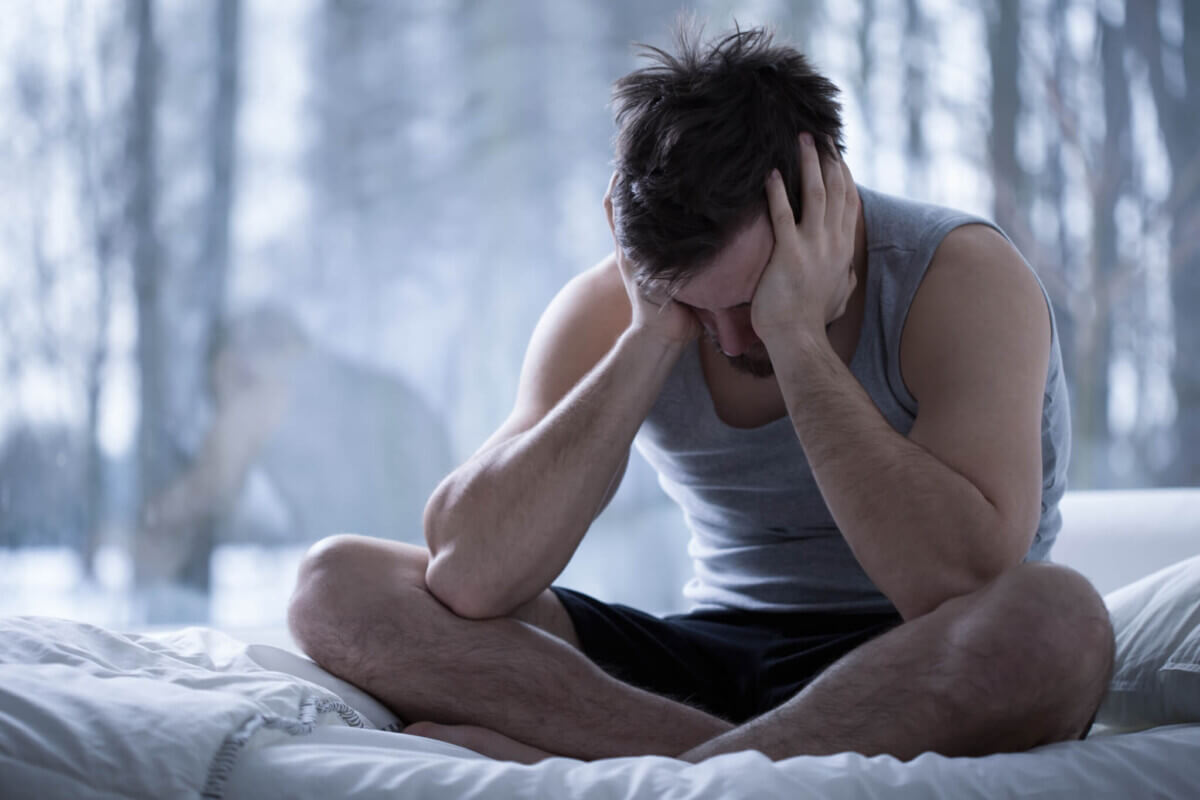
TRONDHEIM, Norway — A new study is emphasizing just how important a regular and consistent sleep schedule is to one’s overall wellbeing. Researchers from the Norwegian University of Science and Technology say that lack of sleep can make a person feel less happy, lazier, and less attentive the following day.
“Not in the sense that we have more negative feelings, like being down or depressed. But participants in our study experienced a flattening of emotions when they slept less than normal. They felt less joy, enthusiasm, attention and fulfilment,” explains Ingvild Saksvik-Lehouillier, an associate professor at NTNU’s Department of Psychology, in a release.
Sleeping two hours less has dramatic impact
A group of 59 adults between the ages of 18-35 had their sleeping habits tracked for this study.
Most sleep research projects take place in labs, but this study separates itself from the rest by allowing participants to sleep from the comfort of their homes. To start, each person slept according to their usual schedule in their own bed for seven days. Following three of those nights, participants underwent a series of tests.
Then, for the next three nights everyone slept two hours less than they usually would. On two of the mornings following those shortened nights, participants underwent the same tests again. Researchers say the results were striking.
“Participants’ positive feelings scored worse after just one night of reduced sleep, and dropped even more after three nights,” comments Saksvik-Lehouillier. “We all have different sleep patterns. The point of having the participants sleep at home was to keep everything as similar to daily life as possible. In the imposed sleep deprivation phase, participants crawled under their covers two hours later than they normally did, and had to get up at their usual time.”
Better sleep, better focus
All of the tests took place about an hour and a half after participants woke up, and no one was allowed to drink any coffee. The tests examined each person’s attentiveness by asking them to identify the letter ‘x’ in a series of images.
“We tested responsiveness and accuracy. The reaction time went down after the participants had been sleep deprived, but the error rate went up,” says Saksvik-Lehouillier. “It seems that we react more quickly to compensate for lower concentration. Then there’ll be more mistakes. It may be smart to avoid activities that require a high level of accuracy the morning after sleeping less than usual,”
For each additional night the participants slept less than usual, the worse they performed on these tests.
Positive impact
Next, participants filled out a survey designed to gauge their positive and negative feelings.
“We didn’t find clear differences when it came to the negative emotions, but there were marked differences for the positive ones. Positive feelings scored worse after just one night of reduced sleep, and dropped even more after three nights,” Saksvik-Lehouillier notes.
“I think this is a really interesting find,” she continues. “We already know that fewer positive emotions have a major impact on mental health. We also know that poor sleep is included in virtually all mental health diagnoses.”
Early to rise, early in the sack
Unfortunately, in these modern tech-filled times, more and more people all over the world are getting less sleep than they should.
“It’s easy for us to go to bed later than we should, especially when we think, ‘I just have to finish watching this series.’ But we still have to get up to go to work, or study, or deliver our kids to kindergarten. This contributes to getting too little sleep. How long we sleep is just part of the picture, but when we sleep is also important. An irregular circadian rhythm can be worse than sleeping too little. Going to bed and getting up at the same time is recommended,” Saksvik-Lehouillier says.
In the long term, prior studies have found a link between prolonged inadequate sleep patterns and an increased risk of major health problems like cancer or diabetes.
“Sleep is individual. Not everyone needs to sleep seven and a half hours every night. And we’re A and B people. Some of us like to stay up till the wee hours, others love to rise and shine early in the morning,” she concludes. “The most important thing is how you feel. If you’re in a good mood and alert when you get up, those are indications that your sleep habits are working for you.”
The study is published in Sleep.
[fb_follow /]


