(Credit: © Carlo - stock.adobe.com)
In a Nutshell
- Researchers split the six months around the 2019 climate strikes into three phases and saw a progression: people first discovered each other’s causes, then got tangled in sharper debates, and finally either joined together or pulled apart around the global September strikes.
- Even people who agreed on the big picture of climate change frequently clashed over specific issues like energy sources, pipeline construction, and wildlife protection.
- Social media made it easier for local climate movements to go global, but it also amplified ideological conflicts and internal friction that could make it harder for those movements to stay aligned.
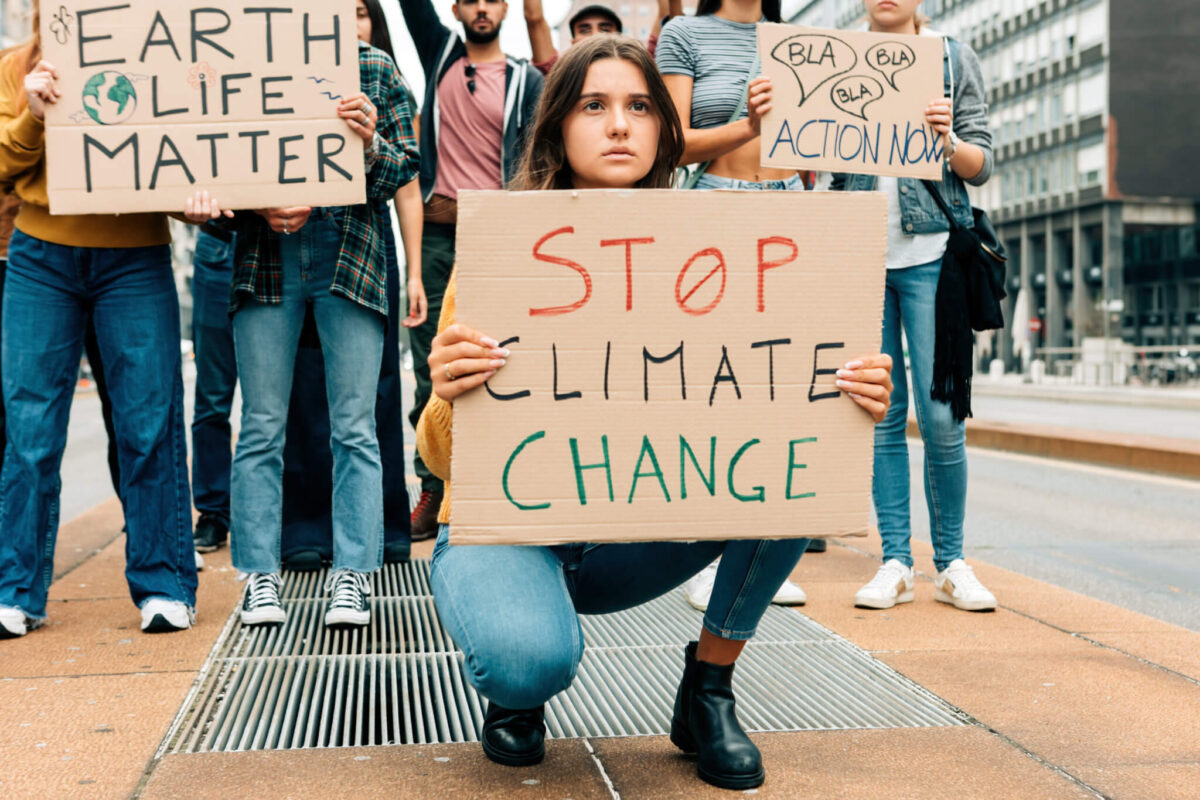
When millions of people took to the streets for the global climate strikes of 2019, something equally dramatic was unfolding online. On Twitter, a sprawling, sometimes ugly battle of ideas played out in real time, with participants agreeing, fighting, and talking past each other, all while trying to save the planet. A new study examined nearly 2 million tweets from that period and found something that might surprise anyone who assumes climate activists are a unified front: the same platform that helped organize those massive strikes also enabled both coalition-building and sharp ideological conflict.
Researchers studied how different climate-focused groups interact on social media, and what they found, published in the Information Systems Journal, paints a complicated picture of digital activism. Coalitions form. Alliances crack. People who agree that climate change is an emergency can still end up in bitter arguments about pipelines, endangered species, or how to talk to children about the environment. Understanding how that happens could matter for anyone trying to use social media to push for large-scale change.
At the heart of this research is a concept called a “movement of movements,” which is exactly what it sounds like: a collection of different activist groups, each with its own priorities, coming together under a larger shared cause. In 2019, that larger cause was climate change. Within it, groups were focused on everything from oil pipeline protests to saving the Amazon rainforest to protecting monarch butterflies. When those groups meet on social media, sparks fly in more ways than one.
How Researchers Analyzed Nearly 2 Million Climate Tweets
Researchers collected 1,872,325 tweets between April and September 2019, tracking the build-up to the massive global climate strikes that September. After removing duplicates and cleaning the data, the team worked with 850,130 messages. They pulled tweets using hashtags tied to the climate strikes, including “climatestrike” and “FridaysForFuture,” as well as hashtags connected to major climate-focused organizations such as Greenpeace, 350.org, and the Sierra Club.
Rather than reading through every post manually, the team used computational tools to analyze the enormous volume of text. One approach mapped which words appeared together frequently, revealing the themes people discussed. Another identified common word sequences to detect patterns in how people communicated. Both methods were applied across three time periods tied to real-world events: before the second school strike, between the second and September global strikes, and during the September strike week itself. News articles, organizational websites, and campaign materials were also reviewed to provide context for what was happening on the ground.
Three Phases of Climate Activism: Discovery, Conflict, and a Fork in the Road
Researchers split the six-month window into three phases around the major climate strikes, and a clear progression appeared across them. In the first phase, different activist groups were essentially discovering each other, sharing reasons they cared about climate, finding common ground, and showing support. Discussion clusters formed around two main areas: energy (pipelines, fossil fuels, solar power) and species and habitat loss (Amazon fires, monarch butterflies, wolves). Posts from this period showed people agreeing on broad goals and encouraging each other to act.
In the second phase, things got more complicated. More voices entered the conversation, discussion clusters fragmented, and debates grew sharper. Urgent calls to protect the Amazon rainforest sat alongside heated arguments about nuclear power. Someone advocating for “Zero Waste” principles could find themselves in a thread with someone questioning the entire premise of the climate movement. One message from this period captured the tension: a user wrote that it made more sense to create awareness and incentivize proper behavior, expressing frustration that many people remained uninformed about basic issues like waste disposal.
By the third phase, the September global strikes brought a surge of collaborative energy. Messages called people to march, celebrated the scale of the strikes, and expressed cross-border solidarity. One post captured the spirit: that no single person or organization could solve climate change alone, and that working together was essential. Yet even at this peak moment of apparent unity, opposing voices remained active. Posts using hashtags like “climatehoax” and personal attacks on activists ran in parallel threads. Unity and division were happening at the same time, just in different corners of the platform.

When Fighting for the Same Cause Creates Conflict in Climate Activism
Much of the friction did not come from climate deniers or outside opponents. It emerged between people who broadly supported climate action but disagreed on specific tactics or priorities. Arguments over energy sources, the role of corporations, and personal habits like recycling created what the researchers describe as “ideological conflicts” within the movement itself.
According to the data, these conflicts sometimes led to negotiation, where people introduced new arguments to find compromise. In other cases, someone would try to reframe or discredit an opponent’s viewpoint entirely. In the most extreme cases, people simply disengaged, changing the subject or walking away from the conversation.
That last behavior is particularly telling for anyone thinking about how online movements sustain themselves. When disagreements get heated enough, some participants stop engaging with opponents or distance themselves from the broader coalition. One message in the dataset illustrated this retreat: a user made clear they had no interest in aligning with mainstream political candidates, signaling a withdrawal from the broader coalition rather than continued engagement.
Social media is often celebrated as a tool for giving ordinary people a megaphone and a community. This research confirms it can do both. The September 2019 global climate strikes were part of a movement that, by most accounts, spanned around 170 countries, and platforms like Twitter were used to organize campaigns, reach participants, and spread climate-related messages internationally. But the same platform also created conditions where ideological differences could spiral, personal attacks could derail productive conversations, and well-meaning activists could exhaust each other rather than their opponents.
For organizers, that tension points to something concrete: building and sustaining a broad coalition on social media requires actively managing not just external opposition, but the conflicts that arise from within. As the study notes, movement participants “mobilize and collaborate on issue-based events, actions, and campaigns, but can also exacerbate conflicts on movement issues.” Greta Thunberg’s school strikes sparked a global phenomenon, but what happened in the comment sections and reply threads tells a more complicated, and arguably more instructive, story.
Paper Notes
Limitations
This study has several important limitations. All data were collected from Twitter, which may not reflect the full range of activism happening across other social media platforms or offline. The analysis covers a six-month window in 2019, and longer-term research could reveal additional patterns or shifts in movement dynamics. The study also does not account for external factors, such as mainstream media coverage or the specific design features of the Twitter platform, that may have shaped online behavior. The study also did not control for cultural and regulatory differences around climate activism in different countries. Additionally, the researchers note that digital disassociation, the act of simply going silent rather than responding, could not be fully captured, since people who stopped engaging left no measurable trace in the data.
Funding and Disclosures
Authors reported no conflicts of interest. Data from Twitter (now X) was used under license, and data availability is subject to restrictions requiring permission from Twitter.
Publication Details
Authors: Carol Lee (D’Amore-McKim School of Business, Northeastern University), Pratyush Bharati (College of Management, University of Massachusetts Boston), and Emmanuelle Vaast (McGill University)
Paper Title: “Entangling and Coalescing on Social Media: A Study of Issue Boundary Spanning in Movement of Movements”
Journal: Information Systems Journal
Year: 2026
DOI: 10.1111/isj.70052


